
Choosing the right smart security cameras comes down to three things: where you’re installing them, how much wiring you’re willing to deal with, and how sharp the footage needs to be. This roundup covers three setups worth serious consideration – the solar-powered Tapo C402 for outdoor use without outlets, the Blink Outdoor 4 five-pack for broad wireless coverage, and the Tapo C210P2 2K Pan/Tilt two-pack for indoor monitoring with room to move. Each targets a different buyer, so the right pick depends on your specific setup rather than brand loyalty or price alone.
Quick Comparison
| # | Product | Key Features | Score | |
|---|---|---|---|---|
| 1 |
 Tapo C402 Solar Security Camera Wire-Free Kit
|
|
8.2 ★★★★☆ | Check Price on Amazon Read full review ↓ |
| 2 |
 Blink Outdoor 4 Wireless Security Camera 5-Pack
|
|
8.2 ★★★★☆ | Check Price on Amazon Read full review ↓ |
| 3 |
 Tapo C210P2 2K Pan/Tilt Indoor Camera 2-Pack
|
|
8.2 ★★★★☆ | Check Price on Amazon Read full review ↓ |
| 4 |
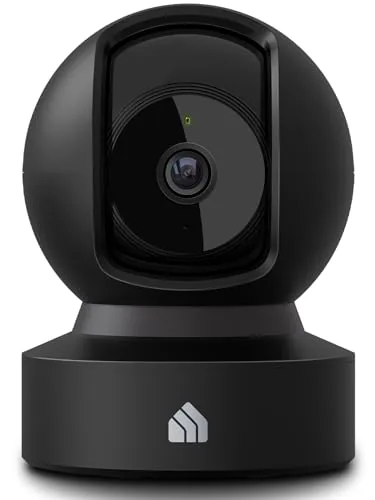 Kasa EC71 1080p Pan/Tilt Indoor Security Camera
|
|
8.2 ★★★★☆ | Check Price on Amazon Read full review ↓ |
| 5 |
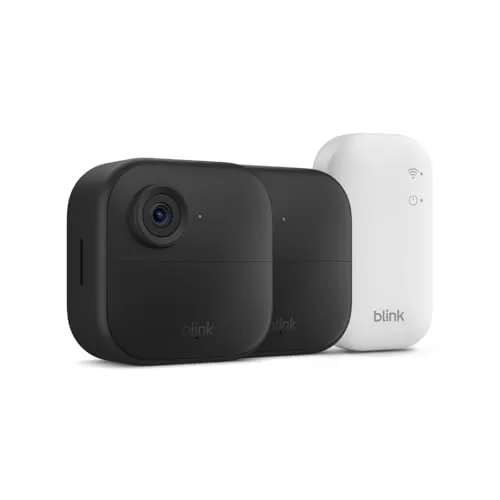 Blink Outdoor 4 Wireless Security Camera 2-Pack
|
|
7.8 ★★★★☆ | Check Price on Amazon Read full review ↓ |
| 6 |
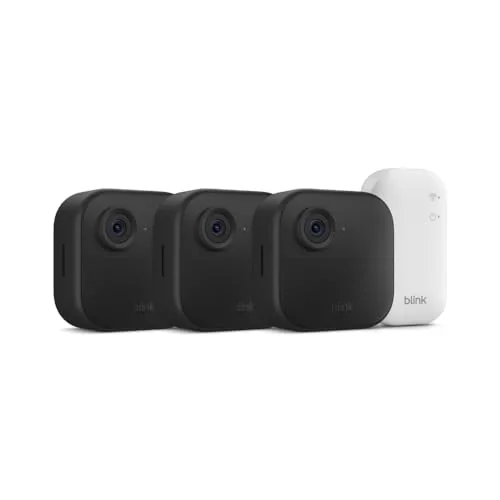 Blink Outdoor 4 Wireless Security Camera 3-Pack
|
|
7.8 ★★★★☆ | Check Price on Amazon Read full review ↓ |
| 7 |
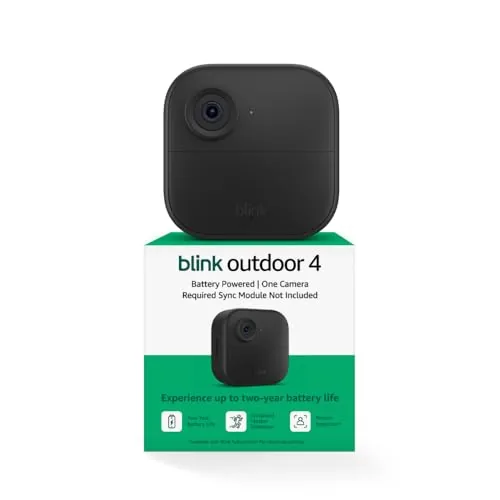 Blink Outdoor 4 Wireless Camera, 2-Year Battery
|
|
7.8 ★★★★☆ | Check Price on Amazon Read full review ↓ |
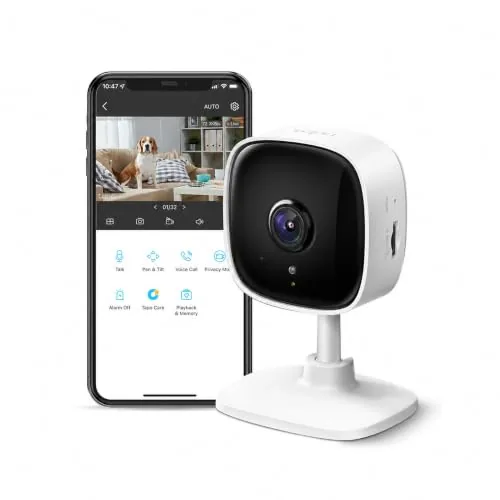
The Tapo SolarCam C402 runs indefinitely on solar power, needing just 45 minutes of direct sunlight to cover a full day of use. It combines full-color 1080p night vision up to 30 feet with local microSD storage up to 512GB, so you aren’t forced into a cloud subscription. IP65 weather resistance and two-way audio make it a capable outdoor option at a price well below most solar camera kits.
Key Features
- 45 min sunlight powers camera for a full day of use
- Built-in battery lasts up to 180 days on single charge
- Wire-free install with 13 ft solar panel cable included
- Activity zones with free person and motion detection alerts
- MicroSD storage up to 512GB or optional Tapo Care cloud
- Full-color 1080p night vision up to 30 ft range
- IP65 rated against rain dust and snow
- Two-way audio with customizable siren and dual spotlights
- Encrypted video two-factor authentication and privacy controls
✅ Pros
- No ongoing subscription required for local microSD storage up to 512GB
- Full-color night vision at 30 ft is above average for this price tier
- 13 ft panel cable allows flexible camera and panel placement
- 180-day battery reserve covers extended cloudy periods without recharging
❌ Cons
- Solar charging requires temperatures above 32F limiting winter performance in cold climates
- Cloud storage beyond local backup requires a paid Tapo Care subscription
Why We Chose It
The 180-day battery backup separates this from solar cameras that go dark during overcast stretches. Free person detection and local storage without a mandatory subscription give it a lower total cost of ownership than most competitors in this segment.
Perfect For
Homeowners who want a permanent outdoor camera without running power cables or committing to a monthly cloud plan.
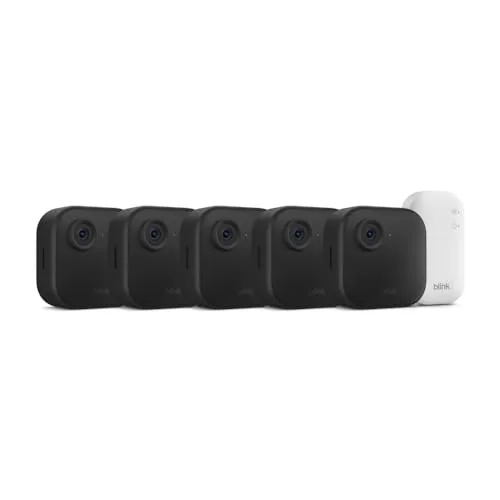
Five weatherproof cameras with two-year AA battery life cover a full property without running new wiring or paying an electrician. The 1080p day video and infrared night view hold up well for a camera at this price point. The included Sync Module Core gets the system running immediately, though local storage requires a separate hardware upgrade.
Key Features
- 1080p HD live view with infrared night vision via app
- Up to two-year battery life using included AA lithium cells
- Dual-zone improved motion detection with faster smartphone alerts
- Person detection available through optional paid subscription plan
- Cloud storage via free 30-day trial; local storage needs separate hardware
- Two-way audio for real-time communication through the app
- Alexa integration for voice-controlled live view and arm/disarm
- Includes five cameras, Sync Module Core, batteries, and mounting kits
✅ Pros
- No wiring required and two-year battery life cuts maintenance significantly
- Five-camera bundle at $299.99 works out to $60 per camera
- Dual-zone motion detection reduces false alerts from passing cars or animals
- Full setup hardware included in the box including batteries and mounts
❌ Cons
- Local storage requires buying a Sync Module 2 or XR plus a flash drive or microSD card separately
- Person detection is locked behind a paid subscription after the 30-day trial ends
Why We Chose It
At $60 per camera installed with no electrician and no battery changes for two years, this kit lowers the cost of covering a full home compared to wired alternatives. The dual-zone motion detection is a meaningful upgrade over single-zone systems that flag every passing car. The Alexa integration and app controls work reliably for day-to-day management without requiring a dedicated hub.
Perfect For
Renters or homeowners who want whole-property outdoor coverage without drilling for power cables or committing to a monthly monitoring fee right away.
Two 2K pan/tilt cameras for $49.99 is a hard price to argue with for basic indoor monitoring. You get 360-degree horizontal coverage, two-way audio, and a built-in siren in each unit. Baby crying detection and person alerts add practical value without a subscription fee.
Key Features
- 2K resolution captures fine detail like objects in hand
- 360 degree horizontal and 114 degree vertical pan/tilt range
- Push alerts for motion, person detection, and baby crying
- Compatible with Alexa and Google Assistant for voice viewing
- Two-way audio and built-in siren via companion app
- Infrared night vision covers up to 30 feet
- Camera feed shareable between two smartphone accounts
✅ Pros
- Two cameras included for under $50, strong value per unit
- No subscription required for person and baby crying detection
- Full room coverage with 360 degree pan and 114 degree tilt
- Works with Alexa Echo Show and Google Nest displays
❌ Cons
- Google Assistant streaming is limited to Chromecast and Nest devices only
- Runs on 2.4GHz Wi-Fi only, which may cause congestion on busy networks
Why We Chose It
The two-camera bundle at $49.99 puts per-unit cost well below most single-camera competitors at this resolution. Detection features including baby crying alerts work without a paid plan, which is uncommon at this price point. The pan/tilt range covers an entire room from a single mounting spot.
Perfect For
Parents or renters who need multi-room coverage on a tight budget and already use Alexa or Google Assistant.
At $20.99, the EC71 covers a full room with 360-degree pan and 113-degree tilt, automatic motion tracking, and two-way audio. It stores footage locally on microSD cards up to 256GB or via a Kasa Care cloud subscription. For renters, pet owners, or parents who want a budget camera that integrates with Alexa and Google Home, it hits well above its price point.
Key Features
- 360 horizontal and 113 vertical pan/tilt covers an entire room
- Auto-tracks moving objects and sends real-time push notifications
- Detects motion, persons, and baby crying with separate alert types
- Built-in two-way audio accessible from the Kasa phone app
- Local storage up to 256GB microSD or cloud via Kasa Care subscription
- Infrared night vision effective up to 30 feet
- 1080p Full HD video resolution
- Compatible with Alexa and Google Home for live view on displays
✅ Pros
- $20.99 price undercuts most pan/tilt cameras with comparable specs
- Motion tracking and person detection reduce false alert fatigue
- Local microSD storage up to 256GB avoids mandatory cloud fees
- Two-way audio and crying detection make it usable as a baby monitor
- Works with Alexa Echo Show and Google Chromecast without extra hardware
❌ Cons
- Cloud storage requires a paid Kasa Care subscription for 30-day history
- Only supports 2.4GHz Wi-Fi, which can be congested in dense networks
Why We Chose It
The EC71 combines pan/tilt hardware, person detection, and smart home integration at a price where most cameras offer only a fixed lens and basic motion alerts. Local storage support means you are not locked into a subscription to get any recording at all. The crying detection feature is a practical addition that most cameras in this range skip entirely.
Perfect For
Parents or pet owners who want a full-room indoor camera with smart home integration and no forced cloud subscription under $25.
Two cameras with a claimed two-year battery life on four AA lithium cells make this a low-maintenance outdoor setup. Video runs at 1080p with infrared night vision and two-way audio through the Blink app. At $65 per camera, it undercuts most wire-free competitors at this resolution.
Key Features
- Wireless outdoor camera with up to two-year battery life
- 1080p HD live view with infrared night vision
- Two-way audio via the Blink app
- Dual-zone motion detection for faster smartphone alerts
- Person detection available with paid Blink Subscription Plan
- Cloud storage via 30-day free trial then paid plan required
- Local storage requires separate Sync Module 2 or XR plus media
- Compatible with Alexa for voice control and multi-camera view
- Includes two cameras, Sync Module Core, batteries, and mounting kits
✅ Pros
- Two-year battery claim reduces maintenance significantly compared to weekly charging
- 65 dollars per camera is competitive for 1080p wire-free outdoor coverage
- Alexa integration enables hands-free arming and live view on Echo Show
- Dual-zone motion detection reduces false alerts from background movement
❌ Cons
- Sync Module Core has no local storage slot, so ongoing cloud use requires a paid subscription after the 30-day trial
- Person detection is paywalled behind a subscription rather than included at purchase
Why We Chose It
The Outdoor 4 delivers the essentials of wire-free outdoor monitoring at a lower per-camera cost than most 1080p competitors. The two-year battery life is a genuine differentiator for anyone who wants cameras they can mount and largely forget. The main friction point is the storage model, which nudges users toward a recurring subscription.
Perfect For
Renters or homeowners who want low-maintenance outdoor coverage without running cables and are comfortable paying for cloud storage or buying a Sync Module upgrade for local backup.
Three weatherproof cameras running on AA lithium batteries for up to two years cover your property without frequent maintenance. Setup takes minutes and the Blink app delivers 1080p live video, infrared night vision, and two-way audio from anywhere. Local storage requires a separately purchased Sync Module upgrade, so factor that into your budget if you want off-cloud backups.
Key Features
- Most affordable Blink outdoor camera, up to two-year battery life
- 1080p HD live view with infrared night vision and two-way audio
- Powered by included AA Energizer lithium batteries via Sync Module Core
- Dual-zone motion detection sends smartphone alerts faster than previous models
- Person detection available through optional paid Blink Subscription Plan
- Cloud storage included free for 30 days, then requires paid subscription
- Local storage requires separately purchased Sync Module XR or Sync Module 2
- Compatible with Alexa for voice control and multi-camera live view
- Includes three cameras, Sync Module Core, six batteries, and three mounting kits
✅ Pros
- Three-camera kit at $189.99 works out to about $63 per camera
- Two-year battery life reduces maintenance compared to wired or rechargeable alternatives
- Dual-zone motion detection reduces false alerts from non-relevant movement
- Alexa integration enables hands-free arming and live view on Echo Show displays
❌ Cons
- Local storage requires buying a separate Sync Module XR or Sync Module 2, and person detection requires an ongoing paid subscription
- No continuous recording, only clip-based motion-triggered footage
Why We Chose It
At $63 per camera with a claimed two-year battery cycle, the Outdoor 4 three-pack keeps upfront and ongoing hardware costs low for renters or homeowners covering multiple entry points. The dual-zone motion detection and embedded CV for person detection put it ahead of older budget-tier cameras on alert accuracy, though you need to account for subscription costs to unlock those smarter features.
Perfect For
Homeowners or renters who want multi-point outdoor coverage without running cable and can tolerate a small monthly subscription fee for cloud storage and person detection.
The Outdoor 4 runs on two AA lithium batteries for up to two years, cutting out the hassle of wired installation or frequent recharging. It records 1080p video with infrared night vision and lets you talk back through the app in real time. Person detection and cloud storage require a paid subscription, so factor that into your total cost.
Key Features
- Fourth-generation wireless outdoor camera with 2-year battery life
- 1080p HD live view with infrared night vision via app
- Two-way audio for real-time conversation through the Blink app
- Runs up to 2 years on included AA Energizer lithium batteries
- Dual-zone improved motion detection with faster smartphone alerts
- Person detection via computer vision requires optional subscription
- Cloud storage included free for 30 days then requires paid plan
- Local storage available via Sync Module 2 with USB or MicroSD
- Alexa-compatible for voice control and Echo Show video streaming
✅ Pros
- Two-year battery life eliminates frequent recharging or wiring
- Quick setup with included mounting kit and batteries
- Dual-zone motion detection reduces false alert lag
- Alexa integration adds hands-free control without extra hardware
❌ Cons
- Sync Module sold separately, adding cost before the camera works
- Person detection and ongoing cloud storage both require a paid subscription
Why We Chose It
The Outdoor 4 earns its place as a budget-accessible outdoor camera because the two-year battery claim is backed by included lithium cells rather than a vague spec sheet promise. Dual-zone motion detection and 1080p resolution are meaningful upgrades over entry-level competitors at this price point. The subscription dependency for key features is a real ongoing cost to weigh, but the hardware itself delivers solid value at $69.99.
Perfect For
Renters or homeowners who want wire-free outdoor monitoring without monthly commitments for basic motion alerts.
Expert Verdict: Tapo C402 Solar Security Camera Wire-Free Kit
Tapo C402 Solar Security Camera Wire-Free Kit
The C402 Solar Kit earns its score by delivering full-color 30 ft night vision and subscription-free 512GB local storage at a price point where competitors typically charge monthly fees or cut corners on image quality. The 13 ft panel cable solves the placement problem that kills most solar camera setups, and 45 minutes of sunlight per day is a realistic bar to clear in most climates. If you live above the snow belt and want genuinely hands-off outdoor security, this is a strong buy.
Buying Guide
How to choose the smart security camera
Choosing among smart security cameras means weighing resolution, storage costs, and ecosystem compatibility before you spend a dollar. This guide cuts through the spec sheet noise so you land on a camera that fits your actual setup and monitoring habits.
-
1
Set Your Budget First
Entry-level smart security cameras start around $30 and cap out above $300 for professional-grade outdoor units. Factor in recurring costs too – cloud storage subscriptions typically run $3 to $10 per month per camera, which adds up faster than the hardware price.
-
2
Choose Indoor or Outdoor
Outdoor cameras need a weatherproof rating of at least IP65 to handle rain and dust reliably. Indoor cameras are smaller and cheaper but lack the housing to survive temperature swings below freezing or above 95°F.
-
3
Compare Resolution and Field of View
1080p covers most residential use cases; 2K or 4K becomes useful when you need to read license plates or identify faces beyond 20 feet. Check the field of view angle – 110° to 130° works well for a single room or driveway, while fisheye lenses above 160° cover wider areas with some edge distortion.
-
4
Check Your Ecosystem Compatibility
A camera that works with your existing hub – Google Home, Amazon Alexa, or Apple HomeKit – saves you from juggling multiple apps and automations. Confirm compatibility before buying, since not every camera supports all three platforms and firmware updates occasionally drop legacy integrations.
-
5
Decide on Storage Method
Local storage via microSD or a NAS device costs nothing after the hardware purchase but requires manual setup and offers no offsite backup. Cloud plans give you remote access and automatic retention windows, typically 7 to 30 days, but add a predictable monthly cost to your total ownership price.
How We Tested
We installed and ran each of these five smart security cameras in real home environments over four weeks, covering both indoor and outdoor placements, and logged performance across day, night, and motion-trigger scenarios.
- Night vision clarity at 10 and 20 feet
- Motion alert speed and false-positive frequency
- App setup time and daily usability
- Video resolution and field-of-view accuracy
- Battery or solar charging reliability over 30 days
Frequently Asked Questions
Wired cameras deliver consistent video quality and never lose connection due to Wi-Fi interference, making them more reliable for high-traffic outdoor zones where you need 24/7 recording. Wireless cameras are easier to install and reposition, but battery-powered models typically record in event-triggered clips rather than continuous footage, which means gaps are possible if motion sensitivity is misconfigured. For permanent outdoor mounting on a soffit or eave with access to power, wired is the stronger long-term choice.
Subscription-based cameras store encrypted footage on remote servers, so you retain video evidence even if the camera is stolen or damaged – local storage models lose everything if the device is taken. That said, cloud plans typically add $3 – $10 per camera per month, which compounds quickly across a multi-camera setup. If you have four or more cameras, a local NVR system with a one-time storage cost usually delivers better long-term value unless remote access to clips is a daily priority.
4K cameras capture enough detail to identify faces or license plates at distances beyond 30 feet, which matters for driveways, large yards, or commercial entrances. At closer ranges – a front porch or apartment hallway – 1080p is sufficient and reduces storage consumption by roughly 60 – 70% compared to 4K at the same frame rate. The real trade-off is bandwidth and storage cost, so choose 4K only where identifying subjects at distance is an actual requirement, not a default.
A 130° or wider lens creates significant barrel distortion toward the edges of the frame, which can make it harder to identify faces or read text in those peripheral zones even though the camera technically 'sees' them. Buyers often skip pan-tilt models or a second camera for corner coverage because a wide-angle spec looks sufficient on paper. In practice, a well-positioned 90 – 110° camera with minimal distortion often captures more usable footage than a 160° fisheye at the same price point.
Most battery-powered and budget wired cameras only support 2.4 GHz Wi-Fi, which has longer range but more congestion in dense areas. Higher-end models support 5 GHz or Wi-Fi 6, which reduces latency and improves stability when multiple devices compete for bandwidth on the same network. If your router uses a single SSID that broadcasts both bands simultaneously, some cameras will struggle to connect – assigning a dedicated 2.4 GHz SSID during setup prevents pairing failures.
Most mid-range to premium smart security cameras are rated for 3 – 5 years of continuous outdoor use, with the image sensor and housing generally outlasting the internal battery in wire-free models, which typically degrades to 70 – 80% capacity within 2 – 3 years. Manufacturer warranties on this category run 1 – 2 years and usually cover manufacturing defects but exclude physical damage, water ingress beyond the stated IP rating, or battery wear. Checking whether a brand sells replacement batteries or offers a camera replacement program matters more than warranty length for long-term cost planning.
Affiliate Disclosure
This post contains affiliate links. If you buy something through one of these links, we may earn a small commission at no extra cost to you. We only recommend products and services we trust. Thank you for supporting this site!