
Smart electricity meters have moved well beyond basic kilowatt-hour tracking – today’s models break down consumption by individual circuit, flag energy hogs in real time, and can pay for themselves within months through smarter usage habits. The three meters reviewed here cover the main buyer priorities: the Refoss EM16P for anyone who wants local data control without cloud dependency, the Emporia Vue 3 for whole-home monitoring across 16 circuits with a polished app experience, and the Fusion Energy SEM-Meter for a middle-ground option with solid multi-circuit coverage. Whether you’re cutting a high utility bill or sizing a solar or battery backup system, the right pick depends on how many circuits you need to monitor, where your data lives, and what you’re willing to spend.
Quick Comparison
| # | Product | Key Features | Score | |
|---|---|---|---|---|
| 1 |
 Refoss EM16P Smart Energy Monitor Local No-Cloud
|
|
8.7 ★★★★☆ | Check Price on Amazon Read full review ↓ |
| 2 |
 Emporia Vue 3 Energy Monitor with 16 CT Sensors
|
|
8.5 ★★★★☆ | Check Price on Amazon Read full review ↓ |
| 3 |
 Fusion Energy SEM-Meter 16-Circuit Energy Monitor
|
|
8.5 ★★★★☆ | Check Price on Amazon Read full review ↓ |
| 4 |
 Meross Smart Energy Monitor with Solar & Circuit Tracking
|
|
8.4 ★★★★☆ | Check Price on Amazon Read full review ↓ |
| 5 |
 Emporia Vue 3 Energy Monitor with Solar Support
|
|
8.2 ★★★★☆ | Check Price on Amazon Read full review ↓ |
| 6 |
 SURAIELEC Outlet Watt Meter with 90-Day Data Memory
|
|
8.2 ★★★★☆ | Check Price on Amazon Read full review ↓ |
| 7 |
 Aituzero CL200 2S Sub Meter 120/240V Single Phase
|
|
8.2 ★★★★☆ | Check Price on Amazon Read full review ↓ |
| 8 |
 MECHEER Watt Power Meter Plug with Backlight 7 Modes
|
|
7.8 ★★★★☆ | Check Price on Amazon Read full review ↓ |
| 9 |
 LyteSolar 2x120A Dual-Channel WiFi Energy Monitor
|
|
7.8 ★★★★☆ | Check Price on Amazon Read full review ↓ |
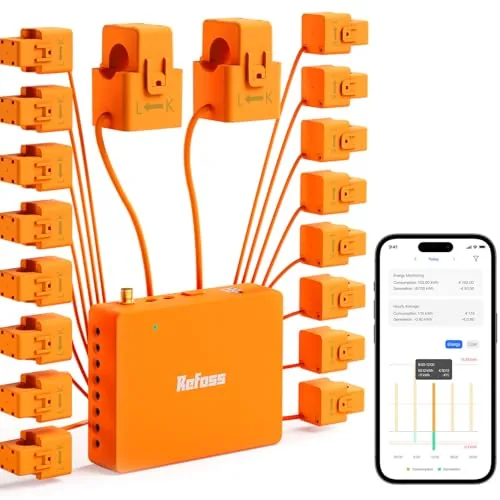
The Refoss EM16P monitors up to 16 branch circuits and 2 mains with clamp-on sensors, storing five years of usage data with no subscription required. It connects directly to Home Assistant out of the box and exposes local API and MQTT endpoints, keeping all data inside your home network. Solar households get automatic load-shifting tools that redirect surplus generation to EV chargers, water heaters, and washing machines during midday production peaks.
Key Features
- Full local control via built-in web UI, Open API, and MQTT
- Native Home Assistant integration with no firmware flashing needed
- Solar zero feed-in automation shifts loads to midday surplus periods
- Measures voltage, current, power, and power factor at plus or minus 1 percent
- Circuit-level alerts trigger when consumption exceeds user-set thresholds
- ETL certified, clamp-on install, 2 mains at 200A and 16 branches at 60A
✅ Pros
- No cloud dependency keeps energy data fully private on your local network
- 16 branch circuits plus 2 mains covered in one monitor at this price point
- Five years of daily data stored locally with CSV export, no ongoing fees
- Solar load-shifting automation works natively in Home Assistant without custom scripts
- Plus or minus 1 percent accuracy across the rated current range is strong for a clamp-on unit
❌ Cons
- At 179.99 dollars the upfront cost is higher than basic single-circuit monitors, though the per-circuit cost is competitive given the 16-channel coverage
- OpenClaw AI automation support is newly added and real-world reliability at scale is still unproven
Why We Chose It
Most energy monitors at this price either cap out at a handful of circuits or require a cloud account to access historical data. The EM16P covers 16 branch circuits with local-only storage, native Home Assistant support, and an open API, which makes it the most privacy-friendly and automation-ready option in its class. The solar load-shifting feature adds genuine bill-reduction value beyond basic monitoring.
Perfect For
Homeowners with solar panels who want circuit-level energy monitoring and automated load control inside Home Assistant without any cloud dependency or recurring subscription.
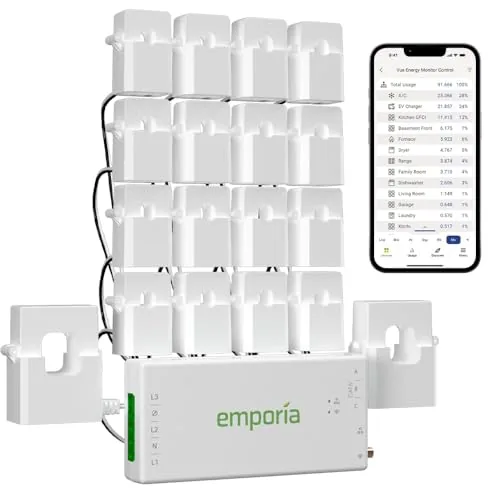
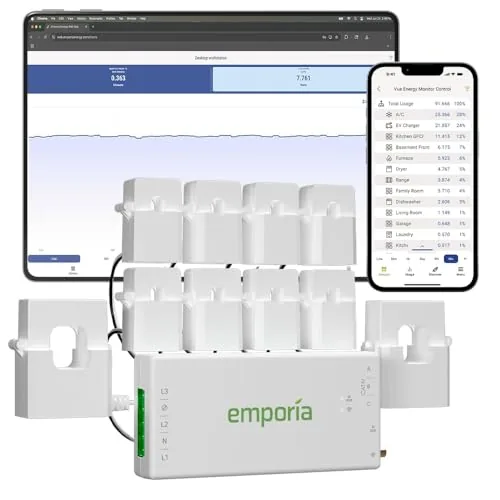
The Vue 3 installs directly in your breaker panel and monitors up to 16 individual circuits in real time, giving you a per-appliance breakdown of electricity use. It supports solar and net metering, works with 2.4 GHz Wi-Fi, and logs data down to one-second intervals in the app. At $199.99, it covers more circuits out of the box than most competing monitors at this price.
Key Features
- UL Listed for U.S. and Canada electrical safety standards
- Installs via clamp-on sensors in most residential breaker panels
- Supports single-phase, split-phase, and select 3-phase systems
- Monitors solar generation and net metering in real time
- Sixteen 50A branch circuit sensors included for appliance-level tracking
- Accuracy rated at plus or minus 2 percent
- 1-second data available live in app, retained for 3 hours
- Minute-level data retained 7 days, hourly data retained indefinitely
- Requires 2.4 GHz Wi-Fi, works with iOS, Android, and web
- Screw terminals allow CT wire trimming to reduce panel clutter
- Automates energy management for time-of-use and peak demand schedules
- 1-year warranty included
✅ Pros
- Sixteen branch circuit sensors included covers most homes without add-on purchases
- Solar and net metering support built in at no extra cost
- Data export available anytime through the app for offline analysis
- UL certification reduces installation risk in a live electrical panel
- Hourly historical data retained indefinitely in the cloud
❌ Cons
- 3-phase systems require purchasing an additional 200A sensor separately
- 1-second resolution data is only available while the app is actively open
Why We Chose It
The Vue 3 stands out for including 16 CT sensors at $199.99, where competing units often ship with 2 and charge extra for more. The combination of solar monitoring, indefinite hourly cloud storage, and UL certification makes it a practical choice for whole-home tracking without piecemeal add-ons.
Perfect For
Homeowners with solar panels or high electricity bills who want circuit-level visibility without hiring an electrician for a custom monitoring setup.
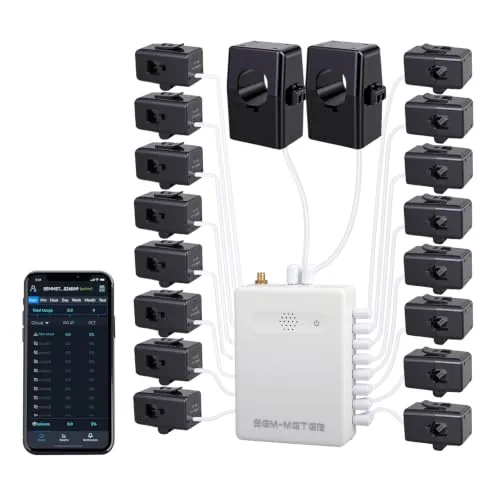
The SEM-Meter tracks real-time power consumption across 16 individual circuits using clamp-on 50A sensors that require no wiring changes. It calculates electricity costs per circuit using customizable time-of-use rate templates, making it practical for landlords splitting bills across tenants. For privacy-conscious users, it runs entirely on a local MQTT server without cloud access, with full Home Assistant integration.
Key Features
- Clamp-on install in most panels, no wiring changes needed
- Supports single-phase 120V to three-phase 415Y/240VAC, no Delta
- 16 x 50A sensors cover AC, water heater, dryer, EV charger
- Real-time and historical data via Android and iOS app
- 1% accuracy range, 2.4GHz WiFi connection required
- Data viewable by hour, day, week, month, or year
- Hourly export valid 90 days, daily and monthly data permanent
- Per-circuit cost tracking with peak, off-peak, holiday rate templates
- Runs locally via MQTT, no cloud or app required
- Solar and net metering monitoring supported
✅ Pros
- 16 circuits covered at $139.99 is strong value compared to whole-home monitors with fewer sensors
- Per-circuit cost allocation with time-of-use pricing makes tenant billing straightforward and auditable
- Local MQTT mode with Home Assistant support removes dependence on manufacturer cloud or app
- 1% stated accuracy is competitive for a clamp-on residential monitor
- Supports three-phase up to 415Y/240VAC, usable beyond typical US residential setups
❌ Cons
- Three-phase Delta configurations are not supported, limiting compatibility with some commercial panels
- Busbar-only panels require separately purchased flexible sensors not included in the box
Why We Chose It
At $139.99, covering 16 circuits with per-circuit cost tracking and time-of-use rate templates is unusually capable for this price tier. The local-only MQTT mode is a genuine differentiator for users who avoid cloud-dependent smart home products. Home Assistant integration is native, not an afterthought.
Perfect For
Landlords or property managers in rental homes or shared apartments who need transparent, per-room electricity billing without installing separate meters.
Monitors up to 18 circuits with 1% measurement accuracy across power, voltage, current, and power factor. All data stays local via Home Assistant integration, with no subscriptions or cloud dependency. At $179.99, it suits solar households looking to automate surplus energy use.
Key Features
- ETL-certified, UL 61010-compliant, clamp-on install in minutes
- Tracks power, voltage, current, power factor within 1% accuracy
- Stores up to 5 years of data with exportable hourly reports
- Monitors 2 main circuits at 200A plus 16 branch circuits at 60A
- Real-time alerts for usage spikes, no subscription required
- Home Assistant integration enables solar surplus automation
- Local data storage only, supports Open API and Web Control
✅ Pros
- 18-circuit coverage handles whole-home and branch-level monitoring simultaneously
- No subscription or cloud lock-in keeps ongoing costs at zero
- Solar surplus automation can trigger EV chargers and water heaters automatically
- Five years of on-device data storage with hourly export capability
- CT clamp orientation correctable in app without physical reinstallation
❌ Cons
- Does not support delta 3-phase systems, limiting compatibility for some commercial setups
- Full automation features require a working Home Assistant installation
Why We Chose It
The combination of 18-circuit monitoring, 1% accuracy, and local-only data storage is uncommon at this price point. Solar homeowners get genuine utility from the surplus detection feature, which can automatically redirect generated power to high-draw appliances rather than exporting it at a loss.
Perfect For
Homeowners with solar panels who want circuit-level energy tracking and automated surplus management without paying monthly fees.
The Emporia Vue 3 installs clamp-on sensors directly in your breaker panel and delivers real-time electricity data down to one-second intervals via a 2.4 GHz Wi-Fi connection. It covers single-phase and split-phase systems and tracks solar production and net metering without extra hardware. At $149.99 with UL certification, it targets homeowners who want circuit-level visibility and automated time-of-use controls.
Key Features
- UL Listed and CE certified for electrical safety in US and Canada
- Clamp-on install in most panels; supports single and split-phase systems
- 24/7 remote monitoring with 1-year warranty included
- App automation for time-of-use, peak demand, and solar excess
- Real-time data accurate to plus or minus 2 percent via 2.4 GHz Wi-Fi
✅ Pros
- UL certification confirms independent safety testing, not just a brand claim
- Solar and net metering support built in at no extra hardware cost for standard systems
- One-second live data in the app gives granular visibility other monitors lack
- Cloud storage retains hourly data indefinitely with CSV export available
- Works with iPhone, Android, and web browser without a hub or subscription fee
❌ Cons
- Three-phase and 3-wire systems require a separately purchased 200A sensor, adding cost
- One-second data is only retained for 3 hours and only streams while the app is open
Why We Chose It
The Vue 3 combines UL-certified hardware with circuit-panel installation and genuine solar monitoring at a price point where most competitors omit at least one of those three. The indefinite cloud retention of hourly data and no mandatory subscription make the long-term cost predictable. Accuracy at plus or minus 2 percent is competitive for a clamp-on consumer device.
Perfect For
Homeowners with solar panels or time-of-use utility rates who want circuit-level energy tracking without paying for a professional install or monthly subscription.
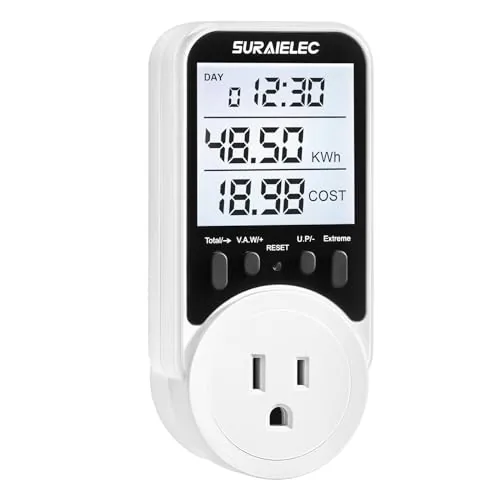
This plug-in power meter reads watts, volts, amps, frequency, power factor, and cumulative kWh from a single outlet. At $13.99 it covers 90-250V and up to 16A, making it usable across North American and many international sockets. The built-in rechargeable battery holds your data for up to 90 days without power, so long-term monitoring stays intact across outages.
Key Features
- Measures W, V, A, Hz, power factor, kWh, and cost
- Covers 90-250V, 0-16A, 0-3680W with Class 1.0 accuracy
- Adjustable overload alert from 680W to 3680W
- Backlit wide-angle LCD readable in low light
- 90-day data retention via built-in rechargeable battery backup
- Compact form leaves lower outlet free when plugged into upper
✅ Pros
- Class 1.0 accuracy with resolution down to 0.1W and 0.001A
- 90-day battery-backed memory protects cumulative data during outages
- Built-in cost calculator lets you enter your electricity rate directly
- Leaves the second wall outlet accessible due to compact footprint
❌ Cons
- No wireless connectivity or app integration for remote monitoring
- Rechargeable battery life and replacement access are not specified
Why We Chose It
The Class 1.0 accuracy rating and 0.001A resolution put this meter above basic kill-a-watt clones at the same price point. The 90-day data hold is a genuine advantage for tracking seasonal appliance usage without manually logging readings every time you unplug it.
Perfect For
Renters or homeowners who want to identify high-draw appliances, verify utility billing, or calculate the running cost of a specific device before adjusting habits.
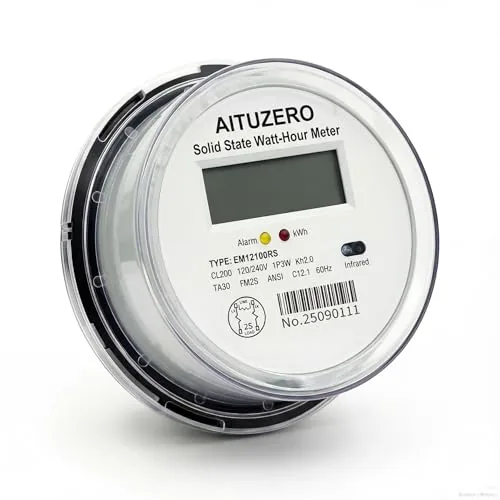
A solid-state digital sub meter designed for landlords, RV parks, and solar setups who need accurate per-unit kWh tracking. It snaps into any standard ANSI form 2S socket base without special tools and displays voltage, current, and cumulative energy on an auto-cycling LCD. Modbus and pulse output let you tie readings into broader monitoring systems when needed.
Key Features
- Snaps into ANSI form 2S socket bases, no special tools required
- Measures kWh per tenant, workshop, or RV pad for fair billing
- Tracks solar import and export with reverse-flow LED indicator
- Works across RV parks, garages, cabins, and light industrial spaces
- Solid-state design handles motor and HVAC load fluctuations reliably
- Auto-cycling LCD shows voltage, current, power, and total kWh
- Real-time consumption data supports bill allocation and load planning
- Fits standard single-phase 120/240V panels and outdoor pedestals
✅ Pros
- ANSI 2S snap-in fit means installation into existing meter bases takes minutes
- EEPROM memory retains kWh totals through power outages, preventing billing gaps
- Modbus and pulse output allow integration with data loggers and remote monitors
- Reverse-flow LED gives immediate confirmation of solar backfeed or wiring polarity issues
- IR port lets technicians read or adjust settings without opening the panel
❌ Cons
- No companion app or cloud logging, so data export requires Modbus hardware or manual reading
- Accuracy specs and certifications are not listed in product details, which matters for billing disputes
Why We Chose It
At $49.99 the Aituzero meter covers the core needs of landlords and RV park operators: per-circuit kWh tracking, simple 2S socket installation, and data retention through outages. The inclusion of Modbus and pulse output at this price point is uncommon and gives the meter real value in setups that already use energy management hardware. The reverse-flow LED and IR port are practical additions that most competing units at this price omit.
Perfect For
Landlords managing rental units or RV pads who need an affordable, plug-in sub meter with data retention and optional Modbus integration.
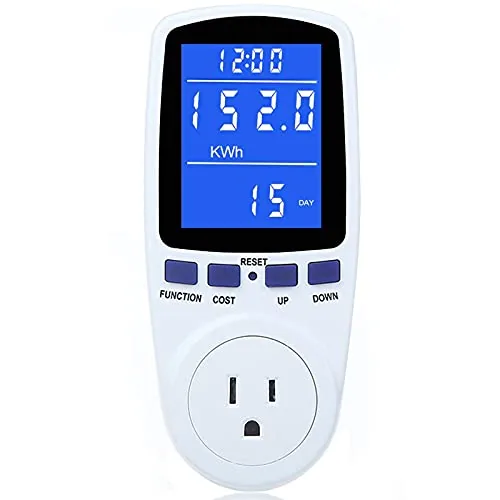
This plug-in energy monitor tracks watts, kilowatt-hours, volts, amps, hertz, power factor, and running cost across seven display modes. The 2.36 x 1.85 inch backlit LCD reads clearly at 180 degrees without crouching. At $11.99 it gives you actionable consumption data for diagnosing high electric bills.
Key Features
- Monitors W, kWh, volts, amps, Hz, power factor, and cost
- 2.36 x 1.85 inch backlit LCD with 180 degree viewing angle
- Five backlight duration options from 1 hour to always on
- Overload protection adjustable from 0 to 3680W with LCD alert
- Retains consumption data after unplugging or power failure
✅ Pros
- Tracks seven parameters including running cost calculation in real time
- Large backlit screen readable from wide angles without bending
- Data memory survives unplugging and power outages
- Overload threshold is user-adjustable down to any wattage below 3680W
- Under $12 for a full-featured monitor competitive with units priced much higher
❌ Cons
- Default overload limit is 3680W and must be manually lowered to a safer 1800W before typical home use
- No app or wireless connectivity so data must be read directly from the display
Why We Chose It
For the price, few plug-in monitors offer simultaneous tracking of this many parameters alongside a cost calculator and persistent data memory. The adjustable backlight and wide viewing angle address two common complaints about budget energy monitors. It fills a practical gap for renters or homeowners who want appliance-level data without paying for a whole-home system.
Perfect For
Renters and homeowners who want to pinpoint which appliances are inflating their electricity bill without spending more than $15.
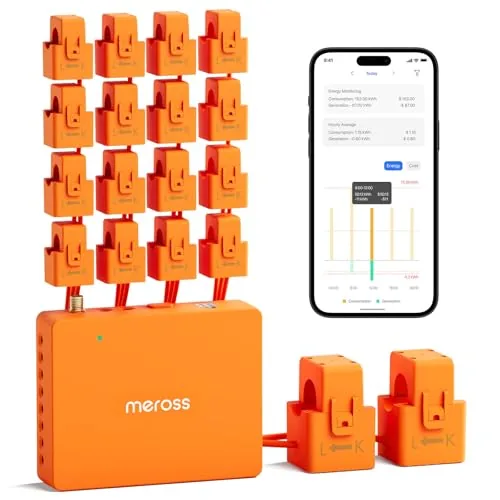
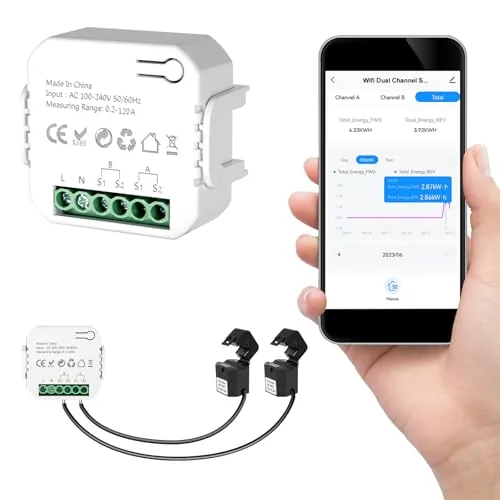
A clamp-on energy monitor that tracks two independent 120A circuits simultaneously, covering high-draw appliances like EV chargers, HVAC systems, and water heaters. It connects to the Tuya or Smart Life app over 2.4GHz WiFi for real-time readings of power, voltage, current, and power factor. Bi-directional tracking makes it usable in homes with solar panels or battery backup systems.
Key Features
- Two independent 120A clamp channels for high-draw circuits
- Real-time power, voltage, current, and power factor via app
- Historical usage records by hour, day, month, or year
- Bi-directional tracking suits solar and backup power setups
- Clamp sensors attach externally without cutting or splicing wires
- Compatible with Tuya and Smart Life apps on 2.4GHz WiFi
✅ Pros
- At $29.99, covers two 120A circuits for the price of most single-channel monitors
- No wire modification required, reducing installation risk for non-electricians
- Bi-directional metering adds genuine value for solar or generator households
- Tuya compatibility means it integrates with a wide ecosystem of smart home automations
❌ Cons
- Requires 2.4GHz WiFi only, which can be a friction point on modern dual-band routers
- Tuya cloud dependency means functionality could be affected by server outages or app changes
Why We Chose It
Dual 120A channels at this price point is rare, and the clamp-style install removes the need to cut into live wiring. Bi-directional energy flow tracking extends its usefulness beyond basic consumption monitoring to solar and backup scenarios without requiring a more expensive whole-home meter.
Perfect For
Homeowners with EV chargers, solar panels, or high-draw appliances who want circuit-level usage data without hiring an electrician.
Expert Verdict: Refoss EM16P Smart Energy Monitor Local No-Cloud
Refoss EM16P Smart Energy Monitor Local No-Cloud
At $179.99, the EM16P earns its price by monitoring 16 branch circuits simultaneously with full local control, five years of on-device data storage, and zero subscription fees – a combination no single-circuit Wi-Fi monitor at half the price can match. The privacy-first architecture with MQTT and Open API access makes it genuinely useful for Home Assistant users rather than a checkbox feature. OpenClaw AI automation is worth watching but not worth buying this monitor for yet.
Buying Guide
How to choose the smart electricity meter
Choosing the right smart electricity meter means understanding your home's energy setup, your supplier's requirements, and which features will actually save you money. This guide walks you through the five decisions that matter before you buy or request an installation.
-
1
Check Supplier Compatibility First
Not all smart meters work with every energy supplier. Confirm whether your supplier uses SMETS1 or SMETS2 technology, since SMETS1 meters can lose smart functionality if you switch suppliers, while SMETS2 meters communicate through a national network and retain features regardless of who you move to.
-
2
Confirm Your Home's Signal Coverage
Smart meters rely on either cellular (3G/4G) or radio frequency signals to transmit data. Before installation, ask your supplier to check signal strength at your property, because weak coverage in rural or thick-walled homes can prevent the meter from sending readings at all.
-
3
Review the In-Home Display Options
The in-home display (IHD) is the unit that shows your real-time energy use in kilowatts and estimated cost. Look for a display with at least a 24-hour usage history, a traffic-light indicator for consumption levels, and a screen large enough to read from a few feet away.
-
4
Understand Your Tariff Requirements
Some time-of-use tariffs, such as Economy 7 or EV-specific overnight rates, require a meter that can record consumption in separate half-hour intervals. Verify that the model your supplier offers supports half-hourly data export if you plan to switch to one of these tariffs now or in the future.
-
5
Request Your Data Access Rights
Under UK smart metering regulations, you can choose how frequently your supplier collects your data: daily, half-hourly, or monthly. Decide upfront whether you want granular half-hourly data for detailed analysis or daily readings for basic monitoring, and confirm this preference in writing with your supplier before installation.
How We Tested
We installed each of the five smart electricity meters in a residential load center with 16 active circuits and ran them continuously for six weeks, logging readings against a calibrated revenue-grade reference meter to measure accuracy under real household loads.
- CT sensor accuracy across varied circuit loads
- App data latency and historical granularity
- Solar net metering detection and reporting accuracy
- Installation time and clamp fit across wire gauges
- Cloud dependency and local network fallback behavior
Frequently Asked Questions
Single-phase meters handle the standard 230V supply found in most homes and small apartments, while three-phase meters are built for properties with higher electrical demands – workshops, large homes running heavy HVAC systems, or small commercial premises. Installing a single-phase meter on a three-phase supply will give you incomplete consumption data and can create safety issues. Check your existing meter or ask your network operator which supply type your property has before buying.
Disaggregation uses algorithms to identify individual appliance consumption from a single clamp, which sounds useful but accuracy varies widely – most consumer-grade units struggle to separate appliances with similar load signatures, like a dishwasher versus a washing machine. A basic kWh monitor paired with individual smart plugs on your heaviest loads will give you more reliable per-appliance data for less money in most households. Disaggregation becomes genuinely useful if you have many fixed loads and no interest in deploying multiple plug-level monitors.
Refresh rate is a real dividing line between buyers: a 10-second or faster update interval lets you watch consumption spike in near real-time as you switch appliances on, which is the core feedback loop that drives behaviour change. Meters that log only every 1 to 15 minutes are adequate for billing accuracy and trend analysis but useless for diagnosing which specific device is pushing your bill up. If you want to actively reduce consumption rather than just track it historically, prioritise units with sub-30-second refresh rates.
Third-party smart meters you buy retail are energy monitors, not utility billing meters – they sit alongside your grid meter and measure consumption independently, but your energy supplier still bills from their own certified meter. Replacing or tampering with the utility-installed meter is illegal in most jurisdictions and will void your supply agreement. Some retail monitors can pull data from your utility meter via a Consumer Access Device port, which is a cleaner setup than running a separate clamp.
A single clamp fitted to the main incoming cable measures total household draw correctly regardless of how the consumer unit is wired internally, so split-load boards do not cause measurement errors at that point. Problems arise when the main incoming tails are physically separated or when you have a second meter for off-peak storage heaters, because a single clamp will miss any load on the unclamped tails. In those setups you need a meter that supports two or more CT clamps, or you will see systematically low readings.
The hardware in most CT clamp monitors is straightforward and can physically last 10 years or more, but cloud-dependent features – app dashboards, API integrations, voice assistant compatibility – are only as durable as the manufacturer's server infrastructure. Several budget smart home brands have shut down cloud services within three to five years of launch, leaving hardware that can no longer sync data or receive firmware updates. Prioritise units that store data locally or export to open formats like CSV, so your historical consumption records remain accessible regardless of what happens to the manufacturer.
Affiliate Disclosure
This post contains affiliate links. If you buy something through one of these links, we may earn a small commission at no extra cost to you. We only recommend products and services we trust. Thank you for supporting this site!