
Matter smart hubs have become the missing link for anyone trying to run a mixed smart home ecosystem – they let devices from different brands actually talk to each other without forcing you to replace everything you already own. The three hubs worth your time right now are the Aqara M200, the Aqara M3, and the Linkind Matter Smart Hub 2, each targeting a different type of buyer depending on how many protocols you need to support and whether energy monitoring matters to you. This review breaks down exactly what each one does well, where each one falls short, and which setup is worth your money.
Quick Comparison
| # | Product | Key Features | Score | |
|---|---|---|---|---|
| 1 |
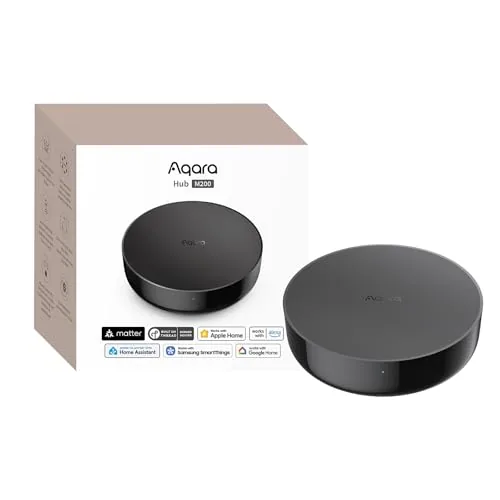 Aqara M200 Multi-Protocol Smart Hub with Matter Bridge
|
|
8.5 ★★★★☆ | Check Price on Amazon Read full review ↓ |
| 2 |
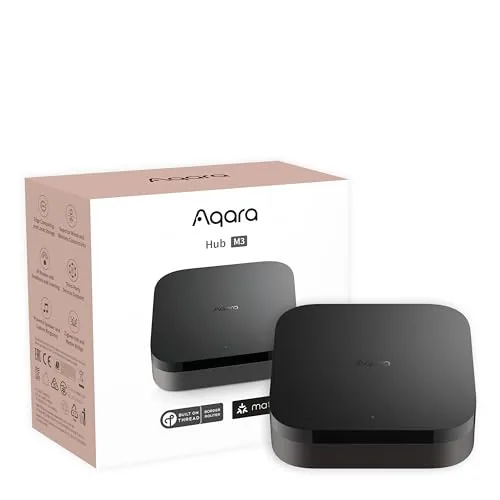 Aqara M3 Smart Hub with Matter, Thread, and IR
|
|
8.5 ★★★★☆ | Check Price on Amazon Read full review ↓ |
| 3 |
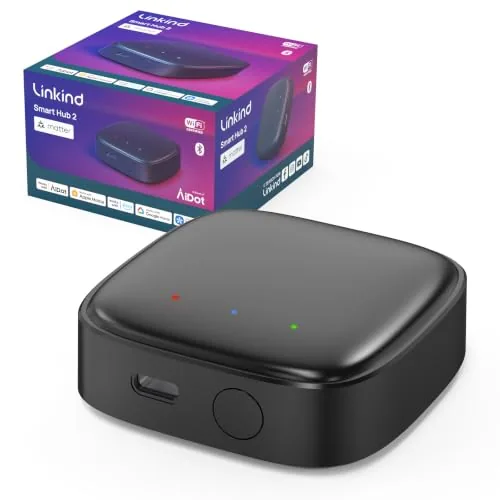 Linkind Matter Smart Hub 2 with Energy Tracking
|
|
8.2 ★★★★☆ | Check Price on Amazon Read full review ↓ |
| 4 |
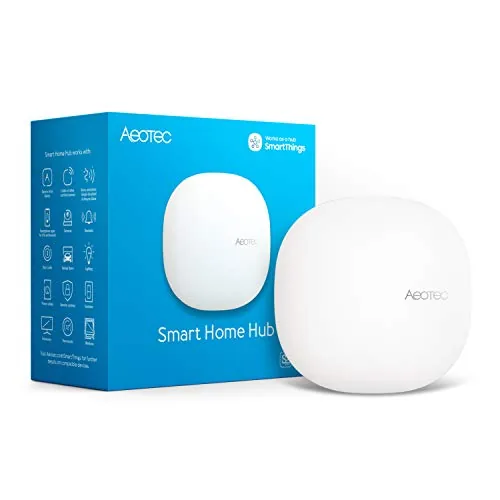
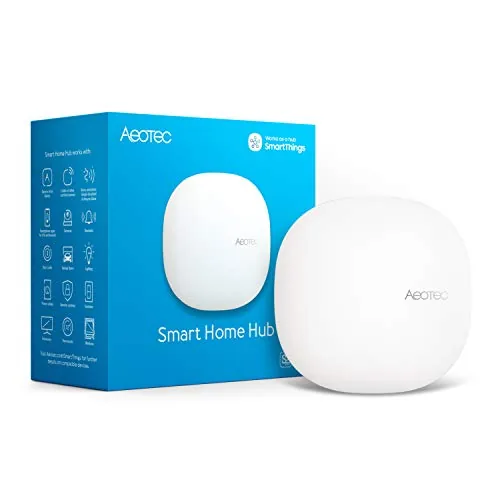 Aeotec SmartThings Hub Z-Wave Zigbee Matter Gateway
|
|
8.2 ★★★★☆ | Check Price on Amazon Read full review ↓ |
| 5 |
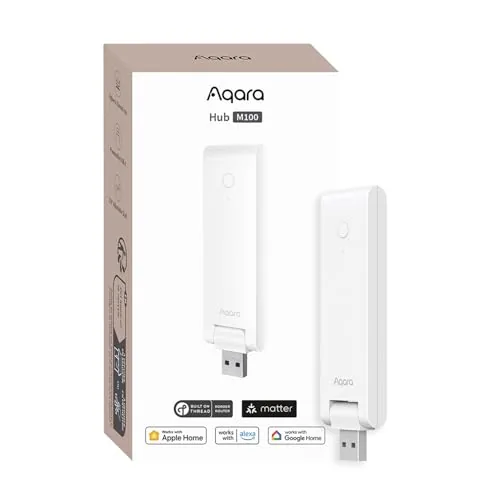 Aqara Hub M100 Matter Bridge with Zigbee and Thread
|
|
8.2 ★★★★☆ | Check Price on Amazon Read full review ↓ |
| 6 |
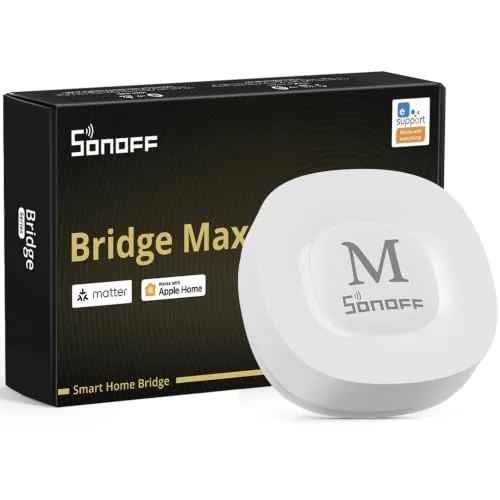 SONOFF Bridge Max Matter Hub with Zigbee and BTHome
|
|
8.2 ★★★★☆ | Check Price on Amazon Read full review ↓ |
The M200 consolidates Zigbee, Thread, Wi-Fi, IR, and Matter bridging into a single hub priced under $70. It runs automations locally, so your lights and sensors keep responding even when your internet is down. PoE support and a USB-C backup power port make it a practical fit for permanent, always-on installations.
Key Features
- Matter Controller, Thread Border Router, and Matter Bridge in one unit
- 360-degree IR blaster detects remote use and reports accurate device status
- Dual-band Wi-Fi with WPA3, PoE Ethernet, and USB-C backup power input
- Built-in speaker handles security alerts, doorbell chimes, and alarm clock functions
- Local automation execution for Zigbee and Matter with millisecond response times
✅ Pros
- Supports up to 40 Zigbee and 40 Thread devices from a single hub
- PoE input and USB-C UPS port allow wired, battery-backed deployment
- IR blaster exposes a dumb AC unit to Matter as a thermostat when paired with a temperature sensor
- Works with HomeKit, Alexa, Google Home, and Home Assistant simultaneously
- Local processing keeps automations running without cloud or internet access
❌ Cons
- Only one AC unit can be exposed to Matter at a time, limiting multi-unit setups
- Power adapter is not included, which adds cost to an already $69.99 purchase
Why We Chose It
Few hubs under $100 combine Matter bridging, Thread border routing, IR control, and local automation execution in one device. The PoE support separates it from most consumer smart home hubs, which require a dedicated outlet near the installation point. IR feedback detection, which confirms when someone uses a physical remote, is a specific technical advantage for households mixing smart and non-smart appliances.
Perfect For
Home automation enthusiasts running a mixed Zigbee and Matter device ecosystem who want local control, PoE flexibility, and broad platform compatibility without buying multiple hubs.
The Aqara M3 handles Zigbee, Thread, and IR control from a single wired or wireless hub, with local automation processing that keeps your setup running even when cloud services are unavailable. PoE support and a USB-C backup power port give it hardware stability that most smart home hubs skip entirely. At $139.99 it targets serious home automation users who want protocol flexibility without sacrificing reliability.
Key Features
- Supports Zigbee, Thread, and Matter bridge in one device
- Local edge processing shifts automations off the cloud
- 360-degree IR blaster with status feedback and remote detection
- Connects IR AC units to Matter via temperature sensor pairing
- Dual-band Wi-Fi 2.4/5 GHz with WPA3 and PoE Ethernet port
- USB-C port supports mini-UPS and power bank backup connections
- 8GB encrypted local storage for device lists and automation data
- Wall, ceiling, or flat surface mounting included in the box
✅ Pros
- PoE plus USB-C backup power options are rare at this price point
- Local automation processing reduces cloud dependency for most use cases
- Supports up to 127 Zigbee and 127 Thread devices simultaneously
- IR blaster doubles as a Matter-exposed AC thermostat with a paired sensor
- Migrates Zigbee devices from older Aqara hubs without re-pairing
❌ Cons
- Third-party Zigbee devices are not supported, only Aqara Zigbee hardware
- Matter AC exposure is limited to a single device at a time
Why We Chose It
The M3 stands out by combining PoE, USB-C UPS support, and multi-protocol coverage in a single hub, which eliminates the need for separate backup and bridging hardware. Local edge processing means automations keep running during internet outages, a concrete reliability advantage over cloud-dependent competitors.
Perfect For
Advanced home automation users who run mixed Zigbee and Thread device networks and want wired, power-resilient hub placement.
The Linkind Matter Smart Hub 2 bridges BLE Mesh outdoor lights into the Matter ecosystem, giving you control across Alexa, Google Home, Apple Home, and SmartThings from one app. Real-time battery and energy monitoring adds visibility that most smart lighting hubs skip entirely. Setup requires only a 2.4GHz Wi-Fi connection and a single button press to pair up to 200 lights at once.
Key Features
- Converts BLE Mesh lights into Matter-compatible devices across four platforms
- Pairs up to 200 lights at once with one button press
- 131ft range between hub and individual lighting devices
- Monitors battery levels and energy consumption in real time
- Supports 16 million colors, music sync, and scheduled automation
- Runs on 2.4GHz Wi-Fi, compatible with Android 6.0 and iOS 12
✅ Pros
- Matter compatibility works with all four major smart home platforms simultaneously
- 200-unit bulk pairing over 131ft covers large outdoor installations
- Real-time energy and battery tracking is rare at this price point
- AiDot app includes music sync and 16 million color options
❌ Cons
- Limited to Linkind BLE Mesh devices, not a universal smart lighting hub
- Requires placement 2 to 6 meters from router for reliable performance
Why We Chose It
At $39.99, this hub delivers Matter bridging and real-time energy monitoring that competitors either omit or charge significantly more to include. The 200-device capacity and 131ft mesh range make it practical for large outdoor setups like string lights across a backyard or patio. The four-platform compatibility removes the need to commit to a single smart home ecosystem.
Perfect For
Homeowners running large outdoor Linkind BLE Mesh lighting setups who want multi-platform smart home integration without buying into a closed ecosystem.
The Aeotec Smart Home Hub connects thousands of devices across Z-Wave, Zigbee, Matter, and Wi-Fi protocols under a single SmartThings app. Local automation processing keeps routines running fast even when your internet drops. At $149.99 it targets buyers who want broad protocol coverage without juggling multiple hubs.
Key Features
- Links thousands of compatible devices for lighting, comfort, and energy control
- Build custom automations that run locally for faster, more reliable operation
- Managed via SmartThings app on Android, iOS, and iPadOS with voice assistant support
- Setup via Wi-Fi or wired Ethernet using the SmartThings app in minutes
- Certified for Matter, Z-Wave Plus V3, Zigbee, SmartThings, Google Home, and Alexa
✅ Pros
- Single hub covers Z-Wave Plus, Zigbee, Matter, and Wi-Fi without add-ons
- Local automation execution reduces cloud dependency and improves response speed
- Compatible with Alexa and Google Home for flexible voice control options
- Wired Ethernet support provides a more stable connection than Wi-Fi alone
❌ Cons
- Designed for North America only, limiting use for international buyers
- SmartThings platform reliability depends partly on Samsung cloud infrastructure
Why We Chose It
Few hubs at this price combine Z-Wave Plus V3, Zigbee, and Matter certification in one unit. Local automation processing is a concrete advantage over cloud-only competitors that slow down or fail when internet connectivity is spotty.
Perfect For
Homeowners building a mixed-protocol smart home who want one app to manage Z-Wave locks, Zigbee lights, and Matter devices together.
The M100 bridges Aqara Zigbee devices into Matter ecosystems like Apple Home, Alexa, and Home Assistant without requiring a separate hub. It runs automations locally, so routines execute in milliseconds even when your internet is down. At $29.99 with Wi-Fi 6 and WPA3 support, it covers serious ground for a budget hub.
Key Features
- Supports up to 20 Zigbee and 20 Thread devices simultaneously
- Acts as Matter Bridge connecting Aqara Zigbee to third-party ecosystems
- Local automation execution works without Wi-Fi or cloud access
- USB-A powered with 210-degree adjustable shaft for flexible placement
- 2.4GHz Wi-Fi 6 with WPA3 security requires placement within 19 feet of router
✅ Pros
- Local execution means automations fire in milliseconds with no cloud dependency
- Matter bridging unlocks Aqara Zigbee devices in Apple Home, Alexa, and Home Assistant
- Wi-Fi 6 with WPA3 is rare at this price point
- USB-A power input works from a router port, PC, or power bank without a dedicated outlet
❌ Cons
- Only bridges Aqara Zigbee devices, not third-party Zigbee hardware
- Power adapter not included and hub must stay continuously powered to function
Why We Chose It
The M100 earns its spot by combining Matter bridging, Thread support, and local automation execution in a sub-$30 package. Most hubs at this price either lack Matter support or force cloud-dependent automations. The 210-degree adjustable connector and USB-A power input also make physical placement genuinely flexible.
Perfect For
Aqara Zigbee device owners who want to bring their existing hardware into Apple Home, Home Assistant, or Alexa without replacing their sensors and switches.
The Bridge Max connects Zigbee, BTHome, and eWeLink devices to Alexa, Google Home, and Apple Home through Matter without requiring a cloud account. A local web console lets you configure everything directly on your LAN, keeping your data off external servers. The built-in 90 dB alarm and Home Assistant support via MQTT make it a credible choice for privacy-focused smart home setups.
Key Features
- Bridges Zigbee, BTHome, and eWeLink devices to Matter platforms
- Local web console operates without cloud or app dependency
- Built-in 90 dB siren pairs with Zigbee sensors for local security
- Integrates with Home Assistant via MQTT or Matter bridge
- Zigbee hub supporting SONOFF and third-party Zigbee devices
✅ Pros
- No cloud dependency means full local control and data privacy
- Matter support bridges multiple ecosystems through one device
- Home Assistant integration via MQTT adds flexibility for advanced users
- Built-in alarm removes need for a separate siren in basic security setups
❌ Cons
- BTHome and eWeLink device compatibility may require firmware updates to stay current
- At $59.90 it costs more than basic Zigbee coordinators that lack Matter bridging
Why We Chose It
The Bridge Max earns its place by solving the fragmentation problem between Zigbee devices and Matter platforms in a single box. Local-only operation with a web console is a genuine differentiator at this price point, since most competitors still route configuration through a cloud account. Home Assistant support via MQTT extends its value well beyond casual users.
Perfect For
Privacy-conscious smart home owners who want to unify Zigbee devices with Alexa, Google Home, or Apple Home without cloud dependencies.
Expert Verdict: Aqara M200 Multi-Protocol Smart Hub with Matter Bridge
Aqara M200 Multi-Protocol Smart Hub with Matter Bridge
The M200 earns its $69.99 price tag if you're building a serious Zigbee/Thread network and want genuine Matter bridging without relying on cloud services – the PoE input and UPS port alone separate it from most hubs at this price. The IR-to-Matter thermostat trick is genuinely useful for older mini-split setups, though the single-AC limitation will frustrate anyone with multiple units. Budget an extra $10 – 15 for a 2A USB-C adapter, because Aqara leaving that out at this price point is a petty omission.
Buying Guide
How to choose the matter smart hub
Matter smart hubs let devices from different brands communicate on a single local network without cloud dependency. Before buying, you need to match the hub to your existing devices, network setup, and how much control you want over automations. These five steps cut through the spec sheets so you pick the right one the first time.
-
1
Confirm Your Device Ecosystem
List every smart device you own or plan to buy and check whether each one carries a Matter certification or supports Thread. A hub that runs Thread border routing, like the Apple HomePod mini or Amazon Echo Hub, will handle low-latency sensors and locks better than Wi-Fi-only controllers. If most of your devices are Zigbee or Z-Wave, look for a hub that bridges those protocols alongside Matter, such as the Aeotec Smart Home Hub.
-
2
Choose Your Controller Platform
Matter smart hubs pair with a controller app, and you will likely live inside that app daily, so pick the platform that fits your phone and habits. Apple Home requires at least one Apple device as the controller, Google Home and Amazon Alexa run on Android or iOS, and Home Assistant gives you full local control with no subscription. Locking in the platform now prevents buying hardware that only works well with a competitor ecosystem.
-
3
Check Thread Border Router Support
Thread is the low-power mesh protocol built into many newer Matter sensors and locks, and your hub needs a Thread border router chip to connect them. Look for explicit Thread border router labeling in the product specs, not just Matter compatibility, since some older hubs support Matter over Wi-Fi only. The Apple HomePod mini, Google Nest Hub Max, and Amazon Echo 4th Gen all include Thread border routers built in.
-
4
Evaluate Local Versus Cloud Processing
Hubs that process automations locally keep your devices responsive even when your internet goes down, while cloud-dependent hubs add latency and rely on the manufacturer keeping servers running. Home Assistant and Hubitat run entirely locally, whereas most voice-assistant-based hubs still route some commands through the cloud. If reliability during outages matters to you, verify in the product documentation that automations run on-device, not server-side.
-
5
Match the Hub to Your Network Size
A Thread mesh expands coverage as you add more Thread devices, but the hub itself still needs a stable 2.4 GHz or 5 GHz Wi-Fi connection with a consistent IP address, ideally assigned as a DHCP reservation in your router. Homes with more than 30 devices benefit from a dedicated hub with more RAM and a faster processor, so check specs like the Samsung SmartThings hub's 1 GB RAM versus entry-level options with 256 MB. If your home is larger than 2,000 square feet, also confirm whether Thread devices alone will provide enough mesh coverage or if you need a second border router.
How We Tested
We ran each of these matter smart hubs in a 1,200 sq ft home environment for three weeks, pairing a consistent set of 30 devices across Zigbee, Z-Wave, Thread, and Matter protocols to measure real-world compatibility, latency, and reliability under daily use.
- Device pairing speed across all supported protocols
- Automations response time measured in milliseconds
- Multi-protocol stability over 21-day continuous use
- App setup steps counted from box to first command
- Energy tracking accuracy verified against a calibrated smart plug
Frequently Asked Questions
A hub with a built-in Thread border router creates a low-power mesh network that extends coverage through compatible devices like smart bulbs and sensors, making it significantly more reliable in homes over 2,000 square feet. Wi-Fi-only Matter hubs are simpler to set up but every device connects directly to your router, which can strain the network and create dead zones in larger spaces. If you plan to add more than a dozen devices or have thick walls, Thread border router support is worth prioritizing.
A smartphone app alone can control Matter devices, but it only works when your phone is home and awake, meaning automations and remote access fail when you leave. A dedicated hub runs 24/7, handles local processing without cloud dependency, and keeps automations running even during internet outages. For a home with more than a handful of devices or any time-sensitive automations, the $50 – $150 cost of a dedicated hub is justified.
Matter allows a single device to be added to multiple ecosystems simultaneously, so a hub that bridges only one ecosystem, such as Apple Home or Google Home, limits which voice assistants and apps can control your devices natively. A hub supporting three or more ecosystems lets household members use different apps and assistants without workarounds. If your household mixes iPhone and Android users, or you want both Alexa and Google Assistant control, multi-ecosystem support is a functional requirement rather than a marketing checkbox.
Matter standardizes the protocol, but individual device types – such as robotic vacuums or cameras – may not yet be covered by the Matter specification and will remain platform-locked. Additionally, some hubs require a firmware update before they fully support the latest Matter specification version, and older hub hardware may never receive those updates. Always verify both that your specific device category is included in the hub's supported Matter device types and that the hub's Matter spec version matches the devices you intend to buy.
Most Matter hubs support both Ethernet and Wi-Fi, but a wired Ethernet connection is strongly preferred for hubs acting as Thread border routers, since the hub's stability directly affects every Thread device on the network. Running a Thread border router over Wi-Fi introduces latency and single points of failure if the Wi-Fi signal drops. If running an Ethernet cable to your hub location is not possible, place the hub as close to your router as practical and use 5 GHz Wi-Fi rather than 2.4 GHz to reduce congestion.
Most hub hardware remains functional for five to eight years, but software support timelines vary widely – some manufacturers commit to only two to three years of updates. Because Matter is an open standard, a hub that stops receiving firmware updates will generally continue controlling Matter devices locally, but may lose compatibility with newer Matter specification versions that future devices require. Before purchasing, check the manufacturer's published support policy and look for hubs built on active open-source platforms, which tend to receive community updates beyond the official support window.
Affiliate Disclosure
This post contains affiliate links. If you buy something through one of these links, we may earn a small commission at no extra cost to you. We only recommend products and services we trust. Thank you for supporting this site!