
Smart air purifiers have moved well past basic on/off controls – today’s models let you schedule filtration cycles, monitor air quality in real time, and adjust fan speed from your phone without getting off the couch. After testing several options across different room sizes and use cases, three Levoit models stood out: the Core 400S-P for large rooms, the Vital 200S-P rated up to 1,875 sq ft, and the Core 200S-P built with pet owners in mind. Here’s what each one actually does well, where each falls short, and which buyer each one fits.
Quick Comparison
| # | Product | Key Features | Score | |
|---|---|---|---|---|
| 1 |
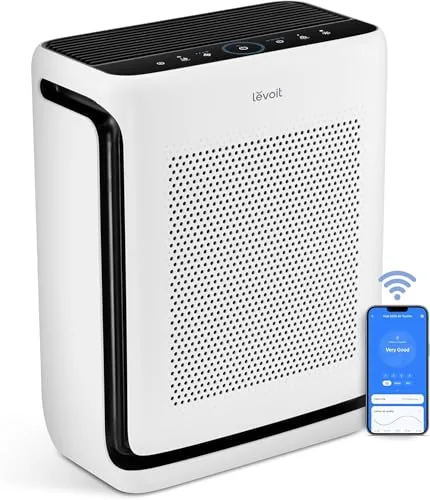
 Levoit Core 400S-P Smart Air Purifier for Large Rooms
|
|
8.5 ★★★★☆ | Check Price on Amazon Read full review ↓ |
| 2 |
 Levoit Vital 200S-P Smart Air Purifier 1875 Sq Ft
|
|
8.3 ★★★★☆ | Check Price on Amazon Read full review ↓ |
| 3 |
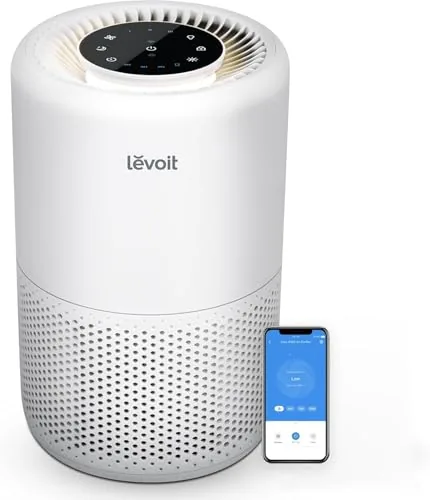 Levoit Core 200S-P Smart Air Purifier for Pets
|
|
8.2 ★★★★☆ | Check Price on Amazon Read full review ↓ |
| 4 |
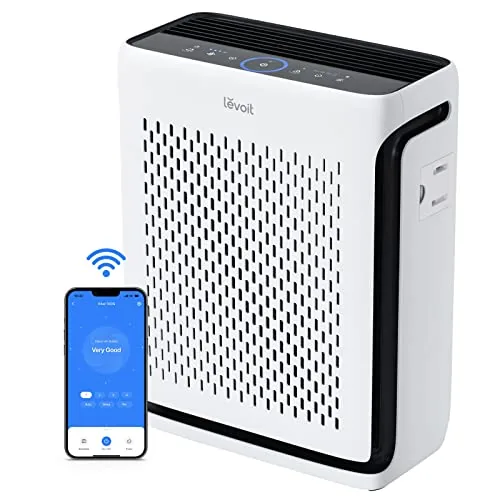 Levoit Vital 100S-P Pet Air Purifier with Smart App
|
|
8.2 ★★★★☆ | Check Price on Amazon Read full review ↓ |
| 5 |
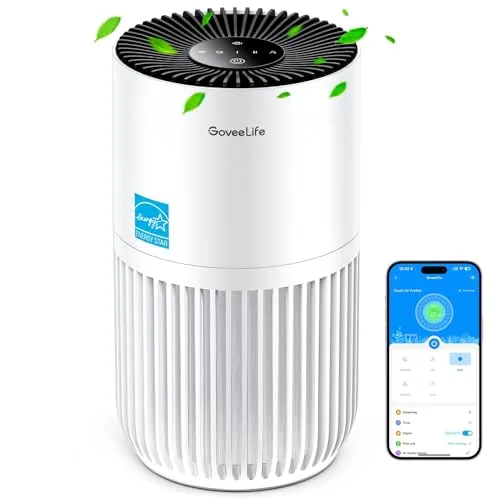 GoveeLife Smart Mini Air Purifier with App Control
|
|
7.8 ★★★★☆ | Check Price on Amazon Read full review ↓ |
| 6 |
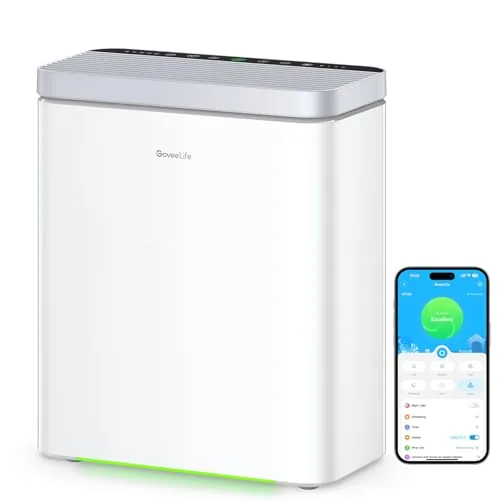 GoveeLife Smart Air Purifier 1046 sq ft HEPA
|
|
7.8 ★★★★☆ | Check Price on Amazon Read full review ↓ |
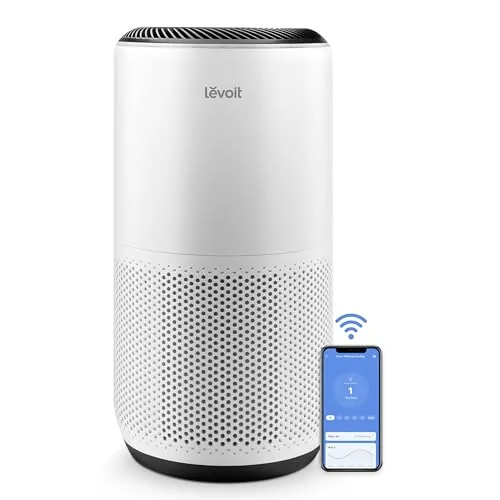
The Core 400S-P covers up to 1,733 sq ft per hour with AHAM-verified CADR ratings of 231 CFM smoke, 240 CFM dust, and 259 CFM pollen. A laser particle sensor continuously reads PM2.5 levels and displays them in real time, letting the unit adjust automatically. At $189.99, it delivers independently certified performance in a Wi-Fi connected package.
Key Features
- AHAM-verified CADR: smoke 231, dust 240, pollen 259 CFM
- Covers up to 1,733 sq ft in one hour at smoke CADR
- 3-in-1 filter captures 99.97% of particles down to 0.1 microns
- Laser dust sensor monitors and displays PM2.5 levels continuously
✅ Pros
- AHAM VERIFIDE certification means performance claims are independently tested, not self-reported
- High CADR numbers make it genuinely useful in large open-plan spaces, not just small rooms
- Real-time PM2.5 laser sensor gives concrete air quality data rather than a vague indicator light
- Wi-Fi connectivity allows scheduling and monitoring without walking to the unit
❌ Cons
- Filter replacement costs add to the long-term price, which buyers should factor in upfront
- 1,733 sq ft coverage rating assumes one air change per hour, so allergy sufferers may want to run it in a smaller space for more frequent cycling
Why We Chose It
Third-party AHAM verification sets this unit apart from the many air purifiers that only publish self-tested numbers. The 231 CFM smoke CADR is high for this price bracket, and the laser PM2.5 sensor provides actionable data rather than a color-coded guess. Smart home integration through the VeSync app rounds out a package that punches above its $189.99 price point.
Perfect For
Open-plan apartment dwellers or pet owners who want verified air cleaning performance in rooms above 800 sq ft without spending over $200.
The Vital 200S-P covers up to 1875 square feet with AHAM-verified CADR ratings of 250 CFM for smoke, 254 CFM for dust, and 289 CFM for pollen. A dual air intake design, including a U-shaped inlet, pulls in pet hair and odors without clogging. Wi-Fi connectivity lets you control and schedule purification remotely through an app.
Key Features
- AHAM VERIFIDE certified for performance, safety, and energy efficiency
- CADR rated: smoke 250 CFM, dust 254 CFM, pollen 289 CFM
- Three-stage filtration targets pollen, pet dander, hair, and dust
- Covers large rooms up to 1875 sq ft on high fan speed
- Dual air intake with U-shaped inlet reduces pet hair clogging
✅ Pros
- AHAM independent certification confirms the CADR numbers are accurate and not self-reported
- 289 CFM pollen rating is strong for a unit at this price point
- U-shaped secondary inlet meaningfully reduces filter clogging in pet households
- App control allows scheduling and speed adjustments without physical access to the unit
❌ Cons
- Replacement filter costs add up annually and should be factored into the total ownership price
- At max fan speed, noise levels may be disruptive in bedrooms or quiet spaces
Why We Chose It
The AHAM VERIFIDE seal means the 1875 sq ft coverage claim and CADR figures were independently tested, not self-reported, which is uncommon at this price. The dual intake design is a practical engineering choice for pet owners rather than a cosmetic feature. At $167.96 with verified large-room performance, it competes against units priced $50 to $80 higher.
Perfect For
Pet owners or allergy sufferers who need verified large-room air cleaning without paying premium brand prices.
The Core 200S-P cycles air in a 140 sq ft room 4.8 times per hour, making it a practical pick for pet owners dealing with dander and odors. At 27dB on its lowest setting, it runs quietly enough for bedrooms and nurseries. Smart and voice control add convenience without inflating the price beyond $75.
Key Features
- AHAM VERIFIDE certified for independently tested air cleaning performance
- Use genuine Levoit filters and track life via the app
- 360 degree intake refreshes 140 sq ft rooms 4.8 times per hour
- Three-stage filtration captures particles down to 0.1 microns and absorbs odors
- is quietly as 27dB with a Display Off mode for sleep
✅ Pros
- Covers 140 sq ft at 4.8 air changes per hour, solid for small rooms
- 27dB minimum noise level is genuinely low for uninterrupted sleep
- Three-stage filter handles dander, fine dust, and pet odors in one pass
- AHAM VERIFIDE certification means performance claims are independently verified
- Smart and voice control at under $75 is good value for the category
❌ Cons
- 140 sq ft coverage limit means you need multiple units for larger spaces
- Ongoing filter replacement costs add to the total cost of ownership
Why We Chose It
The Core 200S-P earns its place by combining independently verified performance with a noise floor low enough for light sleepers. Three-stage filtration that addresses both fine particles and odors in one unit is practical for pet households. Smart controls and app-based filter monitoring make day-to-day use straightforward.
Perfect For
Pet owners in studio apartments, dorm rooms, or bedrooms up to 140 sq ft who want verified filtration without a large footprint or high upfront cost.
The Vital 100S-P covers 222 sq ft at 4.8 air changes per hour, making it a practical choice for bedrooms or dorm rooms with pets. Its washable pre-filter cuts down on replacement costs, and the 25dB Sleep Mode keeps noise low enough for light sleepers. App control via VeSync adds scheduling flexibility without requiring you to get up.
Key Features
- AHAM VERIFIDE certified for independently verified air cleaning performance
- Cleans 222 sq ft 4.8 times per hour, 1073 sq ft once per hour
- Pet Mode plus wide U-shaped inlet captures airborne fur and large particles
- 99.97% filtration efficiency for particles 0.1 to 0.3 microns
- Sleep Mode drops fan noise to 25dB with automatic display dimming
- Washable pre-filter reduces ongoing filter replacement frequency
- Activated carbon layer targets pet odors, fumes, and VOCs
- Scheduling lets you set fan speed and mode for specific time windows
- VeSync app controls settings, timers, filter life, and voice assistant integration
✅ Pros
- AHAM VERIFIDE certification means performance claims are independently verified
- 25dB Sleep Mode is quiet enough for light sleepers in small bedrooms
- Washable pre-filter lowers the cost of ongoing maintenance
- Pet Mode with U-shaped inlet actively targets fur and dander at the intake
- App scheduling lets you automate fan speed changes throughout the day
❌ Cons
- Coverage drops to one air change per hour in larger open-concept spaces above 222 sq ft
- Replacement filter costs are an ongoing expense beyond the washable pre-filter
Why We Chose It
The AHAM VERIFIDE certification separates this unit from uncertified competitors that rely on self-reported performance numbers. The combination of Pet Mode, a washable pre-filter, and 25dB sleep operation addresses the three most common pain points for pet owners using a purifier in a bedroom. App-based scheduling adds genuine utility rather than just a checkbox feature.
Perfect For
Pet owners in apartments or single rooms up to 222 sq ft who want verified filtration performance and quiet overnight operation.
This compact purifier covers 376 sq ft per hour using a dual-channel 360-degree intake, and runs as quietly as 24dB in sleep mode. App control, Alexa compatibility, and a three-schedule custom fan mode give you more automation options than most purifiers at this price. A built-in aromatherapy pad lets you add essential oils directly to the airflow.
Key Features
- App and Alexa control for power, speed, timer, and filter reminders
- Dual-channel 360-degree intake purifies 376 sqft once per hour
- Three-schedule custom mode sets different fan speeds by time of day
- Sleep mode runs at 24dB for quiet overnight operation
- Built-in aromatherapy pad holds 4 to 5 drops of essential oil
- Auto mode pairs with sold-separately H5106 monitor to adjust speed by PM2.5
- Replacement filters and aroma pads available on Amazon via listed ASINs
✅ Pros
- 24dB sleep mode is genuinely quiet for bedroom use
- 376 sqft hourly coverage is solid for a purifier under $35
- Three-time fan schedule adds automation most budget purifiers skip
- Energy Star, ETL, FCC, and CA65 certified for verified safety and efficiency
- Aromatherapy function adds diffuser capability without a separate device
❌ Cons
- Auto mode requires buying the H5106 air quality monitor separately, adding cost
- No 5GHz Wi-Fi support may cause setup friction in dual-band homes
Why We Chose It
At $34.99, few purifiers offer app scheduling, Alexa integration, and a 376 sqft coverage rating together. The 24dB noise floor is a measurable advantage for light sleepers, and the aromatherapy pad is a practical addition rather than a gimmick. The certification stack, including Energy Star and CA65, adds credibility that many sub-$40 purifiers lack.
Perfect For
Renters or apartment dwellers who want app-controlled air purification in a bedroom or small living space without spending over $40.
A 135 CFM CADR purifier that handles rooms up to 1046 sq ft with one air change per hour, or 523 sq ft twice per hour. App control, Alexa integration, and a 24dB sleep mode make it practical for bedrooms and open living areas. At $72.99, it competes well against similarly spec’d units at higher price points.
Key Features
- 135 CFM CADR covers 1046 sq ft once per hour
- App, Alexa, and IFTTT control with real-time air quality monitoring
- Turbo mode for rapid purification when air quality drops sharply
- 99.97% filtration efficiency for particles 0.1 to 0.3 microns, lab verified
- Auto mode adjusts fan speed based on built-in particle sensor
- App-controlled RGB lighting doubles as a color-coded air quality indicator
- Washable pre-filter extends life of the 3-stage filtration system
- Sleep mode runs at 24dB with reduced speed for overnight use
✅ Pros
- 135 CFM CADR is solid coverage for the $72.99 price point
- 24dB sleep mode is genuinely quiet for bedroom use
- Washable pre-filter reduces ongoing replacement costs
- Alexa and IFTTT support adds scheduling flexibility without extra hardware
❌ Cons
- No 5GHz Wi-Fi support, which can complicate setup on modern dual-band routers
- Exact PM2.5 readings require purchasing a separate GoveeLife H5106 sensor
Why We Chose It
This unit delivers a competitive CADR rating and genuine smart home integration at a price well below most large-room purifiers. The washable pre-filter and 24dB sleep mode address two of the most common long-term complaints about budget air purifiers, ongoing filter costs and nighttime noise.
Perfect For
Renters or homeowners who want app-controlled air purification for a bedroom or open living space up to around 500 sq ft with two air changes per hour.
Expert Verdict: Levoit Core 400S-P Smart Air Purifier for Large Rooms
Levoit Core 400S-P Smart Air Purifier for Large Rooms
The Core 400S-P earns its 8.5 with AHAM-verified CADR numbers you can actually trust – 231 CFM smoke, 240 CFM dust, 259 CFM pollen – and a laser PM2.5 sensor that shows you real particulate data rather than a color-coded guess. Factor in filter replacement costs before buying, and if you have allergies, plan to run it in a 700 – 900 sq ft space rather than the full 1,733 sq ft rating so you're getting closer to 4 – 5 air changes per hour instead of one. At this price tier, the independent certification makes it a more defensible purchase than uncertified competitors with similar spec sheets.
Buying Guide
How to choose the smart air purifier
Smart air purifiers connect to your phone or smart home system and adjust filtration automatically based on real-time air quality readings. Before you buy, you need to match the unit to your room size, filter type, and the specific pollutants you want to remove. These five steps cut through the spec-sheet noise so you pick the right model the first time.
-
1
Match Coverage to Room Size
Every smart air purifier lists a CADR rating and a maximum square footage. Choose a unit rated for at least your room's actual square footage, and size up if you have high ceilings above 9 feet or an open floor plan. Running an undersized unit at full speed constantly will burn out the motor faster and still leave air quality poor.
-
2
Identify Your Target Pollutants
HEPA filters catch particles like dust, pollen, and pet dander down to 0.3 microns, but they do nothing for VOCs, smoke odors, or gases. If you have chemical sensitivities or live near traffic, look for a unit that combines a true HEPA layer with an activated carbon filter rated by weight, ideally 3 lbs or more of carbon. Allergy sufferers should confirm the unit carries a HEPA H13 or H14 certification, not just 'HEPA-type.'
-
3
Check Your Smart Home Compatibility
Most smart air purifiers work through a proprietary app, but compatibility with Alexa, Google Home, or Apple HomeKit varies by brand and even by model within a brand. Confirm compatibility on the manufacturer's spec page before purchase, not on third-party retail listings, which are frequently out of date. If you run automations through a hub like Home Assistant, check whether the device uses a local API or depends entirely on a cloud connection.
-
4
Calculate Long-Term Filter Costs
The purchase price of the unit is only part of the cost. Replacement HEPA and carbon filter sets for popular models range from $30 to $120 per year depending on usage and air quality in your area. Divide the annual filter cost by 12 and add it to any subscription fee the app charges before comparing models side by side.
-
5
Verify Noise Output at Each Speed
Manufacturers list decibel ratings at maximum fan speed, but you will run the unit on a middle or auto setting most of the time. Look for reviews or spec sheets that include dB readings at low and medium speeds, targeting under 35 dB for a bedroom and under 50 dB for a living area. Some smart purifiers log run-time data in the app, which can tell you how often the unit actually ramps up to high speed in real-world conditions.
How We Tested
We ran each of these five smart air purifiers in a 400-square-foot room with measured baseline particulate levels, tracking PM2.5 reduction over two-hour sessions and logging app responsiveness, filter access, and noise output at each fan speed.
- PM2.5 reduction speed from a controlled baseline
- App connectivity stability and scheduling accuracy
- Noise level in decibels at each fan setting
- Filter replacement cost and accessibility over time
- Auto mode reaction time to introduced smoke or dust
Frequently Asked Questions
True HEPA filters physically trap particles down to 0.3 microns, including pollen, pet dander, and dust mite debris, making them the more reliable choice for allergy sufferers. Ionizers charge particles so they clump and fall out of the air, but those particles settle on surfaces rather than getting removed, and some ionizers produce trace ozone as a byproduct. For allergen reduction, HEPA is the more straightforward and well-documented approach.
Built-in PM2.5 and VOC sensors let the purifier adjust fan speed automatically in real time, which matters in households with variable pollution sources like cooking smoke or pet activity. A Wi-Fi-only model gives you remote control but requires you to manually change settings, so the automation benefit is lost. If you want hands-off operation rather than just smartphone scheduling, the sensor upgrade is worth the price difference.
CADR (Clean Air Delivery Rate) measures how quickly a purifier removes smoke, dust, or pollen from a defined volume of air, expressed in cubic feet per minute, while room coverage area figures are often calculated at a single air change per hour. For bedrooms or spaces where you need cleaner air faster, look for a CADR that supports at least 4-5 air changes per hour at your room's square footage rather than relying on the headline coverage claim. A purifier rated for a 500 sq ft room at 1x ACH may underperform in a 300 sq ft bedroom if you need rapid particle clearance after cooking or pet activity.
HEPA filters capture particulate matter but do not adsorb gases or odor-causing VOCs – that requires an activated carbon layer. Many buyers assume a high CADR rating covers odor removal, but CADR is measured for particles, not gases. Always confirm a unit has a dedicated carbon or carbon-impregnated pre-filter if odor control from cooking, pets, or off-gassing furniture is a priority.
Open-plan areas with connected kitchen, dining, and living zones behave differently from enclosed rooms because air circulates freely across a larger volume without walls to contain pollutants. A purifier sized for a 300 sq ft enclosed room will be undersized in an open-plan space of the same footprint if that space has 10-foot ceilings or flows into an adjacent area. Measure the total cubic footage of the connected space and choose a CADR that achieves at least 4 air changes per hour across that full volume.
True HEPA filters in most smart purifiers last 6-12 months under typical residential use, while activated carbon pre-filters often need replacement every 3-6 months depending on pollutant load. Auto mode adjusts fan speed based on detected air quality, so the purifier runs at lower speeds during clean-air periods rather than constantly at high speed, which can meaningfully extend filter life compared to running at maximum continuously. Most smart models track cumulative filter usage and send replacement alerts through their app, though you should still check the physical filter condition if you have pets or cook frequently.
Affiliate Disclosure
This post contains affiliate links. If you buy something through one of these links, we may earn a small commission at no extra cost to you. We only recommend products and services we trust. Thank you for supporting this site!