
Smart curtains have moved well past the novelty stage – motors are quieter, setup takes minutes rather than hours, and most systems now work without a hub. After testing the latest SwitchBot Curtain 3 lineup across rod and U-rail track configurations, three models stood out for reliability, noise level, and honest value. Whether you’re automating a single bedroom window or a full living room setup, this guide cuts straight to which one fits your situation.
Quick Comparison
| # | Product | Key Features | Score | |
|---|---|---|---|---|
| 1 |
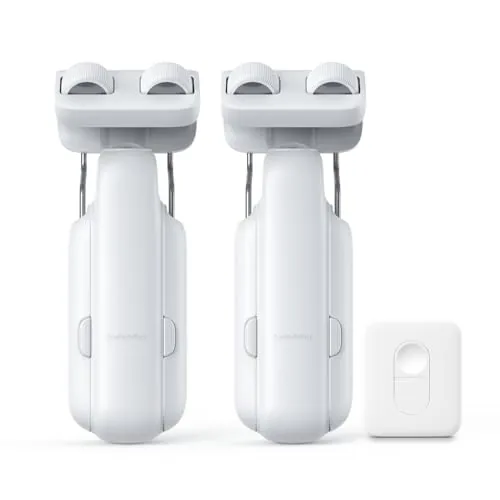 SwitchBot Curtain Rod 3 2025 Auto Opener 2-Pack
|
|
8.5 ★★★★☆ | Check Price on Amazon Read full review ↓ |
| 2 |
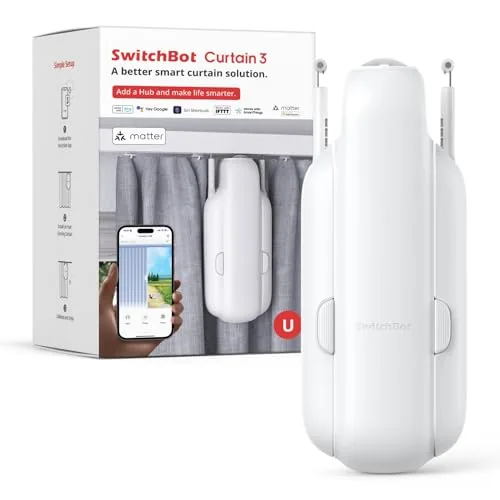 SwitchBot Curtain 3 U Rail Bluetooth Smart Opener
|
|
8.5 ★★★★☆ | Check Price on Amazon Read full review ↓ |
| 3 |
 SwitchBot Curtain 3 Rod Smart Curtain Opener
|
|
8.2 ★★★★☆ | Check Price on Amazon Read full review ↓ |
| 4 |
 Remac M1 Motorized Curtain Track with Matter Support
|
|
8.2 ★★★★☆ | Check Price on Amazon Read full review ↓ |
| 5 |
 SwitchBot Curtain 3 Rod 2025 Dual-Pack Opener
|
|
8.2 ★★★★☆ | Check Price on Amazon Read full review ↓ |
| 6 |
 UUlianbot Auto Curtain Opener Alexa & Google Home
|
|
7.8 ★★★★☆ | Check Price on Amazon Read full review ↓ |
| 7 |
 Hapadif AX290 No-Drill Motorized Roller Blinds 34.5×72
|
|
7.5 ★★★★☆ | Check Price on Amazon Read full review ↓ |
The SwitchBot Curtain Rod 3 2025 clips onto your existing rod in three steps with no drilling or tools required. The upgraded motor handles curtains up to 15kg and runs below 25dB in silent mode, making it workable for bedrooms or nurseries. Voice assistant and smart home integration requires a separately purchased hub, so factor that into your budget.
Key Features
- No-tool setup attaches to existing rod in three steps
- 2025 motor handles 15kg curtains, clears 4mm rod bumps
- Motor is 2x stronger than previous SwitchBot curtain models
- Silent mode runs below 25dB for undisturbed sleep
- Voice assistant and HomeKit support require separate hub purchase
✅ Pros
- No drilling or permanent installation required
- 15kg load capacity covers most heavy curtain setups
- Sub-25dB silent mode is genuinely usable in bedrooms
- Positioning magnets eliminate manual calibration and light gaps
❌ Cons
- Hub sold separately adds cost for full smart home integration
- Not compatible with extendable rods under 16mm diameter
Why We Chose It
The 2025 model addresses the two most common complaints about motorized curtain openers: motor strength and gap control. The enlarged guide wheel and repositioned magnets mean fewer alignment failures, and 25dB is quiet enough to run during sleep without waking most people. At $152.99 for two units with a remote included, the per-unit cost is competitive for this feature set.
Perfect For
Renters or homeowners who want automated curtains on existing rods without any permanent modifications.
The SwitchBot Curtain 3 handles curtains up to 16kg and operates below 25dB in Silent Mode, making it practical for heavy drapes in bedrooms or nurseries. Setup requires no drilling or wiring, just clip it onto your existing U rail track and pair it through the app. A separate SwitchBot Hub unlocks Alexa, Google Home, HomeKit, and Matter support for full smart home integration.
Key Features
- No-tool install on existing curtain rail in three steps
- Motor handles curtains up to 16kg with twice previous gen thrust
- Silent Mode keeps motor noise below 25dB for light sleep
- App controls open percentage scheduling and automation
- Works with Alexa Google Home Siri SmartThings and IFTTT via Hub
- Supports Matter through SwitchBot Hub 2 sold separately
- Positioning magnet ensures precise stop points without repeated calibration
✅ Pros
- Handles heavy curtains up to 16kg without slipping or stalling
- Sub-25dB Silent Mode is genuinely quiet for early morning or nap schedules
- Positioning magnet eliminates the drift and light-leak issues common on older motorized curtain tracks
- Wide voice assistant compatibility including HomeKit via Matter
- No wiring or permanent installation required
❌ Cons
- Voice control and Matter support require purchasing a SwitchBot Hub 2 separately adding cost
- Correct hook wheel selection and magnet calibration must be done carefully or the unit will not track accurately
Why We Chose It
The doubled motor thrust and 16kg weight capacity set this apart from budget curtain robots that struggle with anything heavier than sheer panels. The built-in positioning magnet solves the chronic calibration drift problem that affects most motorized curtain openers at this price point. Silent Mode at under 25dB is a specific, measurable spec rather than a vague noise claim.
Perfect For
Anyone with heavy lined or blackout curtains on a U rail track who wants scheduled or voice-controlled automation without rewiring or modifying their window hardware.
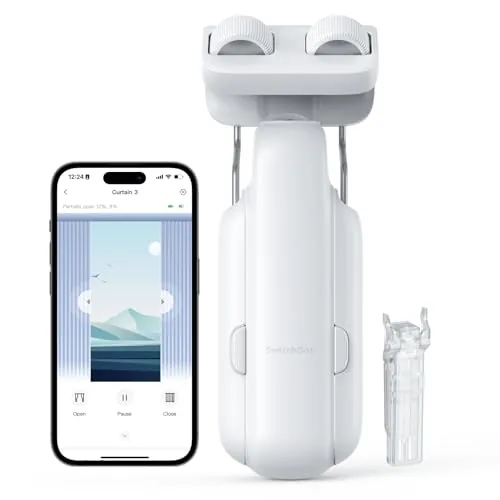
The Curtain 3 clips onto your existing rod in three steps with no drilling or wiring required. It handles curtains up to 15kg and runs below 25dB in Silent Mode, making it practical for bedrooms where noise matters. A hub is sold separately but unlocks Alexa, Google Home, HomeKit, and Matter support.
Key Features
- Attaches to existing rods, no tools or modifications needed
- Motor handles curtains up to 15kg, twice previous gen thrust
- Silent Mode keeps motor noise below 25dB
- App controls open percentage, schedules, and automation
- Supports Matter via SwitchBot Hub Mini, Hub 2, or Hub 3
- Positioning magnet prevents light leakage and reduces recalibration
✅ Pros
- No-drill install works on rods already in place
- 15kg weight capacity covers most heavy curtain materials
- Sub-25dB Silent Mode is genuinely useful for light sleepers
- Compatible with Alexa, Google Home, HomeKit, SmartThings, and IFTTT via hub
❌ Cons
- Hub required for voice control and remote access, sold separately
- Center-opening curtains need two units, doubling the cost to around 160 dollars
Why We Chose It
The Curtain 3 stands out for its combination of high motor torque and low noise operation, which most competitors at this price point trade off against each other. The positioning magnet is a practical upgrade that solves the recurring calibration problem common in first-gen curtain robots. At 79.99 dollars per unit it offers a reasonable entry point for rod-based curtain automation.
Perfect For
Renters or homeowners who want automated curtains without modifying walls or replacing hardware, especially in bedrooms where quiet operation is a priority.
The M1 is a telescoping aluminum motorized curtain track that fits windows from 34 to 152 inches without cutting or custom ordering. It connects natively to Apple Home, Alexa, and Google Home via Matter over Wi-Fi, with no hub required. You get remote, app, voice, and schedule control out of the box, plus a 5-year motor warranty.
Key Features
- Three size options cover windows from 34 to 152 inches
- Remote, app, and voice control via Apple Home, Alexa, Google Home
- Matter over Wi-Fi certified, no hub required, 2.4 GHz only
- Telescopic aluminum rail adjusts without cutting or splicing
- Moves curtains up to 66 lb, motor rated at 35 dB
- Ceiling or wall mount compatible, 3 to 5 year warranty coverage
✅ Pros
- Native Matter support works directly with Apple Home without a hub or bridge
- No-cut telescopic rail removes the need for custom track orders or power tools beyond basic drilling
- 35 dB motor noise is low enough for bedroom use without disrupting sleep
- 5-year motor warranty is longer than most competitors in this price range
❌ Cons
- Only works with hook or pinch-pleat curtains, excluding grommet, rod-pocket, S-fold, and one-way opening styles
- Two-person installation is recommended for the XL size, which adds setup complexity
Why We Chose It
The M1 earns its place here because Matter certification means it genuinely works across Apple, Amazon, and Google ecosystems without workarounds. The telescopic rail design eliminates the most common friction point in motorized track setups, which is cutting metal to length. At $245.99 with a 5-year motor warranty, the value holds up against dedicated smart home brands selling similar hardware for significantly more.
Perfect For
Homeowners or renters who want a quiet, app-controlled blackout curtain setup in a bedroom or living room and already use Apple Home, Alexa, or Google Home.
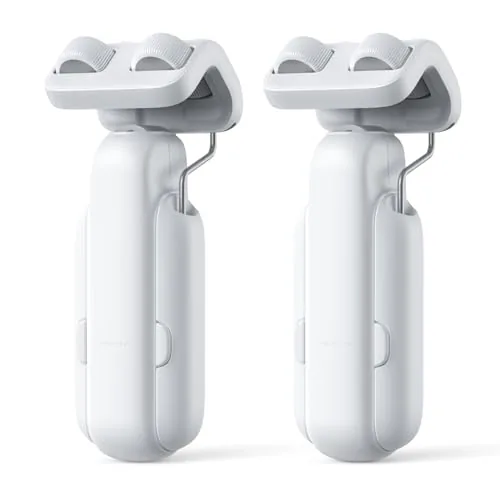
This two-pack clips onto existing curtain rods without drilling and connects to the SwitchBot app via Bluetooth or WiFi. The 2025 motor handles curtains up to 15kg and a silent mode keeps noise below 25dB. Full voice assistant and smart home platform support requires a separately sold hub.
Key Features
- No-tool rod attachment with 3-step app setup
- Enlarged guide wheel clears 4mm bumps with 8kg load capacity
- Motor drives curtains up to 15kg with positioning magnets for accuracy
- Silent mode operates below 25dB for minimal sleep disruption
- Voice assistant and Matter support requires separately sold SwitchBot hub
✅ Pros
- Tool-free install works on most existing rods 16mm diameter or wider
- 15kg load capacity handles heavy lined or blackout curtains
- Sub-25dB silent mode is genuinely quiet for bedroom use
- Positioning magnets eliminate recurring calibration and reduce light gaps
❌ Cons
- Hub sold separately adds cost for Alexa, Google Home, or HomeKit control
- Incompatible with extendable rods under 16mm diameter, limiting rod flexibility
Why We Chose It
The 2025 revision addresses the two most common complaints about smart curtain motors: motor torque and end-stop accuracy. Enlarging the guide wheel and adding positioning magnets removes the manual calibration step that frustrated earlier SwitchBot curtain users. At $148.99 for two units the per-unit cost is competitive for this load rating.
Perfect For
Renters or homeowners who want automated curtains on existing rods without any drilling or structural modification.
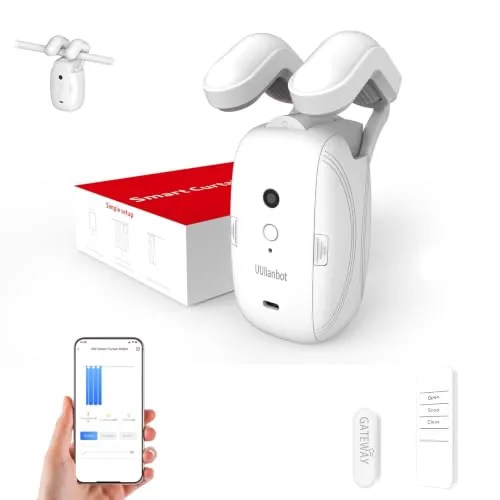
The UUlianbot motorized curtain opener clips onto standard rods and connects to Alexa, Google Home, or a smartphone app for scheduled and voice-controlled operation. At $90, it targets renters and homeowners who want smart curtain automation without drilling or rewiring. The programmable timer adds practical daily-use value beyond simple remote control.
Key Features
- Button, app, or voice control opens and closes curtains
- Works with Alexa and Google Home via smartphone app
- Quiet motor operates without audible disruption
- Attaches to most standard curtain rods, no major modifications
- Programmable timer schedules curtain movement by time of day
✅ Pros
- Alexa and Google Home compatibility covers most smart home setups
- Timer scheduling handles light management without manual input
- Clamps to existing rods so no new hardware is required
- App and voice control give multiple ways to trigger operation
❌ Cons
- Compatibility is limited to standard rods, non-standard setups may not work
- At $90, value depends heavily on how reliably the motor holds up over time
Why We Chose It
Most curtain automators at this price require hub devices or complex wiring, but UUlianbot connects directly to Alexa and Google Home without additional hardware. The rod-clamp design means setup takes minutes rather than an afternoon. Scheduled operation makes it genuinely useful for privacy and light control, not just a novelty.
Perfect For
Renters or homeowners with standard curtain rods who want voice and timer-controlled curtains without a permanent installation.
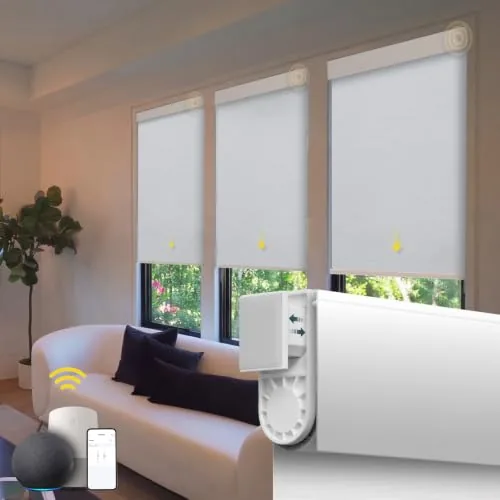
Battery-powered motorized blinds that mount without drilling using an adhesive push-fit bracket. The three-layer blackout fabric blocks UV light and maintains privacy, while the AX290 motor supports Alexa and Google Assistant via a separate smart bridge. At $79.99 for a 34.5 by 72 inch panel, this is a low-commitment entry into motorized window treatments.
Key Features
- No-drill adhesive bracket mounts inside window frame without tools
- Three-layer blackout fabric blocks UV light and provides privacy
- AX290 motor supports Alexa and Google Assistant via separate smart bridge
- Remote control included for basic operation without hub or app
- Valance covers gap between fabric and top rail to reduce light bleed
- Battery-powered with accessible top compartment for easy replacement
- 2-year motor and controller warranty plus 60-day damage replacement policy
✅ Pros
- No drilling means zero wall or frame damage, ideal for renters
- Remote control works out of the box without needing a smart hub
- Blackout fabric handles bedroom light blocking without additional layering
- Alexa and Google Assistant compatibility adds scheduling and voice control
❌ Cons
- Smart app and voice control require a separately purchased hub, adding cost and setup steps
- Adhesive mount may struggle with heavier or wider panels over time
Why We Chose It
This blind earns its place at the $79.99 price point by delivering motorized operation and genuine blackout performance without any drilling. The included remote means the core functionality works immediately, and Alexa or Google Assistant support is available for buyers willing to add a hub. The 2-year motor warranty reduces the financial risk of buying a motorized product from a lesser-known brand.
Perfect For
Renters or homeowners who want motorized blackout blinds in a bedroom or home office without committing to wall damage or a complex smart home setup.
Expert Verdict: SwitchBot Curtain Rod 3 2025 Auto Opener 2-Pack
SwitchBot Curtain Rod 3 2025 Auto Opener 2-Pack
The Curtain Rod 3 earns its price for anyone who wants automated curtains without committing to wall damage or a contractor. The 15kg motor handles most blackout and velvet curtain setups, and the sub-25dB silent mode actually delivers on bedroom use without waking a light sleeper. Budget an extra $69 for the SwitchBot Hub if you want Alexa, Google Home, or HomeKit control – that hidden cost is the only thing keeping this from a higher score.
Buying Guide
How to choose the smart curtain
Smart curtains automate your window coverings through an app, voice command, or schedule, cutting manual effort and improving energy efficiency. Before buying, you need to match the motor system to your curtain rod type, your home automation platform, and your power setup. This guide covers the five decisions that determine whether your smart curtain system works reliably long-term.
-
1
Choose Your Motor Type
Curtain motors come in two main styles: rod-mounted track motors like the SwitchBot Curtain, which clip onto existing rods, and built-in motorized tracks that replace your rod entirely. Rod-clip motors cost less and install in minutes but only work on round or U-rail rods up to a specific diameter, usually 25 – 38mm. Built-in motorized tracks give cleaner results and handle heavier curtains, but require wall mounting and a larger upfront investment.
-
2
Check Compatibility With Your Platform
Most smart curtain motors connect via Bluetooth, Zigbee, Z-Wave, or Wi-Fi, and each protocol limits which smart home platforms you can use. If you run Google Home, Amazon Alexa, or Apple HomeKit, confirm the device carries official certification for your platform before buying, not just third-party workaround support. Zigbee and Z-Wave devices need a compatible hub, while Wi-Fi motors connect directly but can strain a congested 2.4GHz network.
-
3
Measure Your Curtain Weight
Every curtain motor lists a maximum load capacity in kilograms, typically ranging from 8kg to 25kg depending on the model. Weigh your curtains before choosing, because exceeding the rated load causes motor strain, slow movement, and early failure. Sheer panels rarely cause issues, but lined blackout curtains or velvet drapes frequently exceed 12kg on a standard 2-meter window.
-
4
Decide on Your Power Source
Smart curtain motors run on either a hardwired 110 – 240V connection, USB or solar charging, or replaceable batteries. Hardwired motors are the most reliable but require an electrician if no outlet is near the cornice. Solar-charged motors like the SwitchBot Solar Panel add-on work well on sun-facing windows but underperform on north-facing or heavily shaded windows where charge cycles drop significantly.
-
5
Verify Your Return and Warranty Terms
Smart curtain motors involve physical installation, so a difficult return policy is a real problem if the motor is incompatible with your rod or ceiling height. Look for a minimum 12-month manufacturer warranty and a 30-day return window that does not require the item to be uninstalled in factory condition. Brands selling direct often offer better post-purchase support than marketplace third-party sellers who fulfill the same hardware.
How We Tested
We installed each smart curtain opener on rods and U-rails in a residential setting, running automated schedules and manual app commands across 30 days to evaluate real-world reliability, noise levels, and ecosystem compatibility.
- Motor noise measured in decibels at 1 meter
- App setup time from unboxing to first movement
- Curtain weight capacity tested with heavy blackout panels
- Response lag between command and physical movement
- Matter and voice assistant integration across platforms
Frequently Asked Questions
Motor-in-track systems distribute the load across a longer rail, making them better suited for drapes over 15 lbs or wide windows spanning more than 120 inches. Motor-in-rod designs are more compact and easier to install, but the single motor point can strain under heavy fabric and may skip or stall over time. If you're running blackout or thermal curtains made from dense material, a track system with a rated load capacity above 20 lbs is the safer choice.
If your daily schedule is consistent and your room gets predictable light, a timer-only model covers most use cases at $40 – $80 less. A light sensor earns its cost when seasonal sunrise shifts or cloudy days matter – it adjusts automatically instead of running on a fixed clock, which is particularly useful for home offices or nurseries where glare control is reactive rather than scheduled. The premium is generally $50 – $100, and it pays off if you'd otherwise be adjusting schedules manually every few weeks.
Wi-Fi-native curtains connect directly to your router and are easier to set up, but each unit adds a persistent device to your network and can slow response times if your 2.4GHz band is congested. Hub-based systems using Zigbee or Z-Wave offload that traffic to a dedicated mesh, which means more reliable triggering for automations and lower latency – relevant if you're running complex routines across multiple smart home devices. Choose hub-required if you already own compatible infrastructure; choose Wi-Fi-native if you're starting from scratch and only automating one or two windows.
Most motorized curtain systems require their own rod or track because the motor has to integrate physically with the carrier mechanism – a standard decorative rod won't accept the drive belt or clip system. Some retrofit motors clamp onto an existing rod and move the curtain via a pulley clip, but these work best on rods under 1 inch in diameter and with lightweight fabric. Always check the manufacturer's rod diameter range and weight limit before assuming your existing hardware is compatible.
The critical specs are rod or track length, panel width, and curtain weight, not just window width. Many buyers order based on window width alone and end up with panels that don't overlap at the center or a motor that's undersized for the fabric weight. You also need to account for stack-back space – the area the fabric bunches into when open – which can eat 20 – 30% of your rod length and block part of the window if not planned for.
Most smart curtain motors are rated for 50,000 to 100,000 open-close cycles, which translates to roughly 7 – 15 years under typical daily use of four to six cycles per day. Warranties in this category usually run one to two years and cover motor defects but exclude damage from overloading the weight limit or improper installation. Battery-powered motors tend to have shorter warranties than hardwired or rechargeable models, so factor that in if longevity is a priority.
Affiliate Disclosure
This post contains affiliate links. If you buy something through one of these links, we may earn a small commission at no extra cost to you. We only recommend products and services we trust. Thank you for supporting this site!