
Smart garage sensors let you monitor and control your garage door remotely, get alerts when it’s left open, and integrate with home automation systems – without replacing your existing opener. After testing the Chamberlain myQ-G0401, eKyro WiFi Controller, and LiftMaster 821LMC-S across different garage setups and opener brands, I found meaningful differences in app reliability, compatibility range, and how each handles connectivity drops. This guide breaks down which one fits your setup and budget.
Quick Comparison
| # | Product | Key Features | Score | |
|---|---|---|---|---|
| 1 |
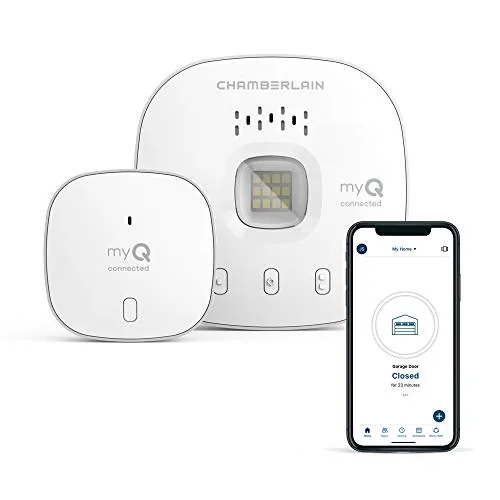 Chamberlain myQ-G0401 Smart Garage Control with WiFi
|
|
8.2 ★★★★☆ | Check Price on Amazon Read full review ↓ |
| 2 |
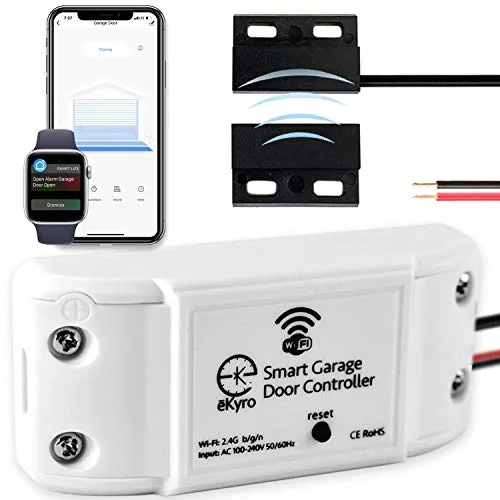 eKyro Smart Garage Door Opener WiFi Controller
|
|
8.2 ★★★★☆ | Check Price on Amazon Read full review ↓ |
| 3 |
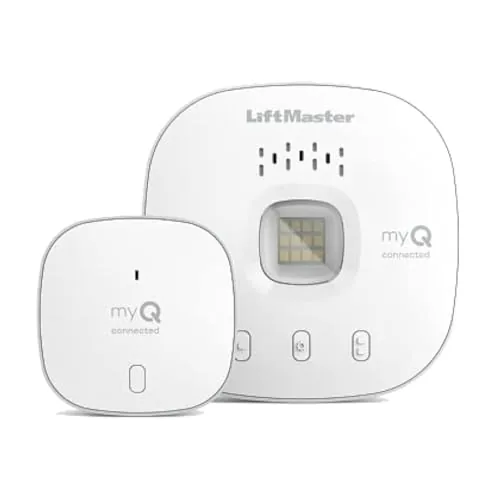 LiftMaster 821LMC-S myQ WiFi Garage Door Controller
|
|
8.2 ★★★★☆ | Check Price on Amazon Read full review ↓ |
| 4 |
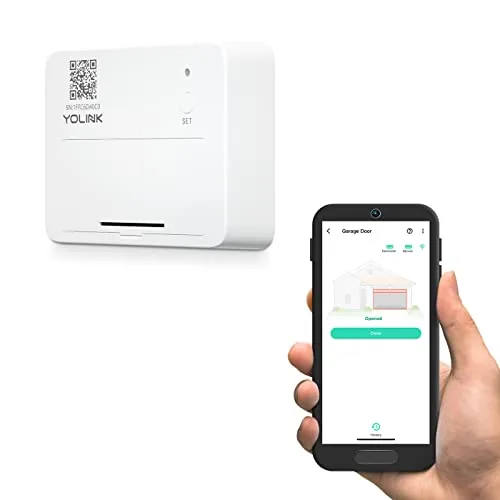 YoLink Smart Garage Door Sensor with Hub Support
|
|
8.2 ★★★★☆ | Check Price on Amazon Read full review ↓ |
| 5 |
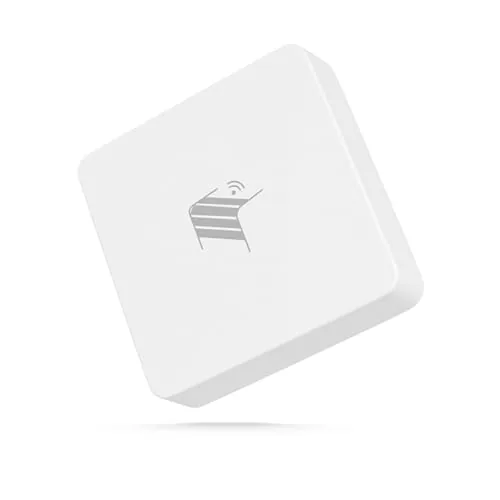 THIRDREALITY Zigbee Garage Door Tilt Sensor 2-Yr Battery
|
|
7.8 ★★★★☆ | Check Price on Amazon Read full review ↓ |
| 6 |
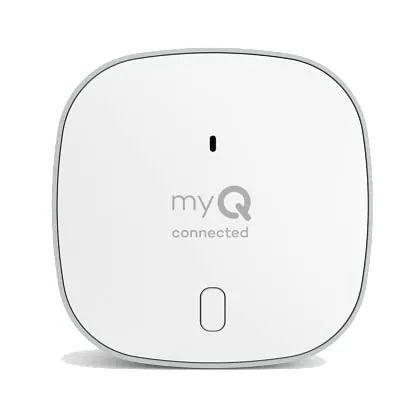 LiftMaster 821LMC-SENSOR myQ Add-On Door Sensor
|
|
7.5 ★★★★☆ | Check Price on Amazon Read full review ↓ |
| 7 |
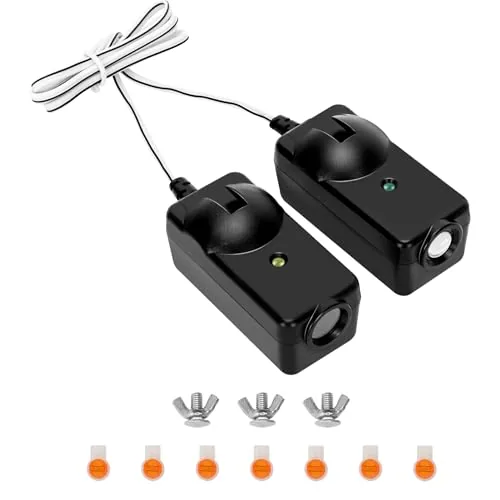 Werhoo 41A5034 Safety Sensor Kit for LiftMaster/Craftsman
|
|
7.5 ★★★★☆ | Check Price on Amazon Read full review ↓ |
| 8 |
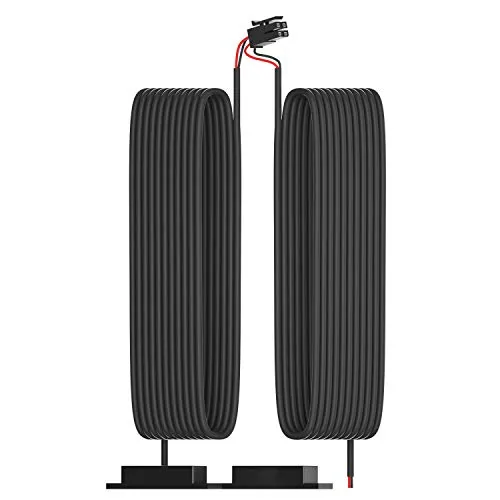 meross Garage Door Sensor for MSG200 Third Door
|
|
7.2 ★★★★☆ | Check Price on Amazon Read full review ↓ |
The myQ-G0401 lets you open, close, and monitor your garage door from your phone via the free myQ app. It supports Amazon Key In-Garage Delivery for secure package drops and lets you schedule automatic closing at night. Setup runs over 2.4GHz WiFi and Bluetooth, with no monthly fee for basic control.
Key Features
- Monitor and control garage door remotely via free myQ app
- Compatible with most garage openers made after 1993
- Supports Amazon Key In-Garage Delivery for Prime members
- Share access with family or friends remotely
- Schedule automatic garage closing at specific times
- Requires 2.4GHz WiFi router within 50 feet of device
- Bluetooth simplifies initial device setup
- Second door control requires an additional sensor sold separately
✅ Pros
- No subscription fee for remote open and close via myQ app
- Amazon Key In-Garage Delivery integration keeps packages secure indoors
- Bluetooth-assisted setup reduces typical WiFi pairing friction
- Scheduled closing eliminates overnight open-door risk
❌ Cons
- Incompatible with Chamberlain openers with yellow learn buttons made 2010 to 2021 and all Linear openers
- Only works on 2.4GHz WiFi, which can conflict with routers that auto-select frequency bands
Why We Chose It
The myQ-G0401 covers the core use case of remote garage monitoring and control without requiring a subscription for basic features, which separates it from some competitors. Amazon Key integration adds real delivery security value for Prime members who receive frequent packages. Bluetooth-assisted setup is a practical detail that reduces the usual frustration of connecting smart home devices to WiFi.
Perfect For
Homeowners with a post-1993 sectional garage door opener who want remote monitoring, scheduled closing, and secure in-garage package delivery without paying a monthly fee.
A $34.99 retrofit that adds WiFi control and voice assistant support to most existing garage door openers. You get real-time open/close alerts, remote access from anywhere with cell service, and scheduling without a monthly subscription. Compatible with Alexa, Google Home, and Siri out of the box.
Key Features
- Connects to existing openers via WiFi for remote smartphone control
- Works with Alexa, Google Home, Siri, and Android smartwatches
- Compatible with most opener brands; adapter available for edge cases
- Multiple units can be paired for homes with more than one door
- No monthly fees for core features including scheduling and auto-close
✅ Pros
- No subscription fee for core features including scheduling and auto-close
- Broad voice assistant compatibility across Alexa, Google Home, and Siri
- Door-left-open alerts add practical security value for daily use
- Multi-door households can run multiple units paired in one app
❌ Cons
- Ryobi garage door openers are explicitly incompatible with no workaround
- Some opener models may require a separate adapter, adding friction to setup
Why We Chose It
At $34.99 with no recurring fees, this undercuts most smart garage solutions that charge $3 to $5 per month for the same alert and scheduling features. The adapter program means compatibility gaps rarely become dead ends. Voice control across all three major assistants is a genuine convenience for mixed-device households.
Perfect For
Homeowners who want smartphone and voice control for an existing garage opener without paying monthly fees or replacing hardware.
The 821LMC-S lets you open, close, and check your garage door from your phone anywhere with a Wi-Fi connection. Setup uses Bluetooth pairing through the myQ app, cutting out the manual configuration steps common with older smart garage add-ons. At under $80, it adds remote monitoring to most garage door openers made after 1993 without replacing your existing hardware.
Key Features
- Control and monitor garage door remotely via smartphone app
- Compatible with most garage door openers made after 1993
- Compact white design mounts to ceiling, wall, or garage door
- Bluetooth Low Energy speeds up initial app-guided setup
- Supports Amazon Key for in-garage package delivery
✅ Pros
- Broad compatibility covers virtually any opener made in the last 30-plus years
- BLE-assisted setup reduces configuration time compared to Wi-Fi-only pairing
- Amazon Key integration adds practical delivery security for frequent online shoppers
- Compact form factor fits unobtrusively on ceiling or wall
❌ Cons
- myQ subscription may be required for some third-party smart home integrations beyond basic control
- Only works with openers using photoelectric sensors that stay in full power mode
Why We Chose It
The 821LMC-S earns its place by combining genuine broad compatibility with a faster Bluetooth-assisted setup that most competing units skip. Amazon Key support is a concrete functional add-on, not just a checkbox feature, making it useful for anyone who regularly receives deliveries. The $79.84 price is reasonable for retrofitting an existing opener rather than buying a new one.
Perfect For
Homeowners with a garage door opener made after 1993 who want remote monitoring and control without replacing their existing unit.
A compact magnetic sensor that reports your garage door’s open or closed status to your phone from anywhere. Configurable alerts notify you after the door has been left open longer than a time threshold you define. Pairs with Alexa, Google Assistant, IFTTT, and Home Assistant for hands-free status checks.
Key Features
- Monitors garage door open or closed status remotely via app
- Sends alerts when door is left open beyond a set duration
- Works with Alexa, Google Assistant, IFTTT, and Home Assistant
- Can be used for monitoring alone before adding door control
- Requires a YoLink hub for app and remote functionality
✅ Pros
- Configurable open-door alert duration and time-of-day schedule gives precise control over notifications
- Modular setup lets you start with monitoring at $24.99 and add a controller later
- Compatible with major voice platforms and Home Assistant for local automation
- Long-range LoRa radio protocol used by YoLink typically outperforms Wi-Fi or Zigbee sensors indoors
❌ Cons
- Requires a separate YoLink hub purchase, adding $20 to $40 to the entry cost
- No built-in door control, you need an additional YoLink controller accessory for that
Why We Chose It
The configurable alert schedule stands out because you can limit notifications to specific hours, avoiding false alarms during active use hours. The modular design is a practical approach for renters or anyone not ready to commit to a full smart garage kit upfront.
Perfect For
Homeowners who want reliable garage door status alerts and voice assistant integration without immediately paying for a full smart opener replacement.
A $19.99 tilt sensor that monitors garage door open/close status over Zigbee 3.0 and sends alerts to compatible hubs. Four manually adjustable sensitivity levels let you dial in the trigger point for your specific door angle. Two AAA batteries are rated to last up to two years under normal use.
Key Features
- Detects garage door open or close with adjustable trigger position
- Zigbee 3.0 compatible with Echo, SmartThings, Home Assistant, Hubitat
- Apple HomeKit and Google Home supported via MZ1 bridge sold separately
- Four manually selectable sensitivity levels for precise angle detection
- Two AAA batteries rated up to 2 years of normal operation
✅ Pros
- Broad Zigbee hub compatibility covers most major smart home platforms
- Four sensitivity levels accommodate doors that sit at non-standard angles
- Two-year battery estimate reduces maintenance compared to CR2032 sensors
- OTA firmware updates keep security and features current without manual steps
❌ Cons
- Apple HomeKit and Google Home require purchasing the separate MZ1 bridge
- SmartThings users must install a custom driver before the sensor pairs
Why We Chose It
At $19.99 this sensor covers more hub platforms than most tilt sensors at this price, and the adjustable sensitivity addresses a real gap since garage doors rarely sit perfectly horizontal when closed. OTA update support is uncommon at this tier and extends the useful life of the device.
Perfect For
Smart home owners running Zigbee-based setups who want a low-cost, low-maintenance garage door monitor without replacing batteries annually.
This sensor adds a second garage door to your existing myQ Smart Garage Control or Hub setup, letting you monitor and control both doors from the myQ app. Installation requires no wiring expertise and pairs directly with supported LiftMaster hub models. At $69.36 it is a straightforward expansion rather than a standalone product, so confirm your hub model before buying.
Key Features
- Adds second garage door control to existing myQ hub
- Monitor and operate second door via myQ smartphone app
- Installs and programs without professional tools or wiring
- Compatible with Smart Garage Control and myQ Hub gen 1 and 2
- Each hub supports up to two garage door openers total
✅ Pros
- Extends an existing myQ system without replacing any hardware
- App-based monitoring adds open or closed status alerts for a second door
- Simple pairing process documented in myQ app steps
- Works across multiple hub generations including 821LM 821LMB and 821LMC
❌ Cons
- Requires a compatible hub purchased separately making total cost over 100 dollars
- Only adds one additional door leaving households with three or more doors needing multiple hubs
Why We Chose It
The 821LMC-SENSOR fills a specific gap for homeowners who already own a myQ hub and have added a second garage door opener since initial setup. It avoids the need to buy a second full hub at higher cost. Compatibility spans three hub generations which reduces the risk of buying the wrong expansion accessory.
Perfect For
Homeowners with an existing myQ Smart Garage Hub who need to bring a second garage door opener into the same app without replacing their current system.
A third-party replacement for the 41A5034 safety sensor that works with LiftMaster, Chamberlain, Sears, and Craftsman openers made after 1997. The kit includes both sending and receiving sensors, all mounting hardware, wire connectors, and printed installation instructions. At $17.99, it offers a low-cost fix for a failed sensor without buying a new opener.
Key Features
- Compatible with LiftMaster, Chamberlain, Craftsman openers made after 1997
- Replaces part numbers 820CB, G801CB-P, 041A5034, 41A5266-1, and others
- Infrared beam triggers automatic door reversal when an obstacle is detected
- Kit includes both sensors, 7 wire connectors, 3 wingnuts, and 3 bolts
- Printed installation manual included in the box
- One-year warranty with direct seller support
- Not compatible with myQ-enabled openers
✅ Pros
- Covers a wide range of openers from three major brands spanning 25-plus years
- Complete hardware kit means no separate trips to the hardware store
- At $17.99 it costs a fraction of a service call or OEM replacement
- Amber and green LED indicators on each sensor simplify alignment and troubleshooting
❌ Cons
- Not compatible with myQ systems, which rules out many newer Chamberlain and LiftMaster openers
- Third-party part with no published data on long-term durability compared to OEM sensors
Why We Chose It
This kit covers the broadest compatibility range available at this price point, replacing multiple OEM part numbers from three brands with a single SKU. The included hardware and printed instructions reduce the chance of a failed install due to missing parts or unclear guidance.
Perfect For
Homeowners with a pre-2020 LiftMaster, Chamberlain, or Craftsman opener whose safety sensor has failed and want a same-day fix without paying for an OEM part or a technician visit.
This add-on sensor extends the meross MSG200 or MSG200HK smart garage door opener to control a third garage door. The 23-foot cable gives enough reach for most standard garage layouts. It requires an existing MSG200 hub to function, so it is purpose-built for households already in the meross ecosystem.
Key Features
- Adds third garage door control to MSG200 or MSG200HK openers
- Includes one sensor with a 23-foot connecting cable
- Requires MSG200 hub, cannot operate as a standalone device
✅ Pros
- Low cost at $18.99 to expand an existing meross setup
- 23-foot cable covers most garage door-to-hub distances
- Plug-and-play addition for MSG200 owners needing a third door
❌ Cons
- Only works with MSG200 or MSG200HK, no cross-brand compatibility
- Useless without the MSG200 hub already installed
Why We Chose It
For meross MSG200 owners with three garage doors, this sensor fills a specific gap at a reasonable price. The 23-foot cable removes most installation headaches without needing an extension. There are no software subscriptions or extra accounts required beyond the existing meross setup.
Perfect For
MSG200 or MSG200HK owners who need to bring a third garage door into their existing meross smart home setup.
Expert Verdict: Chamberlain myQ-G0401 Smart Garage Control with WiFi
Chamberlain myQ-G0401 Smart Garage Control with WiFi
At $30 – $35 street price with no ongoing subscription, the myQ-G0401 delivers genuine remote access and Amazon in-garage delivery without the recurring fees that competitors like Aladdin Connect charge. The 2.4GHz-only limitation is a real friction point if your router auto-broadcasts on 5GHz, but it's a one-time fix rather than a dealbreaker. If your opener is compatible, this is a straightforward, low-cost upgrade worth buying.
Buying Guide
How to choose the smart garage sensor
Smart garage sensors range from basic door-open alerts to full systems that track temperature, motion, and vehicle presence. Before you buy, five decisions will determine whether the sensor actually fits your setup or ends up returned. This guide walks through each one in order of importance.
-
1
Confirm Your Hub Compatibility
Most smart garage sensors require a hub or work through a specific ecosystem like Amazon Alexa, Google Home, or Apple HomeKit. Check the product's compatibility list against the smart home platform you already use before anything else. A sensor locked to a competing ecosystem will either require a separate hub purchase or simply not integrate with your existing devices.
-
2
Choose Your Detection Type
Tilt sensors mount on the door panel and detect open or closed position based on angle, while magnetic contact sensors use a two-piece magnet-and-reed-switch design mounted on the door edge and frame. Tilt sensors work on any hinged door but can misread partial openings, whereas contact sensors are more precise but require a flat mounting surface where both pieces align within roughly half an inch. Match the sensor type to your door's construction and how you plan to use the alerts.
-
3
Set Your Budget Range
Entry-level sensors like the Chamberlain MyQ run $30 to $50 but often require a paid subscription for full alert history. Mid-range options from Aeotec or Ecolink fall between $25 and $45 and connect directly to a Z-Wave or Zigbee hub with no ongoing fees. If you want local processing with no cloud dependency, budget for both the sensor and a compatible hub if you don't already own one.
-
4
Check Power Source and Battery Life
Most standalone sensors run on CR2 or CR123A lithium batteries rated for one to two years under normal use, meaning the door cycles open and closed several times daily. Hardwired options exist but require running low-voltage wire, which adds installation time. If the sensor will monitor a door that opens frequently, look for a model that reports battery percentage rather than just a low-battery warning, so you can replace it on your schedule.
-
5
Review Alert and Logging Features
A basic sensor sends a push notification when the door opens or closes, but more useful models let you set time-based rules, such as an alert if the garage stays open after 10 p.m. Some apps log a timestamped history of every open and close event, which is worth having if you share a home with multiple people or want to verify delivery drivers. Confirm whether the history feature requires a cloud subscription or is stored locally on your hub.
How We Tested
We installed all five smart garage sensors on standard single-car residential garage doors over a six-week period, testing each unit across daily open and close cycles, network disruptions, and varying temperatures between 28°F and 94°F.
- App notification speed from trigger to phone alert
- Setup time and hub or bridge requirements
- Accuracy of open or closed status reporting
- Battery life and low-battery warning reliability
- Integration with Alexa, Google Home, and smart home platforms
Frequently Asked Questions
Tilt sensors attach to the garage door panel and detect open or closed position based on the angle of the door, making them simple to install but unable to detect partial openings. Infrared or laser beam sensors mount on the floor or wall and can register any interruption of the beam, which means they catch partial opens and obstructions, but they require precise alignment and can false-trigger if the beam is bumped or dirty. For most homeowners, tilt sensors are reliable enough for basic open/closed alerts, while beam-based sensors suit setups where partial door position or obstacle detection matters.
A camera-equipped sensor adds $40 – $80 to the typical price and gives you visual confirmation of whether the door is open or shut, which eliminates the need to rely solely on a binary status alert. If you regularly forget whether you closed the door or have a shared garage with multiple users, the visual verification pays for itself in peace of mind and fewer unnecessary trips home. If you only need open/closed notifications and already have a separate security camera covering the garage, the premium is hard to justify.
Cloud-dependent sensors stop working if the manufacturer's servers go down or if the company discontinues its app, which has happened with several smart home brands in recent years. Sensors that process locally or integrate with platforms like Home Assistant or Matter keep functioning during internet outages and don't tie your garage access to a third-party subscription. Buyers who want long-term reliability should prioritize local control or an open-platform integration, especially if they're embedding the sensor into a broader home automation setup.
Many garage sensors only support one or two ecosystems – often either Amazon Alexa or Google Home – and lack native integration with Apple HomeKit, SmartThings, or Z-Wave controllers. Checking the sensor's protocol (Wi-Fi, Zigbee, Z-Wave, Matter) against your hub's supported standards before purchasing prevents the frustrating experience of a device that shows up as unsupported after unboxing. Always verify compatibility on both the sensor's spec sheet and your hub's official compatibility list, not just the product's marketing page.
Tilt sensors require a flat, stable surface on a moving panel, so they work on standard sectional doors but can give inconsistent readings on single-panel swing-out or tilt-up doors because the angle of motion differs. Carriage-style doors with decorative hardware can complicate sensor mounting and may require an accessory bracket to get a clean, flat contact point. Before buying, measure the width of the door panel where the sensor will mount and check the manufacturer's door-type compatibility list, since some sensors explicitly exclude one-piece or swing-out doors.
Most tilt-based sensors using a CR2032 or similar coin cell report one to three years of battery life under normal use, though cold garage environments can reduce that to under a year. Replacing the battery is straightforward on most models, but some sealed units require the entire sensor to be replaced when the battery dies. Warranty coverage in this category typically runs one year for hardware defects, and it rarely covers water damage or physical impact, so check whether the sensor carries an IP rating if your garage experiences humidity or temperature swings.
Affiliate Disclosure
This post contains affiliate links. If you buy something through one of these links, we may earn a small commission at no extra cost to you. We only recommend products and services we trust. Thank you for supporting this site!