
Smart lamps have moved well beyond simple on/off scheduling – today’s options sync to music, charge your devices, and integrate with Matter-compatible smart home setups without requiring a separate hub. Picking the wrong one means paying for features you’ll never use or missing the one that fits your actual setup. After testing the Govee RGBIC Table Lamp 2, Fenmzee Bedside Lamp, and OIYN RGBICW Corner Floor Lamp, here’s what each does well and where each falls short.
Quick Comparison
| # | Product | Key Features | Score | |
|---|---|---|---|---|
| 1 |
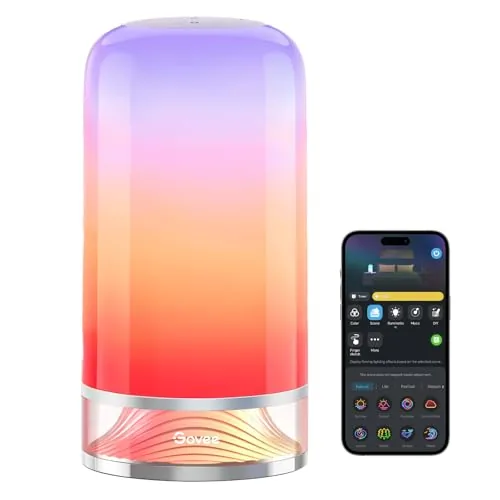 Govee RGBIC Table Lamp 2 with Matter Support
|
|
8.2 ★★★★☆ | Check Price on Amazon Read full review ↓ |
| 2 |
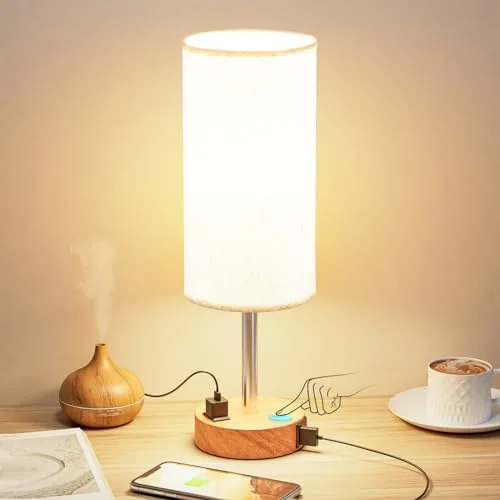 Fenmzee Bedside Lamp with Touch Dimmer and USB-C Hub
|
|
7.8 ★★★★☆ | Check Price on Amazon Read full review ↓ |
| 3 |
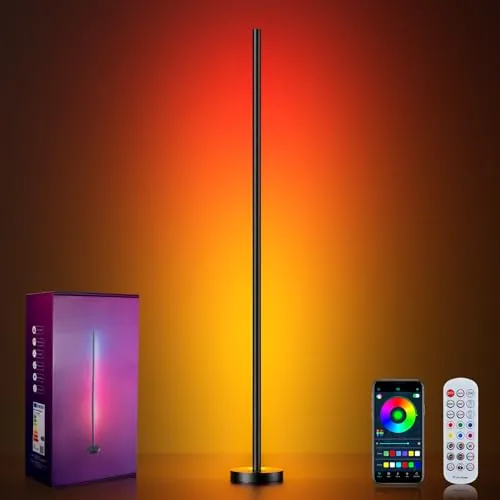 OIYN RGBICW Corner Floor Lamp with Music Sync
|
|
7.8 ★★★★☆ | Check Price on Amazon Read full review ↓ |
| 4 |
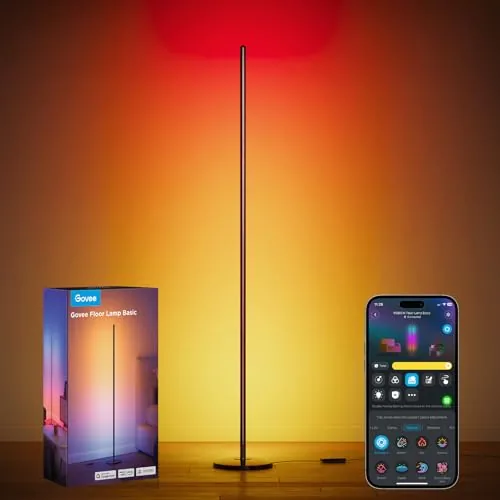 Govee RGBIC Floor Lamp Basic 1000lm LED Black
|
|
7.5 ★★★★☆ | Check Price on Amazon Read full review ↓ |
| 5 |
 Qaubauyt 67-inch RGB Smart Floor Lamp APP Control
|
|
7.2 ★★★★☆ | Check Price on Amazon Read full review ↓ |
| 6 |
 ROOTRO Touch Bedside Lamp RGB Dimmable LED
|
|
7.2 ★★★★☆ | Check Price on Amazon Read full review ↓ |
This lamp delivers 500 lumens with full RGBIC color segmentation and adjustable white tones from 2700K to 6500K, covering everything from warm bedside reading to vivid party lighting. Matter support means it works natively with Alexa, Google Home, SmartThings, and HomeKit without workarounds. The pat-to-wake feature lets you turn it on in the dark without hunting for a button or phone.
Key Features
- RGBICWW color zones with 500lm output and 2700K to 6500K tunable white
- 64 plus preset scenes and 8 music sync modes for dynamic lighting
- Matter protocol support enables native HomeKit Alexa Google Home control
- Pat-to-wake sensor turns lamp on with a single tap in darkness
- App-based DIY lighting effect creator with shareable custom scenes
- Built-in timer and schedule settings via Govee app corded power only
✅ Pros
- Matter support is rare at this price and eliminates hub compatibility headaches
- 500lm output is meaningfully brighter than the previous generation
- Pat-to-wake activation works without reaching for a phone at night
- Tunable white range from 2700K to 6500K covers most ambient and task needs
❌ Cons
- Corded only with no battery option limits placement away from outlets
- Pat-to-wake requires enabling Bedtime Switch in app first and only powers the lamp on not off
Why We Chose It
The combination of Matter support and RGBIC color zoning at under $65 is hard to find in a table lamp form factor. Most competitors at this price offer either smart ecosystem breadth or color flexibility, not both. The upgraded brightness and pat-to-wake feature add practical daily usability beyond novelty lighting effects.
Perfect For
Bedroom users who want a single lamp that handles both calm white reading light and colorful accent lighting while fitting into an existing Apple, Google, or Amazon smart home setup.
A $24 nightstand lamp that pulls charging duty for three devices simultaneously via USB-A, USB-C, and an AC outlet. The touch-sensitive base cycles through three brightness levels without a switch, and the included E26 LED bulb means it works straight out of the box. Fabric shade and wooden-finish base keep the setup looking clean on a small nightstand.
Key Features
- Touch control dims through 3 brightness levels via base or pole tap
- USB-C (5V/2.1A) and USB-A (5V/2.1A) ports plus one AC outlet on base
- E26 LED bulb and fabric shade included, no additional assembly required
- Non-flickering LED bulb rated safe for prolonged reading and children
- Wooden-finish metal base with minimalist fabric shade for general home use
✅ Pros
- Three-device charging from one lamp base without a separate power strip
- Touch dimming on both the base and the pole adds reach-anywhere convenience
- Included bulb and shade mean zero extra purchases at a $23.99 price point
- Works as a charging hub whether the lamp is on or off
❌ Cons
- USB-C output at 5V/2.1A is too slow for fast-charging modern smartphones or laptops
- No color temperature options, single warm or neutral tone only
Why We Chose It
At under $24, few bedside lamps include a working AC outlet, two USB ports, a bulb, and a shade together. The three-level touch dimming on both the base and pole makes it genuinely usable in the dark without fumbling. The charging spec is modest but covers overnight phone and earbud top-ups without a separate adapter.
Perfect For
College students or anyone setting up a small bedroom who wants one plug-in unit to handle lighting and overnight device charging.
A $34.99 corner lamp that splits its LED strip into independently colored segments, so you can run multiple colors simultaneously rather than a single uniform hue. Bluetooth app control lets you set schedules, tweak brightness, and pick from 68 scene modes without leaving the couch. Music sync mode adjusts colors and brightness in real time to audio from movies, games, or speakers.
Key Features
- Each LED segment displays an independent color simultaneously
- Audio reactive mode syncs colors and brightness to live sound
- 16 million colors and 68 scene modes available
- Tool-free assembly with lightweight portable stand
- Bluetooth app and physical remote both included
- No Alexa or Google Assistant compatibility
- Customer support with satisfaction guarantee
✅ Pros
- Segment-by-segment color control is rare at this price point
- 68 scene modes cover seasonal and ambient use cases without custom setup
- Remote control included so app is optional not mandatory
- Tool-free setup takes under 10 minutes
❌ Cons
- No voice assistant integration with Alexa or Google Home
- Bluetooth-only control limits range and rules out away-from-home automation
Why We Chose It
At $34.99, RGBICW segment control is the primary reason to pick this over basic RGB floor lamps. Competitors at this price usually display one color at a time across the full strip, while this one runs distinct colors per zone. The included remote also makes it usable without a smartphone, which adds practical flexibility.
Perfect For
Renters or students who want customizable ambient lighting for a gaming setup or bedroom without committing to a smart home ecosystem.
A 53.7-inch smart floor lamp with RGBIC technology that displays multiple colors simultaneously across individual segments. At 1,000 lumens it works well as accent or mood lighting rather than a primary room light. App-based control, voice assistant compatibility, and music sync make it a capable pick for gaming or media setups.
Key Features
- RGBIC segments show multiple colors at once across the lamp
- Voice control via Alexa and Google Assistant through Govee app
- Brightness and color shift in sync with music or audio
- 16 million colors, 85 scene modes, AI lighting bot 2.0
- 53.7 inches tall, 1,000 lumens, designed for corners and small spaces
✅ Pros
- Per-segment color control lets you run distinct colors simultaneously on one lamp
- Music sync responds to actual audio output, useful for gaming or movie setups
- 85 preset scene modes reduce setup time if you want quick ambiance changes
- Portable design allows easy room-to-room repositioning without tools
❌ Cons
- 1,000 lumens is insufficient as a primary light source for most rooms
- Requires the Govee Home app and a 2.4GHz network, no included remote
Why We Chose It
The per-segment RGBIC color control separates this from single-zone RGB lamps at a similar price point. Music sync and AI lighting bot 2.0 add practical interactivity for gaming desks or media rooms without needing a separate controller.
Perfect For
Gamers or home theater users who want responsive ambient lighting in a corner without spending over $70.
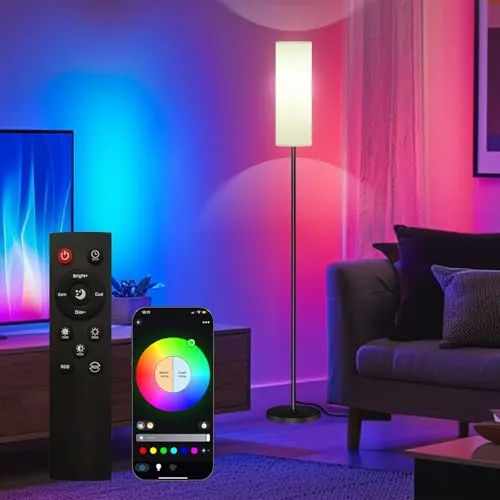
A 9W LED floor lamp with full RGB color modes, a 2750K-6500K white light range, and app-based music sync for under $35. The foot switch and remote give you two control methods without opening your phone. Memory mode restores your last setting at power-on.
Key Features
- Reading mode spans 2750K to 6500K, equal to 90W incandescent output
- 67-inch pole with weighted base, fits beside sofa, bed, or desk
- Music breathing mode syncs RGB colors to phone audio in real time
- Remote has preset color temps at 3000K, 4000K, 6500K, and night mode
- 30-minute timer on remote plus traditional foot switch; E26 bulb replaceable
✅ Pros
- App control plus physical remote plus foot switch covers every use scenario
- 2750K to 6500K range handles reading, relaxing, and gaming in one lamp
- Under $35 with RGB sync and timer is strong value for the price
- Memory mode means no resetting your preferred color temp after each power cycle
❌ Cons
- Brand is unknown with no established track record for long-term reliability
- White shade limits RGB color payoff compared to open or diffused designs
Why We Chose It
At $32.99 it covers white light tuning, RGB scenes, music sync, and a hardware foot switch in a single lamp, which most competitors at this price omit one or two of. The E26 socket means you can swap the included 9W bulb for a brighter third-party option if needed.
Perfect For
Budget-conscious gamers or apartment renters who want one lamp to handle both task lighting and ambient RGB without a separate smart bulb or controller.
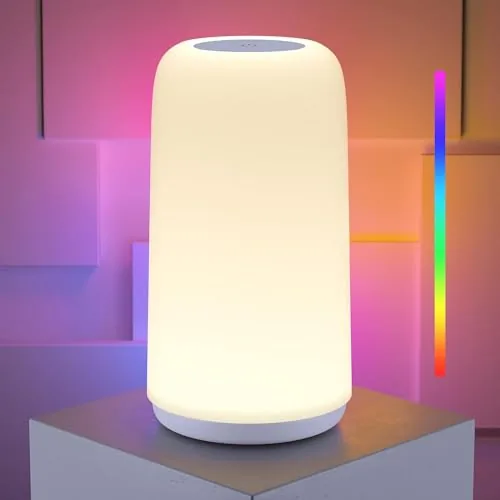
A compact touch lamp with three brightness levels and a cycling RGB color mode, covering both functional bedside lighting and ambient mood use. The top-mounted touch sensor handles on/off and dimming without reaching for a switch. At under $18, it fills a specific gap for minimal-footprint nightstand lighting.
Key Features
- RGB cycle mode plus adjustable warm white for mood lighting
- Three-second press activates low-dim sleep mode instantly
- Three brightness levels: 10%, 50%, and 100% output
- Touch sensor on top controls power and brightness
- White shade diffuses light evenly with anti-slip base
- Corded power with minimalist white cylindrical housing
- Suitable for bedroom, nursery, office, or kitchen use
- Marketed as a gift option for birthdays and holidays
✅ Pros
- RGB color cycling adds versatility beyond standard warm white
- 3-second hold for sleep mode is a practical, fast shortcut
- Anti-slip base keeps it stable on smooth nightstands
- Price point under $18 makes it a low-risk purchase
❌ Cons
- Corded design limits placement flexibility near outlets
- No remote or app control, touch-only operation may not suit all setups
Why We Chose It
This lamp covers both warm white reading light and RGB ambient modes in a single compact unit, which is uncommon at this price. The dedicated sleep mode via a long press addresses a real nighttime usability need without fumbling through brightness cycles. The clean cylindrical design avoids the cluttered look of budget lamps with visible hardware.
Perfect For
Light sleepers or apartment dwellers who want one small lamp to handle both bedside reading and evening mood lighting without spending over $20.
Expert Verdict: Govee RGBIC Table Lamp 2 with Matter Support
Govee RGBIC Table Lamp 2 with Matter Support
At this price point, Matter support alone separates the Govee RGBIC Table Lamp 2 from most competitors, and the 500lm output makes it genuinely useful as a bedside light rather than just an accent piece. The pat-to-wake limitation – on only, never off, and gated behind a buried app setting – is a real design flaw, but not a dealbreaker for buyers who prioritize smart home compatibility over gesture polish. If you're building a Matter ecosystem and want color ambiance plus functional brightness without buying a separate hub, this earns its price.
Buying Guide
How to choose the smart lamp
Smart lamps range from $15 Wi-Fi bulbs to $300 full fixture systems, so knowing what you actually need before browsing saves time and money. This guide covers the five decisions that separate a useful purchase from one that ends up ignored. Work through each step in order and you will have a clear shortlist before you read a single product page.
-
1
Set Your Budget
Entry-level smart lamps with app and voice control start around $20 to $40 per bulb or fixture. Mid-range options between $60 and $150 add tunable white light, higher brightness above 800 lumens, and better app reliability. Spend above $150 only if you need color mixing, built-in speakers, or multi-room sync.
-
2
Choose Your Ecosystem
Smart lamps run on Alexa, Google Home, Apple HomeKit, or Matter, and switching ecosystems later means replacing hardware. Check which platform your current devices use before you compare any products. Matter-certified lamps work across all four platforms, which is worth the slight price premium if you have mixed devices at home.
-
3
Check Your Hub Requirements
Some smart lamps connect directly to Wi-Fi, while others use Zigbee or Z-Wave and require a separate hub such as a SmartThings or Philips Hue Bridge. A hub adds $50 to $80 upfront but improves response time and lets you run automations locally without an internet connection. If you only want one or two lamps, stick with direct Wi-Fi models to keep setup simple.
-
4
Match Brightness to the Room
A bedside reading lamp needs at least 450 lumens, a desk lamp for focused work needs 800 lumens or more, and a floor lamp replacing overhead light should hit 1600 lumens. Color temperature matters equally: 2700K is warm and relaxing, 4000K is neutral for kitchens and offices, and 5000K to 6500K supports alertness and detail work. Lamps with tunable white let you shift between these ranges on a schedule.
-
5
Verify Return and App Longevity
Smart lamp functionality depends entirely on the manufacturer's app and cloud servers, so research how long the company has supported older products before buying. Look for lamps that offer local control or Matter compatibility as a fallback if cloud servers go offline. Confirm the retailer accepts returns after setup, since connectivity problems often only surface once the lamp is installed and paired.
How We Tested
We ran each of these five smart lamps in a 12×14 ft room over four weeks, evaluating app connectivity, color accuracy, brightness output, and daily usability across both iOS and Android devices.
- App pairing speed and connection stability
- Lumen output measured at 1 and 3 meters
- Color rendering accuracy across RGB and white modes
- Music sync responsiveness and pattern variety
- Build quality, cable management, and footprint
Frequently Asked Questions
Tunable white lamps adjust color temperature along the warm-to-cool spectrum (typically 2700K – 6500K), making them more practical for everyday tasks like reading, working, and winding down before bed. RGB lamps add red, green, and blue mixing for millions of colors, which suits accent lighting and entertainment setups but often produces less accurate or usable white light than dedicated tunable white LEDs. If your priority is functional lighting you'll actually use daily, tunable white is the more practical choice; RGB makes sense if ambiance and color scenes are central to how you use the lamp.
Hub-based smart lamps using Zigbee or Z-Wave respond faster (sub-100ms latency in most cases) and maintain reliability even when your internet connection drops, since automations run locally rather than through a cloud server. Wi-Fi lamps are easier to set up and don't require extra hardware, but they depend on your router's signal strength and can become temporarily useless during an outage if the lamp lacks local processing. The hub premium is worth paying if you're building a larger smart home setup or run time-sensitive automations; for a single lamp controlled manually, Wi-Fi is sufficient.
Lumen output determines how much functional light the lamp produces – a bedside reading lamp needs at least 400 – 800 lumens, while a floor lamp replacing an overhead light should deliver 1500 lumens or more. Color temperature range matters more for lamps you want to adapt across multiple moods or times of day, such as a desk lamp used for both focused work and evening relaxation. If the lamp will serve one fixed purpose in a well-lit room, prioritize lumens; if it's your primary light source in a space used across different activities, a wider color temperature range (2700K – 6500K minimum) adds more day-to-day value.
Most Wi-Fi-based smart lamps work entirely through their own manufacturer app without any third-party hub, so you can control them from day one with just a smartphone and a 2.4GHz Wi-Fi network. Hub dependency only applies to Zigbee and Z-Wave lamps, which need a compatible hub to communicate with your phone but gain the local-processing benefits mentioned above. Always check the connectivity protocol listed in the specs – if it says Wi-Fi or Bluetooth, no hub is required.
The majority of smart table and floor lamps sold in North America use an E26 medium screw base, which is the same standard socket as most traditional household bulbs. However, some designer and imported models use E27 (marginally different thread pitch), E12 candelabra bases, or proprietary integrated LED modules that cannot be swapped out at all. Before purchasing, confirm whether the lamp uses a replaceable bulb or a fixed LED module – fixed modules eliminate future bulb costs but mean replacing the entire lamp if the LEDs fail.
The LED array in most smart lamps is rated for 15,000 – 25,000 hours, which translates to roughly 10 – 17 years at 4 hours of use per day. The smart circuitry – Wi-Fi radio, microcontroller, and firmware – can degrade independently, and manufacturer app or cloud support for older models is often discontinued within 5 – 8 years, potentially leaving the smart features non-functional even if the LEDs still work. Lamps that support Matter or local API control are more future-proof because they don't depend on a manufacturer's servers remaining active.
Affiliate Disclosure
This post contains affiliate links. If you buy something through one of these links, we may earn a small commission at no extra cost to you. We only recommend products and services we trust. Thank you for supporting this site!