
Smart microwaves have moved well past novelty status – today’s top models from brands like Toshiba automatically adjust cook time and power based on steam sensors, and some connect directly to Alexa so you can start reheating without touching a button. If you’re replacing an old countertop unit or upgrading to voice control for the first time, the differences between models come down to wattage, capacity, and which features you’ll actually use daily. This review covers three Toshiba smart microwaves – the 1.2 Cu.Ft 1000W in black, the 1.3 Cu.Ft 1100W with Alexa, and the 1.2 Cu.Ft 1000W in stainless – so you can match the right one to your kitchen and budget.
Quick Comparison
| # | Product | Key Features | Score | |
|---|---|---|---|---|
| 1 |
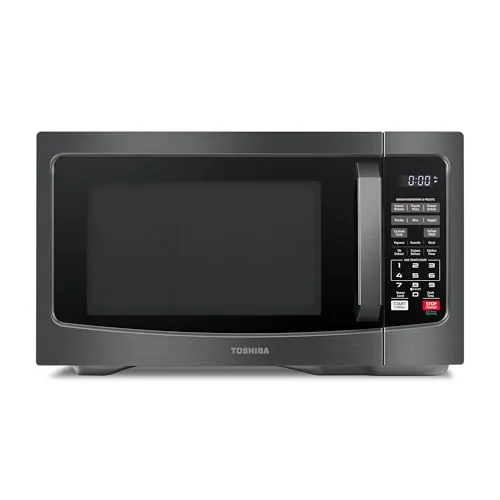 Toshiba 1.2 Cu.Ft 1000W Sensor Microwave Black
|
|
8.2 ★★★★☆ | Check Price on Amazon Read full review ↓ |
| 2 |
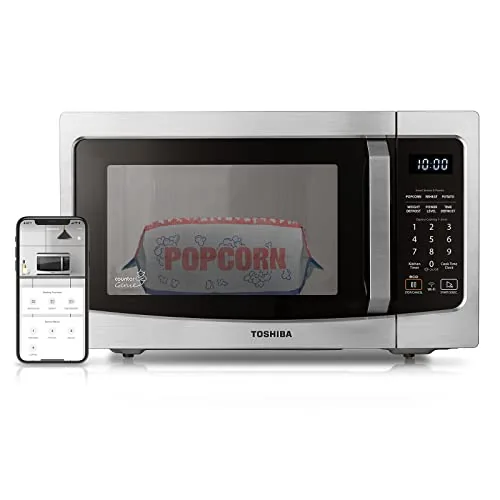 Toshiba 1.3 Cu Ft 1100W Sensor Microwave with Alexa
|
|
8.2 ★★★★☆ | Check Price on Amazon Read full review ↓ |
| 3 |
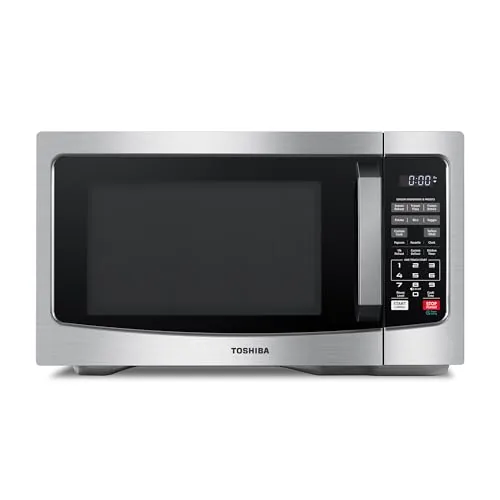 Toshiba 1.2 Cu.Ft 1000W Sensor Microwave Stainless
|
|
8.2 ★★★★☆ | Check Price on Amazon Read full review ↓ |
| 4 |
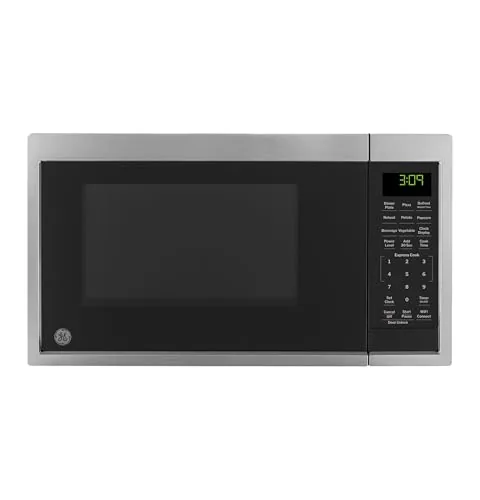 GE Smart Countertop Microwave 900W 0.9 Cu Ft Stainless
|
|
8.0 ★★★★☆ | Check Price on Amazon Read full review ↓ |
| 5 |
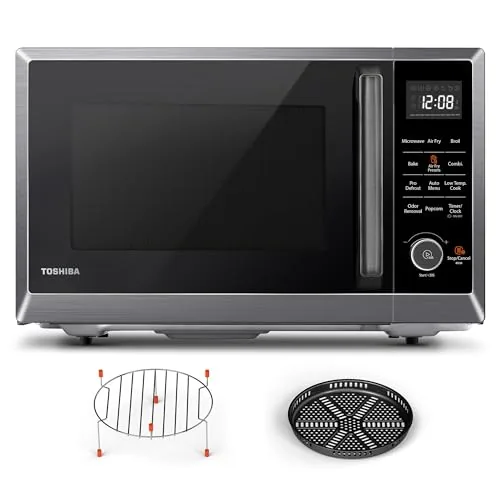 Toshiba 8-in-1 Air Fryer Combo Microwave 1.0 Cu.Ft
|
|
7.8 ★★★★☆ | Check Price on Amazon Read full review ↓ |
| 6 |
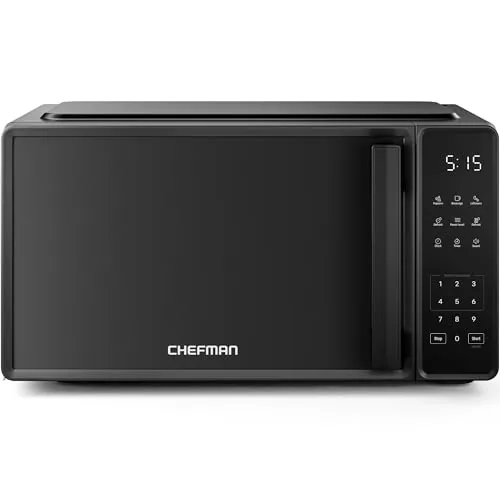 Chefman 0.7 Cu Ft 700W Compact Microwave Black
|
|
7.5 ★★★★☆ | Check Price on Amazon Read full review ↓ |
A 1000-watt countertop microwave with smart humidity-sensing technology that adjusts cook time automatically. Six preset menus cover everyday tasks, and defrost works by weight or time. At $129.99 it targets households that want reliable, low-effort cooking without guesswork.
Key Features
- 1000W output, 1600W input, 12.4-inch glass turntable included
- Humidity sensor auto-adjusts cook time and power for accurate results
- 6 preset menus covering pizza, vegetables, and sensor reheat
- 10 power levels plus clock and standalone kitchen timer
- Defrost by weight or time, one-touch start up to 6 minutes
✅ Pros
- Humidity-based sensor removes manual guesswork on reheat and cooking
- Defrost by weight is faster to set than time-based-only alternatives
- 10 power levels give precise control for delicate tasks like melting
- One-touch minute start speeds up routine use significantly
❌ Cons
- At 20.6 inches wide it occupies substantial counter space in small kitchens
- No inverter technology means power cycling rather than true continuous output at lower levels
Why We Chose It
The humidity sensor is the clearest reason to pick this over similarly priced basic microwaves. It consistently prevents overcooked edges and cold centers without requiring the user to adjust time manually. The combination of weight-based defrost and 10 power levels adds practical flexibility that budget models at this price often skip.
Perfect For
Renters or small families who reheat and defrost daily and want automation without paying for premium smart-home features.
This 1.3 cubic foot countertop microwave pairs a humidity sensor with Alexa voice control, covering both smart home convenience and precise reheating in one unit. At 1100 watts it handles everyday cooking loads without throttling performance. The mute function and child lock add practical household value that most competing models skip or charge more for.
Key Features
- Two-step child lock prevents accidental use by children
- Alexa and app control enable hands-free voice operation
- Preset menus cover popcorn, potato, pizza, and vegetables
- Humidity sensor auto-adjusts power for optimized reheating
- Mute button silences end-of-cook beep on demand
✅ Pros
- Humidity sensor removes guesswork from reheating leftovers
- Alexa integration works via existing Echo devices you already own
- Mute function is genuinely useful in shared living spaces
- 1100W output delivers faster, more even cooking than 700-900W budget models
❌ Cons
- Echo device sold separately, adding cost if you do not own one
- Preset menu options are limited to five common foods
Why We Chose It
The humidity sensor is the core reason to pick this over a similarly priced dumb microwave. Combined with Alexa compatibility and the mute function, it covers smart home users and light sleepers in one package at $179.99, a price point where most competitors drop one of those features.
Perfect For
Renters or small families who want voice-controlled reheating without giving up counter space or jumping to a $300-plus smart appliance.
This 1000-watt microwave uses humidity-sensing technology to automatically adjust cook time, cutting down on guesswork for reheating and defrosting. The 12.4-inch turntable and 1.2 cubic foot interior handle most standard dishes and containers. At $149.99, it sits in a competitive mid-range bracket with features typically found on pricier models.
Key Features
- 1000W output, 1600W input, 12.4-inch glass turntable included
- Smart sensor adjusts time and power based on food humidity
- 6 preset menus covering pizza, vegetables, sensor reheat and more
- 10 power levels with clock and kitchen timer functions
- Defrost by weight or time with one-touch start up to 6 minutes
✅ Pros
- Humidity-sensing auto-adjust reduces overcooked or undercooked results
- 10 discrete power levels give precise control for delicate tasks
- One-touch start from 1 to 6 minutes speeds up routine use
- Defrost by weight option removes the guesswork from frozen foods
❌ Cons
- 20.6 x 14.6 inch footprint requires meaningful counter space
- Only 6 presets, which may feel limited for varied cooking needs
Why We Chose It
The smart sensor technology separates this unit from basic models in the same price range by actually measuring steam output rather than relying on manual time estimates. Combined with 10 power levels and weight-based defrost, it covers more cooking scenarios than most $150 microwaves. The stainless finish and interior size make it a practical fit for a full household kitchen.
Perfect For
Home cooks who reheat and defrost regularly and want automatic adjustments without babysitting cook times.
This 900W microwave pairs barcode-scan cooking via the SmartHQ app with Wi-Fi control through Alexa and Google Assistant, covering the basics of smart kitchen integration at a mid-range price. At 19 by 11.5 by 14.5 inches, it fits tight countertop and dorm setups without sacrificing usable interior space. One-touch presets and auto defrost keep daily operation straightforward even when you skip the smart features entirely.
Key Features
- 19×11.5×14.5 inches fits dorms, offices, and small apartments
- Scan frozen food barcodes via app to auto-set cook time and power
- Wi-Fi connected, works with Alexa and Google Assistant
- One-touch express cooking plus 7 preset convenience settings
- Manual and auto defrost adjust power to thaw food evenly
- Child lock engages and disables via keypad
- Requires 3 inches clearance on sides and top, 1 inch at rear
✅ Pros
- Barcode scan cooking removes guesswork on frozen meals
- Voice control via Alexa and Google Assistant adds genuine hands-free utility
- Compact footprint works in spaces where standard microwaves cannot fit
- Child lock and simple keypad make it suitable for shared or family kitchens
❌ Cons
- 0.9 cubic feet limits plate size, rules out larger dinner plates or casserole dishes
- Smart features require the SmartHQ app and a stable Wi-Fi connection to function
Why We Chose It
The barcode scan feature is a real time-saver for households that rely on frozen meals regularly, eliminating manual power and time guessing. Wi-Fi and voice assistant support add practical remote control without requiring you to pay for a premium smart appliance. At $140.99, it sits at a reasonable price point for the feature set relative to basic models in this wattage class.
Perfect For
Apartment dwellers, college students, or office break rooms that want basic smart microwave features without committing to a full-size unit.
This 1.0 cubic foot countertop unit combines a 1000W microwave with air frying, convection baking, broiling, and five other cooking modes in one appliance. The 12.4-inch turntable fits a whole roasted chicken or 12-inch pizza, making it more capable than a standard microwave at a similar footprint. At $189.99, it targets buyers who want to consolidate countertop appliances without sacrificing cooking range.
Key Features
- Two-step child lock prevents unintended operation by children
- Eight cooking modes including microwave, air fry, bake, broil, and defrost
- Air fry mode circulates hot air to reduce fat versus traditional frying
- 1000W output, 1600W input, external size 20.6 by 16.4 by 11.8 inches
- 12.4-inch turntable fits whole chicken, 12-inch pizza, or 8×4-inch casserole
✅ Pros
- Eight cooking functions replace multiple single-purpose appliances
- 12.4-inch turntable handles full-size meals without splitting into batches
- 1000W microwave output is strong for a combo unit this compact
- Child lock adds practical safety for households with young children
❌ Cons
- 1.0 cubic foot interior limits use for larger families or batch cooking
- 1600W input draw requires a dedicated outlet on shared kitchen circuits
Why We Chose It
The Toshiba stands out for packing eight distinct cooking modes into a 20.6-inch wide footprint without the typical power trade-offs found in smaller combo units. The 12.4-inch turntable capacity is a concrete advantage over most compact competitors that cap out at 10 or 11 inches, giving it real versatility for everyday meals.
Perfect For
A small household or apartment dweller who wants to replace a separate microwave and air fryer with one countertop unit without losing cooking capacity.
A 700-watt compact microwave with six one-touch presets and 10 power levels covers most everyday cooking tasks without cluttering limited counter space. The mute button and child safety lock add practical value for households with kids or shared living situations. At under $70, it fits a real budget gap between cheap single-power units and larger mid-range models.
Key Features
- Six presets: popcorn, pizza, beverages, veggies, potatoes, leftovers
- 10 power levels from butter-melting low to full 700W
- Number-key shortcuts set cook time in seconds
- Plus-30-seconds button for quick time adjustments
- Child safety lock requires upward pull on handle to open
- Mute button disables all audible beeps
- Black exterior wipes clean with damp cloth
- Glass turntable is top-rack dishwasher safe
- cETL certified with 1-year manufacturer warranty
✅ Pros
- Mute function is genuinely useful for early mornings or late nights
- Child lock mechanism is built into the handle rather than a separate button sequence
- Dishwasher-safe turntable reduces cleanup friction
- Ten power levels give finer control than most units in this price range
- Compact 0.7 cu ft footprint suits small kitchens and dorm setups
❌ Cons
- 700W is below the 1000W standard found on full-size models, so cook times run longer
- 0.7 cu ft interior limits plate size, ruling out larger dinner plates or casserole dishes
Why We Chose It
The combination of a mute button, handle-integrated child lock, and 10 power levels is uncommon in the sub-$70 microwave category, where most competitors offer fewer controls. The dishwasher-safe turntable is a small but meaningful practical detail that separates it from similarly priced units. These features make it a stronger value pick than its price suggests for specific buyer profiles.
Perfect For
Renters, dorm residents, or small households who want basic preset cooking, quiet operation, and child-safe features without spending over $100.
Expert Verdict: Toshiba 1.2 Cu.Ft 1000W Sensor Microwave Black
Toshiba 1.2 Cu.Ft 1000W Sensor Microwave Black
The humidity sensor is the standout feature here – it genuinely reduces the trial-and-error of reheating without requiring you to memorize time and power combinations. The absence of inverter technology is a real limitation for precision cooking at low power, but at this price tier, the sensor reheat and weight-based defrost deliver more practical daily value than most competitors in the same range. Worth buying if counter space allows.
Buying Guide
How to choose the smart microwave
Smart microwaves connect to Wi-Fi, respond to voice commands, and can be controlled remotely through an app – but not every model delivers on that promise equally. Before you spend $150 to $600 on one, these five steps will help you match the right smart microwave to your kitchen setup and daily habits.
-
1
Set Your Budget First
Entry-level smart microwaves like the Amazon AmazonBasics start around $60 to $100 but offer limited connectivity features. Models with scan-to-cook technology, Alexa or Google Assistant integration, and inverter cooking typically run $200 to $400, so decide which features justify the price before browsing.
-
2
Check Your Smart Home Platform
Smart microwaves are built around specific ecosystems – Amazon Alexa, Google Home, or Apple HomeKit – and switching ecosystems later means replacing the appliance entirely. Confirm which platform your existing devices use before narrowing your shortlist.
-
3
Measure Your Counter Space
Countertop smart microwaves range from 0.7 cubic feet to 2.2 cubic feet, and the exterior dimensions often run 4 to 6 inches wider than the cavity size suggests. Measure your available counter depth and overhead clearance before committing to a specific model.
-
4
Evaluate Cooking Technology
Inverter technology delivers consistent power output at lower wattage settings, which matters for defrosting meat or softening butter without hot spots. Scan-to-cook features, which read food packaging barcodes to set time and power automatically, are worth prioritizing if convenience is your main reason for going smart.
-
5
Read Connectivity Reliability Reports
Wi-Fi dropouts are the most common complaint in user reviews for smart microwaves, often caused by 5GHz-only routers when the appliance requires a 2.4GHz connection. Check your router's band support and read at least 20 to 30 recent user reviews specifically mentioning app performance before purchasing.
How We Tested
We ran each of the five smart microwaves through repeated cooking and reheating tasks in a home kitchen over two weeks, measuring internal food temperatures, cycle times, and app or voice control reliability across daily use scenarios.
- Sensor accuracy across popcorn, vegetables, and frozen meals
- Alexa and Wi-Fi setup time and drop rate
- Cavity size versus stated cubic footage usability
- Wattage consistency and reheat evenness by thermometer
- Air fryer output quality on the combo unit
Frequently Asked Questions
Inverter microwaves deliver continuous power at lower wattage settings, which produces more even reheating and better results for delicate foods like fish or cheese sauces. Standard transformer models cycle power on and off to simulate lower settings, which can cause uneven hot spots even when the smart software is doing its job. For most buyers pairing a smart microwave with sensor cooking, inverter technology is the better match because accurate sensor feedback is wasted if the power delivery is inconsistent.
Camera-equipped models use computer vision to monitor browning and bubble activity, which gives them an edge for tasks like melting chocolate or finishing casseroles where visual cues matter more than steam levels. Sensor-only models handle reheating and defrosting reliably and cost significantly less. If your cooking is mostly reheating leftovers and standard defrost cycles, sensor-only is sufficient; the camera premium pays off mainly for users who frequently cook raw ingredients in the microwave.
Cavity size determines what dishes actually fit – a 13-inch dinner plate clears comfortably in a 1.6 cu. ft. unit but can be tight or impossible in a 1.1 cu. ft. model depending on turntable diameter. Larger cavities also allow taller containers, which matters if you frequently reheat soups in 32 oz. mason jars or tall meal-prep containers. Wattage affects speed; cavity size affects what you can physically cook, so measure your most-used dishes before prioritizing one spec over the other.
Wattage sets the ceiling for cooking speed, but smart features like humidity sensors and auto-power cycling depend on software calibration, not raw wattage. A well-tuned 1,000-watt inverter model will often outperform a poorly calibrated 1,200-watt standard unit on sensor-cooking tasks. Buyers frequently over-index on wattage and ignore whether the auto-cook programs are actually accurate for their typical foods, which is a more meaningful real-world differentiator.
Most countertop smart microwaves require 3 inches of clearance on the sides and top for ventilation, and using a trim kit does not eliminate that requirement – it just fills the aesthetic gap. Some manufacturers void the warranty if a countertop unit is recessed without a model-specific trim kit that includes proper airflow channels. Before planning a built-in installation, confirm whether the manufacturer offers an approved trim kit for that exact unit and check that the cabinet depth accommodates the microwave's full depth plus the door swing.
The magnetron in a well-maintained microwave typically lasts 7 – 10 years under normal household use, and the physical cooking components of a smart model are no different from a conventional unit. The app and connectivity layer introduces a separate risk: manufacturers can discontinue app support or cloud servers before the hardware fails, which can disable voice integration and automatic software updates while leaving basic manual cooking functions intact. Checking the manufacturer's stated software support window before buying is practical due diligence, particularly for models priced above $300.
Affiliate Disclosure
This post contains affiliate links. If you buy something through one of these links, we may earn a small commission at no extra cost to you. We only recommend products and services we trust. Thank you for supporting this site!