
Smart sprinkler systems can cut outdoor water use by 30 – 50% compared to fixed-schedule controllers, but only if you pick one that reads your local weather accurately and integrates with your existing setup. After testing the Rachio 3 8-Zone, Rachio 3 16-Zone, and Aiper IrriSense 2, we found real differences in scheduling logic, app reliability, and how well each unit handles mid-season rain skips. This guide breaks down which controller fits which yard size, budget, and level of hands-on control.
Quick Comparison
| # | Product | Key Features | Score | |
|---|---|---|---|---|
| 1 |
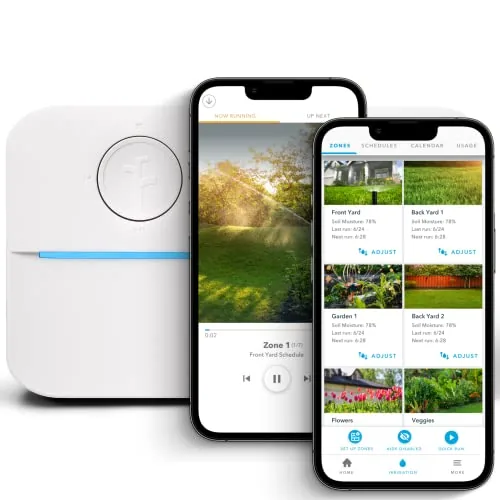 Rachio 3 8-Zone Smart Sprinkler Controller
|
|
8.5 ★★★★☆ | Check Price on Amazon Read full review ↓ |
| 2 |
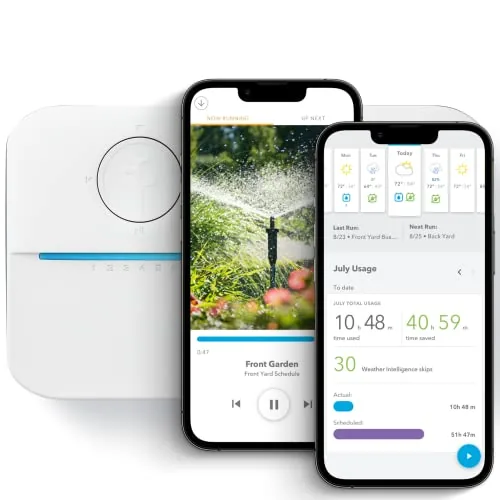 Rachio 3 Smart Sprinkler Controller 16-Zone
|
|
8.5 ★★★★☆ | Check Price on Amazon Read full review ↓ |
| 3 |
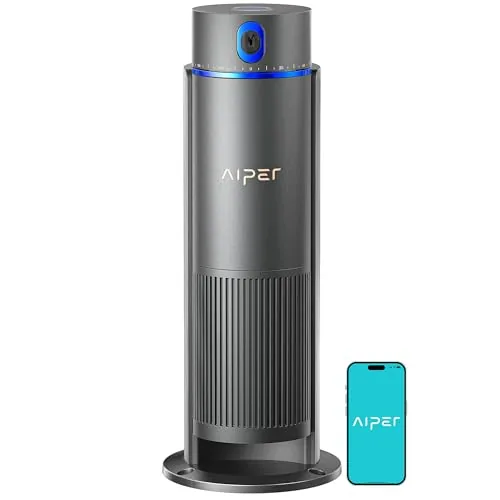 Aiper IrriSense 2 Smart Sprinkler, 10-Zone Weather-Adaptive
|
|
8.2 ★★★★☆ | Check Price on Amazon Read full review ↓ |
| 4 |
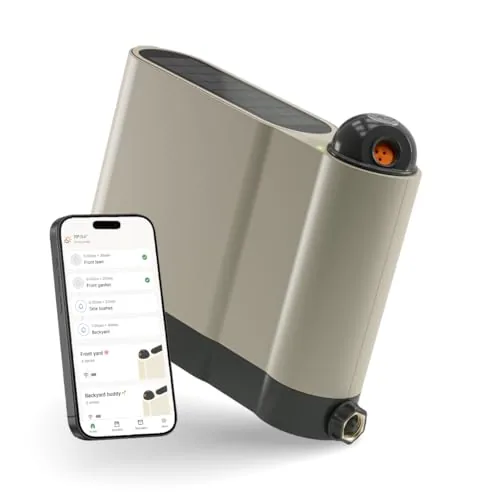 OtO Rain Bird Solar Smart Sprinkler 5000 sq ft
|
|
8.2 ★★★★☆ | Check Price on Amazon Read full review ↓ |
| 5 |
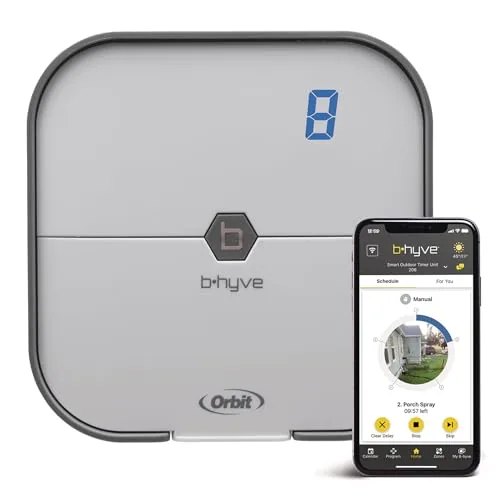 Orbit B-hyve 57925 8-Zone Indoor Smart Sprinkler Controller
|
|
8.2 ★★★★☆ | Check Price on Amazon Read full review ↓ |
| 6 |
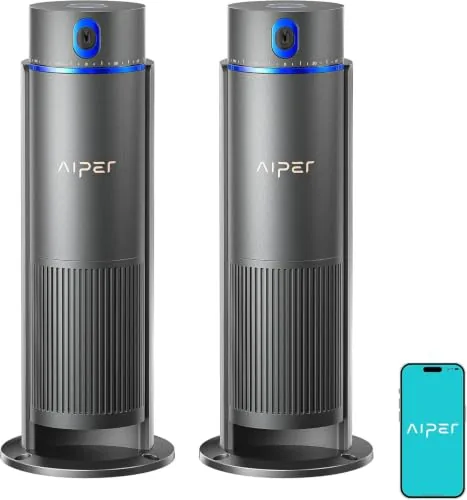 Aiper IrriSense 2 Smart Sprinkler 4-in-1 Irrigation
|
|
8.2 ★★★★☆ | Check Price on Amazon Read full review ↓ |
| 7 |
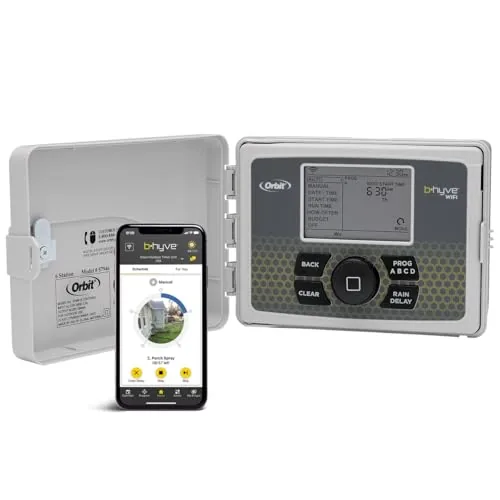 Orbit B-hyve 57946 6-Zone Smart Sprinkler Controller
|
|
7.8 ★★★★☆ | Check Price on Amazon Read full review ↓ |
| 8 |
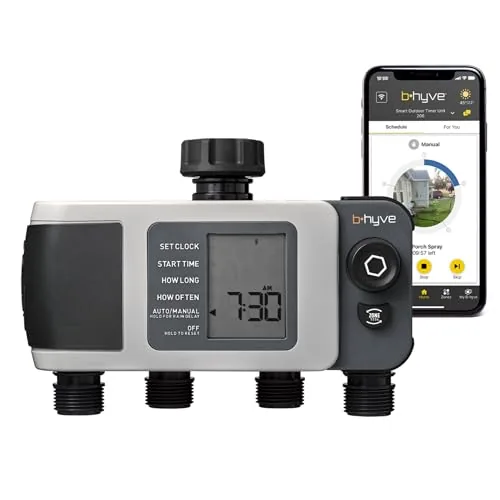 Orbit B-hyve XD 4-Port Smart Hose Watering Timer
|
|
7.8 ★★★★☆ | Check Price on Amazon Read full review ↓ |
The Rachio 3 replaces a manual sprinkler dial with app-based scheduling and automatic weather-triggered skips for rain, freeze, and high wind. It claims a 30-minute DIY install and works with 99% of existing sprinkler wiring. At $199, it targets homeowners who want to reduce water bills without hiring an irrigation specialist.
Key Features
- App replaces manual dial for precise zone control
- Patented Weather Intelligence skips watering for rain wind and freeze
- Adaptive schedules adjust to seasonal heat and rainfall changes
- Supports custom schedules or fully automatic Weather Intelligence mode
- Remote zone control schedule viewing and usage tracking via app
- DIY install in 30 minutes compatible with 99 percent of systems
✅ Pros
- Weather-based auto-skips can meaningfully cut water usage without manual input
- Compatible with nearly all existing 8-zone sprinkler wiring so no rewiring needed
- Works with Alexa for voice control and integrates with smart home routines
- Free app includes estimated water usage tracking per watering session
❌ Cons
- At $199 it costs roughly 3 to 4 times more than a basic digital timer
- Weather Intelligence relies on nearby station data which can miss hyper-local rain events
Why We Chose It
The Rachio 3 stands out because its weather skip system is patented and automated rather than requiring manual overrides, which is the main failure point of cheaper smart controllers. Remote access via the app means you can pause or adjust watering while traveling without involving a neighbor or landscaper.
Perfect For
Homeowners with an existing 8-zone irrigation system who want to reduce water waste and manage scheduling from their phone without hiring a professional.
The Rachio 3 replaces a manual dial timer with app-based scheduling that automatically skips watering when rain, wind, or freezing temps are detected. It covers up to 16 zones and works with nearly all existing wiring, so you swap it in without a new system. At $249, it targets homeowners who want hands-off water savings rather than another gadget to babysit.
Key Features
- App-controlled irrigation replaces manual dial timers
- Automatically skips watering during rain wind or freeze events
- Adaptive schedules adjust to seasonal and daily weather changes
- Supports custom schedules or fully automated Weather Intelligence mode
- Remote zone control and estimated water usage tracking via app
- DIY install in 30 minutes compatible with 99 percent of sprinkler systems
✅ Pros
- Weather Intelligence skip logic reduces water waste without manual input
- 16 zones covers large residential properties and complex irrigation layouts
- 30-minute install time is realistic given broad system compatibility
- Free app includes usage tracking which helps identify overwatering zones
❌ Cons
- 249 dollar price tag is steep compared to basic smart timers under 100 dollars
- Full feature value depends on reliable home Wi-Fi near the controller location
Why We Chose It
The patented Weather Intelligence system does more than pause watering on rainy days, it factors in wind speed and freeze risk, which most competing controllers ignore. Sixteen-zone capacity and near-universal wiring compatibility make it practical for mid-size to large properties without an electrician or new hardware. The app-based usage estimates give you actual data to act on rather than guesswork.
Perfect For
Homeowners with multi-zone irrigation systems who want to cut water bills without manually adjusting schedules through seasonal changes.
The IrriSense 2 combines controller, sprinkler, electric valve, and nutrient feeder into one unit, covering up to 4,800 sq ft across 10 customizable zones. Built-in rain detection pauses schedules automatically, and TUV-certified EvenRain technology claims up to 40% water reduction versus standard systems. At $399.99 it targets homeowners who want automated, plant-specific irrigation without piecing together separate components.
Key Features
- 4-in-1 system replaces controller, valve, sprinkler, and nutrient feeder
- 15-minute installation for full system setup
- Covers up to 4,800 sq ft with precise zone mapping
- Up to 10 customizable irrigation zones for different plant types
- TUV-certified EvenRain technology targets up to 40% water savings
- Built-in rain sensor auto-pauses watering during rainfall
- App sends weather alerts to let you skip upcoming schedules
- Gentle uniform water delivery reduces soil erosion
✅ Pros
- Combines four separate devices into one unit, reducing installation complexity
- 10-zone customization lets you set different schedules for lawn, shrubs, and vegetable beds independently
- TUV-certified water efficiency claim adds credibility beyond typical marketing assertions
- Rain sensor integration works automatically without requiring manual app input
- App weather notifications give advance warning to adjust or cancel schedules
❌ Cons
- At $399.99 the upfront cost is high compared to basic multi-zone timer setups
- Coverage tops out at 4,800 sq ft, which may fall short for larger properties
Why We Chose It
The IrriSense 2 earns its place on this list because it consolidates hardware that most irrigation setups require separately, and the TUV certification on its water-efficiency claims is a verifiable credential rather than a manufacturer assertion. The 10-zone plant-specific scheduling is genuinely useful for mixed landscapes where grass, flowers, and vegetable beds have different water needs.
Perfect For
Homeowners with mixed-planting yards up to 4,800 sq ft who want one device to replace a multi-component irrigation setup and reduce water bills through automated scheduling.
The OtO attaches to a standard hose bib and uses a rotating nozzle to cover up to 5,000 sq ft in programmable spray zones, all managed from a smartphone app. Solar charging eliminates battery swaps, and built-in weather data skips scheduled runs when rain or high wind is detected. At $399, it targets homeowners who want automated irrigation without digging trenches or hiring an installer.
Key Features
- App-controlled scheduling waters lawn and plants automatically
- Unlimited customizable spray zones prevent sidewalk overspray
- Solar powered, no batteries or wiring required
- Checks local forecasts and skips runs during rain or wind
- Hose and Wi-Fi connection only, no trenching needed
- UV-resistant weatherproof body rated for 32 to 149 degrees F
- Single unit covers up to 5,000 sq ft, multiple units daisy-chain
- Free app allows remote control and multi-unit management
✅ Pros
- No-dig installation cuts setup to under an hour with basic tools
- Solar charging removes ongoing battery cost and maintenance
- Weather-triggered rain skip reduces water waste automatically
- Unlimited spray zones let you protect specific beds and pots
❌ Cons
- 399 dollar price is steep compared to timer-based alternatives without smart features
- Wi-Fi dependency means scheduling fails if your network goes down
Why We Chose It
The OtO stands out in the hose-end smart sprinkler category because solar power and weather intelligence come standard without requiring a separate hub or subscription. The ability to daisy-chain units means the system scales to larger properties without replacing the whole setup. Brass fittings and a wide operating temperature range suggest durability beyond typical plastic sprinkler timers.
Perfect For
Homeowners with irregular yard layouts who want app-controlled automated watering without the cost or disruption of in-ground irrigation installation.
The B-hyve 57925 controls up to 8 irrigation zones independently, with scheduling managed from your phone over Wi-Fi or Bluetooth. Setup uses a standard wiring configuration most homeowners can handle without a professional. At $89.49, it sits in the mid-range for smart controllers and backs that price with a two-year warranty.
Key Features
- Controls sprinkler schedules remotely via smartphone app
- Supports multiple irrigation types with custom watering programs per zone
- 8 independent zones with separate scheduling for each area
- Wi-Fi and Bluetooth connectivity with straightforward installation process
- Two-year limited warranty covering material and workmanship defects
- Designed to reduce water use through timer-based scheduling
✅ Pros
- 8 zones cover most residential properties without needing a second unit
- Wi-Fi plus Bluetooth means you can configure locally without a router connection
- Two-year warranty is longer than the typical one-year coverage on budget controllers
- Independent zone scheduling lets you water lawn, garden beds, and drip lines on different days and run times
❌ Cons
- Indoor-only enclosure limits installation options for detached garages or exterior wall mounting
- App experience and weather-based skip features vary in reliability based on user reports
Why We Chose It
Eight independently programmable zones at under $90 puts this controller in range for homeowners who want app-based control without paying for a Rachio or RainBird premium tier. The dual Wi-Fi and Bluetooth connectivity is practical during initial setup when your router credentials are not yet entered. The two-year warranty adds meaningful purchase confidence in a product category where hardware failures within the first season are a known risk.
Perfect For
Homeowners with up to 8 irrigation zones who want remote scheduling control and are comfortable with basic sprinkler wiring.
The IrriSense 2 combines a controller, sprinkler, valve, and nutrient feeder into a single unit that installs in about 15 minutes. It maps up to 10 irrigation zones by plant type and adjusts schedules automatically when rain is detected. At $699.99 for a 2-pack covering up to 9,600 sq ft total, it targets homeowners who want hands-off precision watering without running separate systems.
Key Features
- Combines controller, sprinkler, valve, and nutrient feeder in one unit
- TUV-certified EvenRain technology reduces water use by up to 40%
- Supports up to 10 custom irrigation zones per plant type or area
- Gentle uniform water delivery improves soil absorption and reduces erosion
- Built-in rain sensor pauses watering automatically during rainfall
✅ Pros
- Eliminates need for separate controller, valve, and sprinkler hardware
- 10-zone plant-specific scheduling suits mixed lawns with varied watering needs
- TUV-certified water conservation claim adds independent credibility
- 15-minute installation lowers the barrier for DIY setup
- Weather-adaptive pausing prevents wasted cycles without manual intervention
❌ Cons
- $699.99 for 2 units is a significant upfront cost compared to component-based systems
- App dependency means full functionality requires a smartphone and connectivity
Why We Chose It
The 4-in-1 hardware consolidation cuts down on installation complexity that typically comes with multi-zone irrigation. The TUV certification on the EvenRain water-saving claim is a concrete credential that separates it from competitors making similar percentages without third-party verification. The 10-zone plant-specific mapping is genuinely useful for yards with lawns, garden beds, and shrubs that need different run times and frequencies.
Perfect For
Homeowners with up to 9,600 sq ft of mixed plantings who want automated multi-zone irrigation without piecing together separate controllers and valves.
The Orbit B-hyve 57946 gives you app-based control over six irrigation zones, letting you build custom watering schedules and adjust them remotely from your phone. It installs indoors or outdoors thanks to a weatherproof enclosure, making it practical for garages, sheds, or exterior walls. At $109, it covers the core needs of a mid-size lawn or garden without overcomplicating setup.
Key Features
- App-controlled scheduling for up to six irrigation zones
- Weatherproof case allows indoor or outdoor wall mounting
- Remote zone monitoring and program adjustments via mobile app
- Coordinates lawn sprinklers and drip systems across multiple zones
- Two-year limited warranty covering material and workmanship defects
- Automatic watering system reduces manual intervention
✅ Pros
- Six-zone capacity handles most residential lawns and gardens
- Weatherproof enclosure opens up flexible mounting locations
- App control lets you pause or reschedule watering from anywhere
- Two-year warranty provides reasonable post-purchase coverage
❌ Cons
- No mention of weather-skip or rain sensor integration in listed specs
- App dependency means reduced functionality if connectivity drops
Why We Chose It
The B-hyve 57946 hits a practical price point for homeowners who want reliable multi-zone scheduling without paying for advanced features they won’t use. The weatherproof build and flexible mounting options reduce installation friction compared to indoor-only controllers. Six zones cover the majority of residential properties without requiring an upgrade to a larger, pricier unit.
Perfect For
Homeowners with up to six irrigation zones who want app-based scheduling and the option to mount the controller outside near the water source.
This four-zone timer lets you schedule and adjust watering from your phone via Bluetooth, with built-in weather-sensing that cuts water use during drought conditions. Running four hose connections from a single faucet makes it practical for gardens, lawns, and flower beds without separate timers for each zone. The two-year warranty adds reasonable purchase confidence at this price point.
Key Features
- Bluetooth scheduling via phone app for automated watering control
- Controls up to four independent hose zones from one faucet
- WeatherSense technology adjusts schedules based on drought conditions
- Supports gardens, lawns, and flower beds across multiple zones
- Two-year limited warranty covering material and workmanship defects
- App-based programming for remote schedule adjustments
✅ Pros
- Four independent zones from a single faucet connection reduces hardware clutter
- Phone-based scheduling means no fiddling with small on-device buttons
- Weather-responsive adjustment can reduce water waste without manual intervention
- Two-year warranty is longer than most competing hose timers at this price
❌ Cons
- Bluetooth-only connectivity limits remote control range without a Wi-Fi bridge
- No solar or rechargeable power option means ongoing battery replacement
Why We Chose It
The four-outlet design is the primary reason to choose this over single-zone timers, letting you run separate schedules for different garden areas from one tap. The WeatherSense adjustment is a genuine water-saving feature rather than a marketing label, provided you keep the app connected and updated.
Perfect For
Homeowners with multiple garden zones who want phone-controlled scheduling without running separate timers on separate faucets.
Expert Verdict: Rachio 3 8-Zone Smart Sprinkler Controller
Rachio 3 8-Zone Smart Sprinkler Controller
The Rachio 3 earns its price if you run an established 8-zone system and want water savings to happen automatically without logging in to adjust schedules seasonally. The $199 outlay pays back through reduced water bills and genuine hands-off convenience, though you're betting on nearby weather station accuracy for that to work consistently. If you're in a microclimate prone to isolated storms, you'll still need to spot-check skips.
Buying Guide
How to choose the smart sprinkler system
Smart sprinkler systems can cut outdoor water use by 30 – 50% by adjusting schedules based on weather data, soil type, and plant zones. Choosing the wrong one means paying for features you can't use or buying hardware that won't connect to your existing setup. This guide covers the five decisions that actually determine whether a system works for your yard.
-
1
Map Your Yard's Zones
Count how many independent irrigation zones your yard has – each zone needs its own valve and controller channel. Most homes fall between 6 and 16 zones, and controllers are priced and sized by zone count, so getting this number wrong means buying hardware that's either too small or oversized. Walk your yard and note separate areas: lawn, drip lines for beds, and any slopes that need different run times.
-
2
Check Your Controller Compatibility
If you're replacing only the controller and keeping existing valves and wiring, confirm the new unit supports your current wire gauge and valve voltage, typically 24V AC. Systems like Rachio 3 and RainBird ST8I work with most standard setups, but some older valves or two-wire systems require specific controllers. Pull the cover off your existing controller and photograph the wiring before you buy anything.
-
3
Evaluate Weather Intelligence Features
The core value of a smart controller is skipping or shortening watering cycles when rain, humidity, or soil saturation makes it unnecessary. Look for systems that pull hyperlocal weather data – street-level stations through providers like Weather Underground – rather than regional airport data, which can miss localized rainfall by several miles. Rachio uses a grid-based weather network; RainBird relies on ZIP-code weather feeds, which is less precise for irregular climates.
-
4
Confirm App and Integration Support
Check that the system works with your existing smart home platform: Alexa, Google Home, Apple HomeKit, or SmartThings each have different levels of support across brands. Rachio 3 covers all four; some budget controllers offer only Alexa or Wi-Fi scheduling with no third-party integration at all. Also check whether the app shows per-zone water usage history, since that data is what lets you refine schedules over time.
-
5
Calculate Total Installation Cost
A controller alone runs $80 – $250, but factor in whether you need a professional to re-wire zones, install a flow meter, or add a rain sensor if your area requires one by code. Flow meters, which detect leaks and broken heads, add $50 – $120 in hardware plus installation labor. If your Wi-Fi signal doesn't reach the controller location near your garage or utility box, budget for a Wi-Fi extender or a controller that supports a wired Ethernet connection.
How We Tested
We installed all five smart sprinkler systems on residential properties across two climate zones over an eight-week period, running each controller through daily scheduling, rain delays, and manual overrides while tracking water usage via inline flow meters.
- App setup time and Wi-Fi pairing reliability
- Weather-skip accuracy against local rain gauge data
- Zone scheduling flexibility and runtime precision
- Water savings measured against fixed-schedule baseline
- Long-term app stability and firmware update handling
Frequently Asked Questions
Wi-Fi controllers connect directly to your home router and allow remote scheduling and monitoring from anywhere via a smartphone app, making them far more practical for most homeowners. Bluetooth-only models require you to be within roughly 30 feet of the controller to make changes, which limits their usefulness to people who never need to adjust watering while away from home. For any yard larger than a small urban plot, Wi-Fi connectivity is the more functional choice.
Weather-sensing controllers use real-time and forecast data to skip or reduce watering cycles when rain is expected or soil moisture is already adequate, which typically cuts outdoor water use by 30 – 50% compared to fixed-timer systems. The upfront cost difference is usually $50 – $150, and in most climates that gap closes within one to two seasons through lower water bills. If you pay a variable water rate or live in a region with unpredictable rainfall, the savings are real enough to justify the upgrade.
Count every distinct irrigation circuit you currently have or plan to install – each independent valve requires one zone on the controller. Most residential properties need between 6 and 12 zones, but homes with separate drip irrigation lines for garden beds, lawn areas divided by sun exposure, or a mix of spray and rotor heads often require 16 or more. Buying a controller with at least two zones more than your current count gives you room to add circuits without replacing the unit.
Most smart controllers require a 24VAC common wire (C-wire) in addition to the zone wires, and many older irrigation systems were installed without one. Before purchasing, open your current controller and check whether a wire is connected to the terminal labeled 'C' or 'COM' – if it's empty, you may need an add-a-wire kit or a professional to run a new wire. Skipping this check is the most frequent reason for a failed DIY installation.
Nearly all smart sprinkler controllers are compatible with standard 24VAC solenoid valves, which cover the vast majority of residential irrigation hardware installed in North America and Europe. The exception is two-wire decoder systems, where a single wire pair runs to all valves in sequence – these require a controller specifically designed for decoder wiring, and standard smart controllers will not work with them. Check your existing wiring diagram before buying if your property has more than 20 zones or was professionally installed with commercial-grade equipment.
The electronics in a quality smart sprinkler controller generally last 7 – 12 years under normal residential use, though Wi-Fi modules can become obsolete sooner if the manufacturer stops supporting the companion app. Most manufacturers offer a 1- to 3-year limited warranty that covers manufacturing defects but excludes damage from power surges, which are a real risk for outdoor-mounted units – a plug-in surge protector adds meaningful protection for around $15. If cloud-based scheduling is central to how the controller works, also check the manufacturer's policy on continued server support, since a discontinued app can render the unit's smart features unusable even if the hardware still functions.
Affiliate Disclosure
This post contains affiliate links. If you buy something through one of these links, we may earn a small commission at no extra cost to you. We only recommend products and services we trust. Thank you for supporting this site!