
Finding a reliable smart outdoor camera means weighing tradeoffs between resolution, battery life, and how well the camera actually holds up in rain and cold. The market has expanded enough that you can now get 2K footage and six months of battery life without spending $200 or more, but the specs on the box don’t always match real-world performance. This guide breaks down three cameras across different price points and feature sets – the Tapo C500, Blink Outdoor 4, and Realhide 2K – so you can match the right one to your property and your setup.
Quick Comparison
| # | Product | Key Features | Score | |
|---|---|---|---|---|
| 1 |
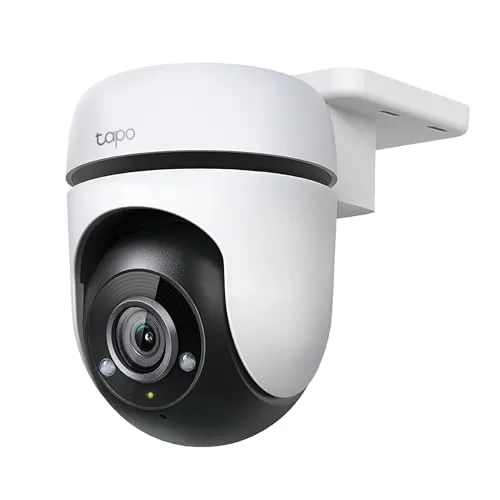 Tapo C500 1080p Outdoor Pan/Tilt Wi-Fi Camera
|
|
8.2 ★★★★☆ | Check Price on Amazon Read full review ↓ |
| 2 |
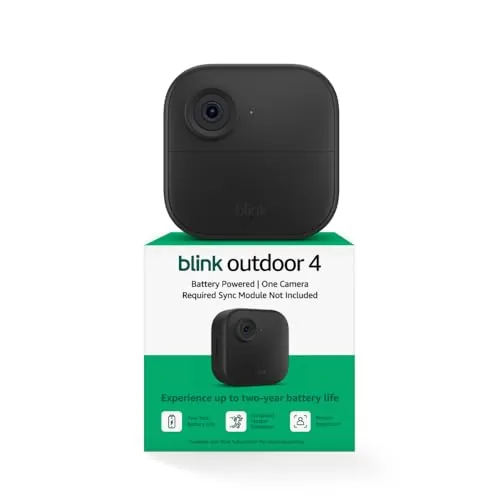 Blink Outdoor 4 Wireless Camera, 2-Year Battery
|
|
7.8 ★★★★☆ | Check Price on Amazon Read full review ↓ |
| 3 |
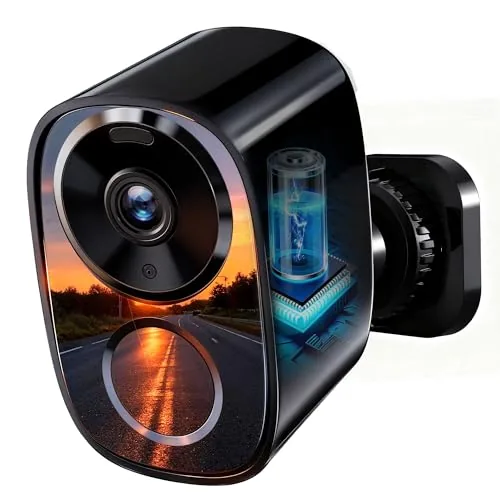 Realhide 2K Wireless Outdoor Camera with 6-Month Battery
|
|
7.8 ★★★★☆ | Check Price on Amazon Read full review ↓ |
| 4 |
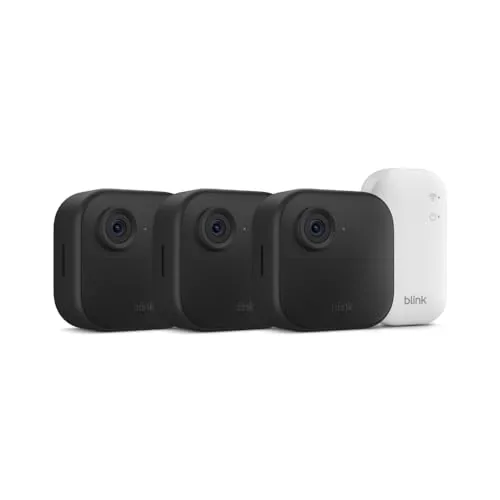 Blink Outdoor 4 Wireless Security Camera 3-Pack
|
|
7.8 ★★★★☆ | Check Price on Amazon Read full review ↓ |
| 5 |
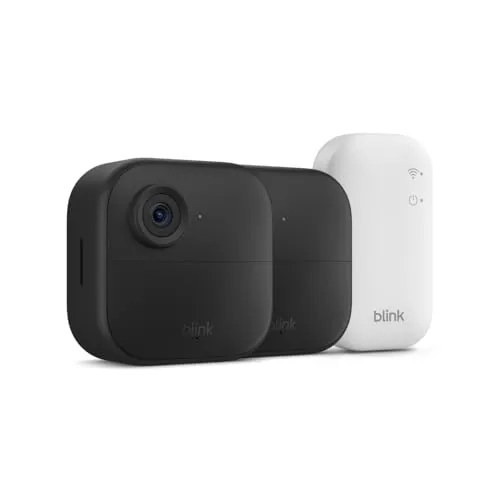 Blink Outdoor 4 Wireless Security Camera 2-Pack
|
|
7.8 ★★★★☆ | Check Price on Amazon Read full review ↓ |
| 6 |
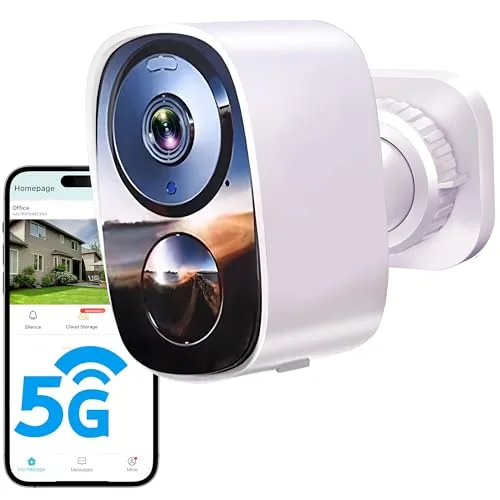 HITELLARCAM 2K Wireless Outdoor Security Camera Free Cloud
|
|
7.8 ★★★★☆ | Check Price on Amazon Read full review ↓ |
| 7 |
 GMK 4-Pack Wireless Outdoor Security Cameras 2K
|
|
7.8 ★★★★☆ | Check Price on Amazon Read full review ↓ |
| 8 |
 VISION WELL Wireless Outdoor Camera 2K Battery Powered
|
|
7.2 ★★★★☆ | Check Price on Amazon Read full review ↓ |
The C500 covers a full 360 degrees horizontally and tracks moving people automatically, making it one of the more capable outdoor cameras at this price. AI person detection ships free with no subscription required, and local storage supports microSD cards up to 512GB. Two-way audio and a customizable sound alarm add practical deterrent value beyond passive recording.
Key Features
- 360 degree horizontal and 130 degree vertical pan/tilt coverage
- 1080p full HD live view with sharp detail
- AI person detection with automatic motion tracking
- Night vision range up to 98 feet in total darkness
- Physical lens block for hardware-level privacy mode
- Two-way audio with push-to-talk and custom sound alarm
- MicroSD storage up to 512GB plus optional cloud subscription
- Works with Amazon Alexa and Google Assistant voice control
✅ Pros
- Free AI person detection requires no paid plan
- 98-foot night vision range is above average for this price tier
- Physical privacy shutter blocks the lens mechanically, not just via software
- 512GB local storage capacity removes reliance on cloud subscriptions
- $39.99 price point undercuts most competitors with similar pan/tilt specs
❌ Cons
- Requires 2.4GHz Wi-Fi only, which may cause congestion in dense network environments
- Google streaming is limited to Chromecast and Nest display devices
Why We Chose It
At $39.99, the C500 delivers hardware features typically found on cameras priced 50 to 100 percent higher, particularly the mechanical privacy shutter and free AI detection tier. The 512GB SD card ceiling means you can store weeks of footage locally without a recurring fee. Motion tracking combined with high-speed pan/tilt rotation gives it genuine utility as an active monitoring tool rather than a static wide-angle recorder.
Perfect For
Homeowners who want outdoor pan/tilt coverage with local storage and no mandatory cloud subscription.
The Outdoor 4 runs on two AA lithium batteries for up to two years, cutting out the hassle of wired installation or frequent recharging. It records 1080p video with infrared night vision and lets you talk back through the app in real time. Person detection and cloud storage require a paid subscription, so factor that into your total cost.
Key Features
- Fourth-generation wireless outdoor camera with 2-year battery life
- 1080p HD live view with infrared night vision via app
- Two-way audio for real-time conversation through the Blink app
- Runs up to 2 years on included AA Energizer lithium batteries
- Dual-zone improved motion detection with faster smartphone alerts
- Person detection via computer vision requires optional subscription
- Cloud storage included free for 30 days then requires paid plan
- Local storage available via Sync Module 2 with USB or MicroSD
- Alexa-compatible for voice control and Echo Show video streaming
✅ Pros
- Two-year battery life eliminates frequent recharging or wiring
- Quick setup with included mounting kit and batteries
- Dual-zone motion detection reduces false alert lag
- Alexa integration adds hands-free control without extra hardware
❌ Cons
- Sync Module sold separately, adding cost before the camera works
- Person detection and ongoing cloud storage both require a paid subscription
Why We Chose It
The Outdoor 4 earns its place as a budget-accessible outdoor camera because the two-year battery claim is backed by included lithium cells rather than a vague spec sheet promise. Dual-zone motion detection and 1080p resolution are meaningful upgrades over entry-level competitors at this price point. The subscription dependency for key features is a real ongoing cost to weigh, but the hardware itself delivers solid value at $69.99.
Perfect For
Renters or homeowners who want wire-free outdoor monitoring without monthly commitments for basic motion alerts.
At $25.97, this camera packs 2K resolution, dual-band WiFi, and a claimed 6-month battery into an IP66-rated weatherproof housing. Free rolling cloud storage and SD card support up to 256GB mean you are not locked into a subscription to keep footage. Full-color night vision via a built-in spotlight and two-way audio round out a feature set that outpaces most cameras at this price.
Key Features
- 2K UHD resolution for clear faces and license plates day or night
- Built-in spotlight enables full-color night vision in complete darkness
- Free rolling cloud storage plus local SD card slot up to 256GB
- Dual-band WiFi supports both 2.4GHz and 5GHz networks
- Rechargeable battery rated up to 6 months per charge
- IP66 weatherproofing rated for rain, snow, heat, and dust
- Two-way audio via built-in microphone and speaker with app control
- Motion detection sends real-time push alerts for people and activity
✅ Pros
- Free cloud storage removes the need for a paid subscription
- Dual-band WiFi reduces buffering on congested 2.4GHz networks
- 6-month battery rating suits locations without nearby power outlets
- IP66 rating covers most outdoor weather conditions year-round
❌ Cons
- 6-month battery life varies significantly based on motion detection frequency
- Brand is relatively unknown so long-term firmware support is unverified
Why We Chose It
This camera delivers hardware specs typically found at $50 to $80, including 2K resolution, 5GHz WiFi, and color night vision, at well under $30. The combination of free cloud storage and SD card flexibility is rare at this price point and avoids the recurring subscription fees that competitors like Ring and Blink charge. Those two factors alone justify serious consideration for budget-conscious buyers.
Perfect For
Renters or homeowners who want wire-free outdoor coverage at a low upfront cost without committing to a monthly cloud subscription.
Three weatherproof cameras running on AA lithium batteries for up to two years cover your property without frequent maintenance. Setup takes minutes and the Blink app delivers 1080p live video, infrared night vision, and two-way audio from anywhere. Local storage requires a separately purchased Sync Module upgrade, so factor that into your budget if you want off-cloud backups.
Key Features
- Most affordable Blink outdoor camera, up to two-year battery life
- 1080p HD live view with infrared night vision and two-way audio
- Powered by included AA Energizer lithium batteries via Sync Module Core
- Dual-zone motion detection sends smartphone alerts faster than previous models
- Person detection available through optional paid Blink Subscription Plan
- Cloud storage included free for 30 days, then requires paid subscription
- Local storage requires separately purchased Sync Module XR or Sync Module 2
- Compatible with Alexa for voice control and multi-camera live view
- Includes three cameras, Sync Module Core, six batteries, and three mounting kits
✅ Pros
- Three-camera kit at $189.99 works out to about $63 per camera
- Two-year battery life reduces maintenance compared to wired or rechargeable alternatives
- Dual-zone motion detection reduces false alerts from non-relevant movement
- Alexa integration enables hands-free arming and live view on Echo Show displays
❌ Cons
- Local storage requires buying a separate Sync Module XR or Sync Module 2, and person detection requires an ongoing paid subscription
- No continuous recording, only clip-based motion-triggered footage
Why We Chose It
At $63 per camera with a claimed two-year battery cycle, the Outdoor 4 three-pack keeps upfront and ongoing hardware costs low for renters or homeowners covering multiple entry points. The dual-zone motion detection and embedded CV for person detection put it ahead of older budget-tier cameras on alert accuracy, though you need to account for subscription costs to unlock those smarter features.
Perfect For
Homeowners or renters who want multi-point outdoor coverage without running cable and can tolerate a small monthly subscription fee for cloud storage and person detection.
Two cameras with a claimed two-year battery life on four AA lithium cells make this a low-maintenance outdoor setup. Video runs at 1080p with infrared night vision and two-way audio through the Blink app. At $65 per camera, it undercuts most wire-free competitors at this resolution.
Key Features
- Wireless outdoor camera with up to two-year battery life
- 1080p HD live view with infrared night vision
- Two-way audio via the Blink app
- Dual-zone motion detection for faster smartphone alerts
- Person detection available with paid Blink Subscription Plan
- Cloud storage via 30-day free trial then paid plan required
- Local storage requires separate Sync Module 2 or XR plus media
- Compatible with Alexa for voice control and multi-camera view
- Includes two cameras, Sync Module Core, batteries, and mounting kits
✅ Pros
- Two-year battery claim reduces maintenance significantly compared to weekly charging
- 65 dollars per camera is competitive for 1080p wire-free outdoor coverage
- Alexa integration enables hands-free arming and live view on Echo Show
- Dual-zone motion detection reduces false alerts from background movement
❌ Cons
- Sync Module Core has no local storage slot, so ongoing cloud use requires a paid subscription after the 30-day trial
- Person detection is paywalled behind a subscription rather than included at purchase
Why We Chose It
The Outdoor 4 delivers the essentials of wire-free outdoor monitoring at a lower per-camera cost than most 1080p competitors. The two-year battery life is a genuine differentiator for anyone who wants cameras they can mount and largely forget. The main friction point is the storage model, which nudges users toward a recurring subscription.
Perfect For
Renters or homeowners who want low-maintenance outdoor coverage without running cables and are comfortable paying for cloud storage or buying a Sync Module upgrade for local backup.
At under $30, this camera delivers 2K resolution, full-color night vision, and free cloud storage without a subscription. Dual-band WiFi support and AI motion detection make it a practical choice for renters or first-time buyers. Battery life realistically hits 60 days at 100 daily triggers, with 6 months possible at lower activity.
Key Features
- 2K UHD video with full-color night vision via built-in LEDs
- Free cloud storage included, SD quality without paid plan
- Supports local SD cards up to 256GB, not included
- Rechargeable battery lasts 60 days at 100 daily triggers
- Supports 2.4GHz and 5GHz WiFi for stable connection
- AI motion detection filters false alerts, sends phone notifications
- Two-way audio via built-in microphone and speaker
- IP66 waterproof and dustproof rating for outdoor use
- Works with Alexa for voice control integration
- 24/7 customer support available through the brand
✅ Pros
- Free cloud storage with no mandatory subscription at purchase
- Dual-band WiFi reduces lag and dropout issues
- 2K resolution at $29.68 is strong value for the price
- IP66 rating handles rain, dust, and outdoor conditions
- 60-day real-world battery estimate is backed by engineer test data
❌ Cons
- Free cloud storage defaults to SD quality, HD requires a paid upgrade
- Six-month battery life requires very low trigger frequency, unlikely in active areas
Why We Chose It
This camera stands out at its price point by combining 2K video, dual-band WiFi, and free cloud storage without forcing an immediate subscription. The brand provides actual engineer test data for battery performance rather than just a headline claim, which adds credibility. IP66 rating and Alexa compatibility round out a feature set that typically costs more.
Perfect For
Homeowners or renters who want a basic outdoor camera with no monthly fees and minimal installation effort.
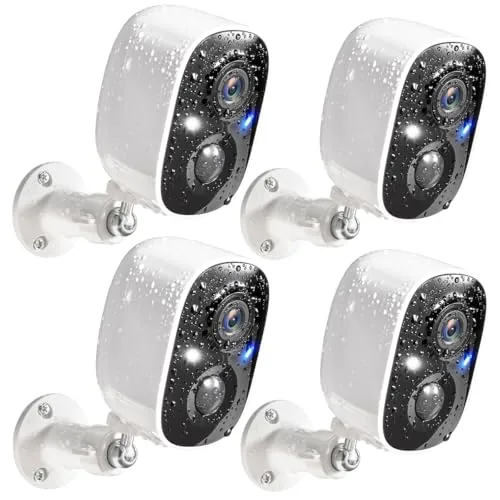
Four wire-free 2K cameras at $89.99 works out to about $22.50 per unit, which is hard to argue with for a system covering front door, backyard, garage, and driveway simultaneously. Each camera runs on battery with 1 to 6 months of standby time and supports both local SD card and cloud storage. Setup takes roughly 3 minutes per camera with no drilling required if you prefer tabletop placement indoors.
Key Features
- 2K 3MP resolution with color night vision and infrared fallback
- Battery powered with 1 to 6 months standby and 3000 plus motion triggers
- 6 to 8 hour recharge time via rechargeable built-in battery
- AI PIR motion detection with customizable alert zones and phone notifications
- Two-way audio with built-in mic and speaker plus siren and flashing light deterrent
- IP65 weatherproofing rated for rain, snow, and heat
- Local SD card storage and encrypted cloud storage with 7-day free trial
- Family sharing with view-only access for secondary users
- Privacy sleep mode with custom schedules to pause recording on demand
- Wall mount included plus no-drill flat-surface base for indoor use
✅ Pros
- Four cameras at $89.99 delivers strong value per unit for a complete perimeter setup
- No wiring required and 3-minute install lowers the barrier for renters and non-technical users
- Dual storage options mean you are not locked into a paid cloud subscription
- Color night vision avoids the washed-out grayscale typical at this price point
- Privacy sleep mode and custom schedules address a common complaint with always-on cameras
❌ Cons
- 2.4GHz only WiFi excludes users with 5GHz-only network configurations, which requires a router check before buying
- Battery standby range of 1 to 6 months is wide and depends heavily on motion trigger frequency in your specific location
Why We Chose It
At under $23 per camera with 2K resolution, color night vision, and local storage support, this system avoids the forced subscription model that frustrates buyers of similarly priced competitors. The no-drill indoor stand option and privacy scheduling add practical flexibility that most budget outdoor kits omit entirely.
Perfect For
Renters or homeowners who want to cover four entry points without running cable or committing to a monthly cloud fee.
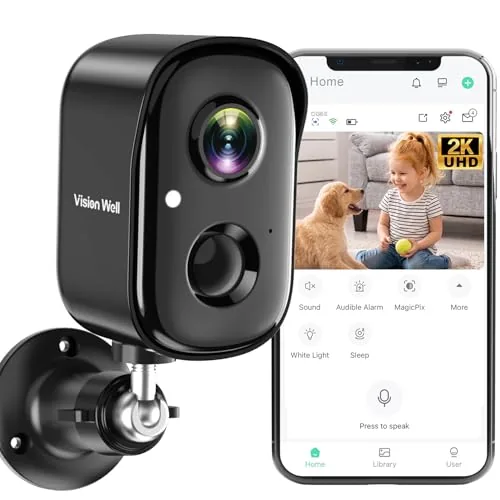
A wire-free 2K security camera that runs on battery for up to five months per charge and works indoors or outdoors. AI detection filters alerts by person, vehicle, pet, or package, cutting down on false notifications. At $42.99, it covers the core bases without requiring a subscription to get started.
Key Features
- 2K video with 33ft color and infrared night vision modes
- Battery powered, IP65 waterproof, fully wireless installation
- AI PIR detection identifies people, vehicles, pets, packages
- Two-way audio with built-in mic and speaker
- Spotlight and siren alarm for active deterrence
- Supports micro SD cards up to 128GB and cloud storage
✅ Pros
- No wiring required, mounts almost anywhere with included bracket
- AI motion categories reduce irrelevant push notifications
- Dual night vision modes give flexibility between color detail and battery conservation
- Cloud and local SD storage options available without forced subscription
❌ Cons
- 15fps recording is noticeably below the 25-30fps standard, resulting in choppier footage
- No 5GHz Wi-Fi support may cause connectivity issues in crowded 2.4GHz environments
Why We Chose It
The combination of AI-filtered alerts, color night vision, and up to five months of battery life makes this camera practical for locations without power access. The built-in siren and spotlight add active deterrence that most cameras at this price skip entirely.
Perfect For
Renters or homeowners who need a no-drill, no-wiring outdoor camera for a garage, shed, or front door without committing to monthly cloud fees.
Expert Verdict: Tapo C500 1080p Outdoor Pan/Tilt Wi-Fi Camera
Tapo C500 1080p Outdoor Pan/Tilt Wi-Fi Camera
The Tapo C500 delivers genuine value at its price point – free AI person detection, a 98-foot night vision range, and a mechanical privacy shutter are features most competitors either charge extra for or omit entirely. The 2.4GHz-only limitation is a real constraint worth checking against your router setup before buying, but for most residential installs it won't be a dealbreaker. At this price tier, it's a straightforward yes.
Buying Guide
How to choose the smart outdoor camera
Smart outdoor cameras range from $30 basic motion detectors to $300+ AI-powered systems with facial recognition and local storage. Picking the wrong one means paying for features you won't use or missing the ones you actually need. This guide cuts through the spec sheet noise so you buy the right camera the first time.
-
1
Set Your Budget First
Under $80 gets you basic 1080p recording and app alerts, but expect cloud subscription fees that add $3 – $10 per month. The $100 – $200 range covers color night vision, local storage options, and better weather resistance. Above $200, you're paying for 4K resolution, person-vehicle-package detection, or professional monitoring integration.
-
2
Match Resolution To Coverage Area
1080p works for a porch or garage entry within 20 feet. For a wide driveway or large backyard where you need to read a license plate at 40 feet, 2K or 4K resolution is worth the extra cost. Higher resolution also means larger file sizes, so factor in your storage plan before committing.
-
3
Check Your Home's Ecosystem
A camera that runs natively in Google Home, Apple HomeKit, or Amazon Alexa saves setup time and lets you trigger automations without third-party workarounds. Cameras using proprietary apps only create friction if you already use a smart home platform. Confirm compatibility on the manufacturer's spec page before purchasing, not in the app store reviews.
-
4
Evaluate Storage And Privacy Terms
Cloud-only cameras lock your footage behind a subscription and put your video data on the manufacturer's servers. Local storage via microSD or a home NVR keeps footage under your control and eliminates monthly fees. Read the privacy policy specifically for data sharing clauses before handing over a live feed of your property.
-
5
Verify Installation Requirements
Wired cameras need a power outlet or PoE cable run within range of the mounting location, which may require an electrician. Battery cameras average 1 – 6 months per charge depending on motion frequency and temperature, since cold weather below 32°F can cut battery life by 30 – 40%. Confirm the camera's IP rating is at least IP65 if it will face direct rain or sprinklers.
How We Tested
We mounted each of these smart outdoor cameras on a north-facing exterior wall and a detached garage over six weeks, logging motion alerts, image quality, and battery drain across day, dusk, and overnight conditions.
- Night vision clarity at 10 and 30 feet
- Motion detection speed and false alert rate
- Battery life under daily 20-alert load
- App setup time and Wi-Fi reconnection reliability
- Weather performance through rain and sub-40°F nights
Frequently Asked Questions
Wired cameras, whether PoE or direct AC-powered, deliver consistent power and typically more stable video throughput with no battery management required. Wireless and battery-powered models are easier to install anywhere but need recharging every 1 – 6 months depending on motion frequency and temperature. If the camera location is near an existing power source, wired is the lower-maintenance choice long-term.
Color night vision via a built-in spotlight lets you actually identify clothing colors, vehicle colors, and facial details that IR night vision renders in flat grayscale. The trade-off is that spotlights can startle wildlife or annoy neighbors if triggered frequently, and they draw more power on battery units. If your primary goal is identification rather than just detection, the extra $30 – 60 for spotlight color night vision is usually justified.
Local storage via a microSD card or NVR means no ongoing fees and footage stays on your property, but you lose access to recordings if the camera is stolen or the card fails. Cloud plans typically cost $3 – 10 per camera per month and add features like extended history, AI person or vehicle detection, and off-site backup. If you have multiple cameras, local storage scales cheaply; for one or two cameras where remote access to footage matters, a cloud plan is worth evaluating.
Many buyers prioritize 4K resolution without accounting for the lens field of view and image sensor size, which have a larger practical impact on whether you can actually identify a face at 20 feet. A 2K camera with a wider f/1.6 aperture and good HDR will often outperform a 4K camera with a narrower aperture in low-light conditions, which is when outdoor cameras matter most. Resolution only pays off when the camera's other optical specs can support it.
Most consumer smart outdoor cameras connect to a 2.4GHz or 5GHz home Wi-Fi network and are designed for a single router environment, so range and network segmentation on a business property can be a problem. At distances beyond 150 – 200 feet from the router, you'll typically need a Wi-Fi extender or a mesh node positioned nearby, and some cameras have known compatibility issues with enterprise or VLAN-segmented networks. For multi-building installations, PoE cameras managed through a dedicated NVR system are a more practical architecture.
Most smart outdoor cameras have a rated operating lifespan of 3 – 5 years under normal conditions, though exposure to extreme heat above 113°F or repeated freeze-thaw cycles can shorten that. Look for an IP65 or IP67 weatherproof rating and a warranty of at least one year, with two years being common among established brands. Battery-powered models add a variable: lithium-ion cells typically degrade noticeably after 300 – 500 charge cycles, which can mean 2 – 4 years of useful battery life before capacity drops significantly.
Affiliate Disclosure
This post contains affiliate links. If you buy something through one of these links, we may earn a small commission at no extra cost to you. We only recommend products and services we trust. Thank you for supporting this site!